HMO Conversion Finance - Fund the Purchase and the Works in One Bridge
Buy the property and convert it into a high-yielding HMO with a single facility. Lendlord funds up to 75% of value and up to 70% of GDV for the works, at rates from 0.75% pm , with completion in as little as 5 working days . Direct lender, no broker fees - repaid when you refinance onto an HMO mortgage.
- 0.75%
- Rate p/m
- 70%
- Of GDV
- 5 days
- To Complete
- £30k-£3M
- Loan Size
HMO conversion finance uses short-term bridging loans for limited company structures to buy a property and turn it into a House in Multiple Occupation - funding the purchase and the refurbishment works in one facility. You repay it by refinancing onto a long-term HMO mortgage once the rooms are finished and let.
Why HMO conversions need bridging finance
A standard buy-to-let mortgage will not fund a property that is mid-conversion. Lenders want a finished, habitable, lettable home before they release long-term money - so a part-built HMO, with rooms being added, fire doors going in and a new kitchen mid-install, simply falls outside their criteria.
Bridging finance is built for exactly this stage. It funds the purchase and the works upfront, lets you complete the conversion, and is then repaid when the finished HMO is refinanced or sold. Because it moves in days rather than weeks, you can also act fast on the kind of tired, below-market stock that makes the best conversion candidates.
"The best HMO deals are usually the ugliest houses on the street. Bridging is what lets an investor buy them, add the rooms, and refinance at the new, higher value."
Claire - Senior Bridging Specialist, Lendlord
How much can you borrow to convert an HMO?
Lendlord funds up to 75% of the property value towards the purchase and up to 70% of the gross development value (GDV) to cover the conversion works. The works element is released in tranches, in arrears, against monitoring surveyor sign-off as each stage completes - so you draw down funds as the rooms are actually built.
The GDV is the value of the finished, fully converted HMO. Because adding lettable rooms typically lifts both rent and capital value, a well-planned conversion increases the GDV - which in turn supports the works funding and strengthens your refinance exit.
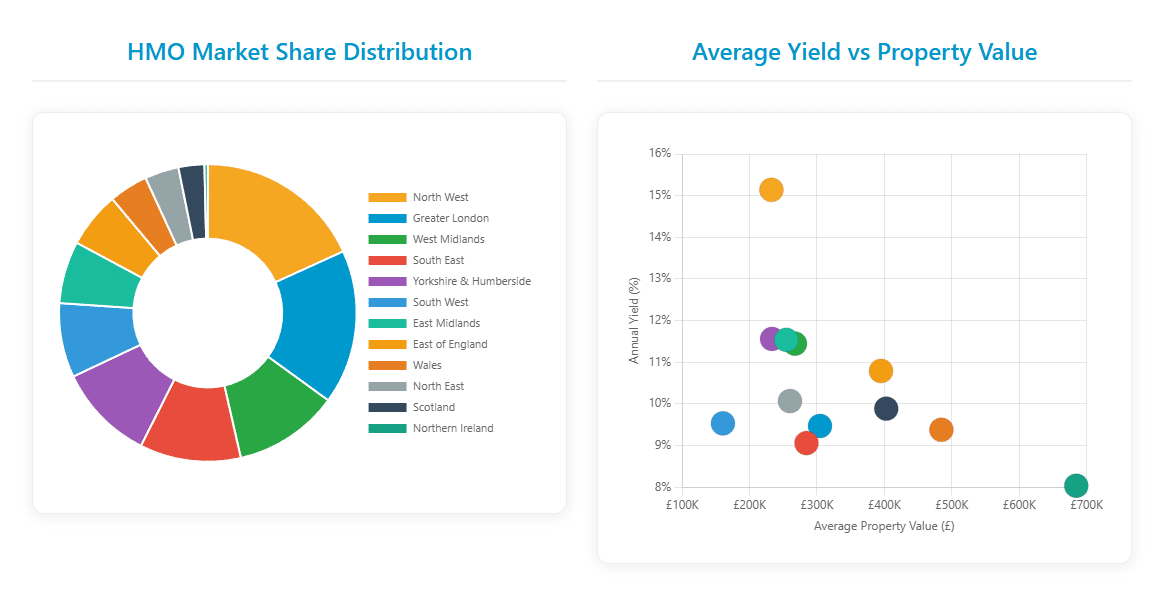
Our Q4 2025 HMO statistics explore comprehensive UK HMO data across different regions, analysing property values, rental yields and market distribution trends across a sample of 1,158 HMO properties. The average HMO yield sits at 9.6% - with the North East leading at 15.1% - while the average HMO value is £330,362 and average annual rent has risen 18.9% year-on-year to £33,591. That yield premium over a single let is exactly why a well-planned conversion can transform a deal's economics.
| Stage | Figure | Notes |
|---|---|---|
| Purchase price | £250,000 | Tired 4-bed house, below market |
| Bridge to purchase (75%) | £187,500 | Released on day one |
| Conversion works | £60,000 | Funded in tranches to a 6-bed HMO |
| GDV once converted | £390,000 | Valued on the finished HMO |
| Refinance exit (75% of GDV) | £292,500 | Repays the bridge, releases capital |
Figures are illustrative - your terms depend on the property, the works schedule and the end value. Model your own numbers with our bridging calculator.
Planning, Article 4 and HMO licensing
A small HMO of up to six occupants is usually permitted development - but in an Article 4 area, that right is removed and you need planning permission to convert. Larger or sui generis HMOs (seven or more occupants) always require full planning. Most councils also require a mandatory HMO licence for properties of five or more occupants forming two or more households.
We lend against the scheme either way and assess planning and licensing as part of the exit. Confirming the planning position before you commit is what keeps the conversion - and the refinance - on track.
How a converted HMO is valued
Valuation method has a big impact on your exit. Smaller HMOs are typically valued on bricks-and-mortar comparables - what similar houses sell for locally. Larger, professionally managed HMOs (usually seven beds or more) can be valued on a commercial, yield-based basis, which often produces a higher value and a stronger refinance.
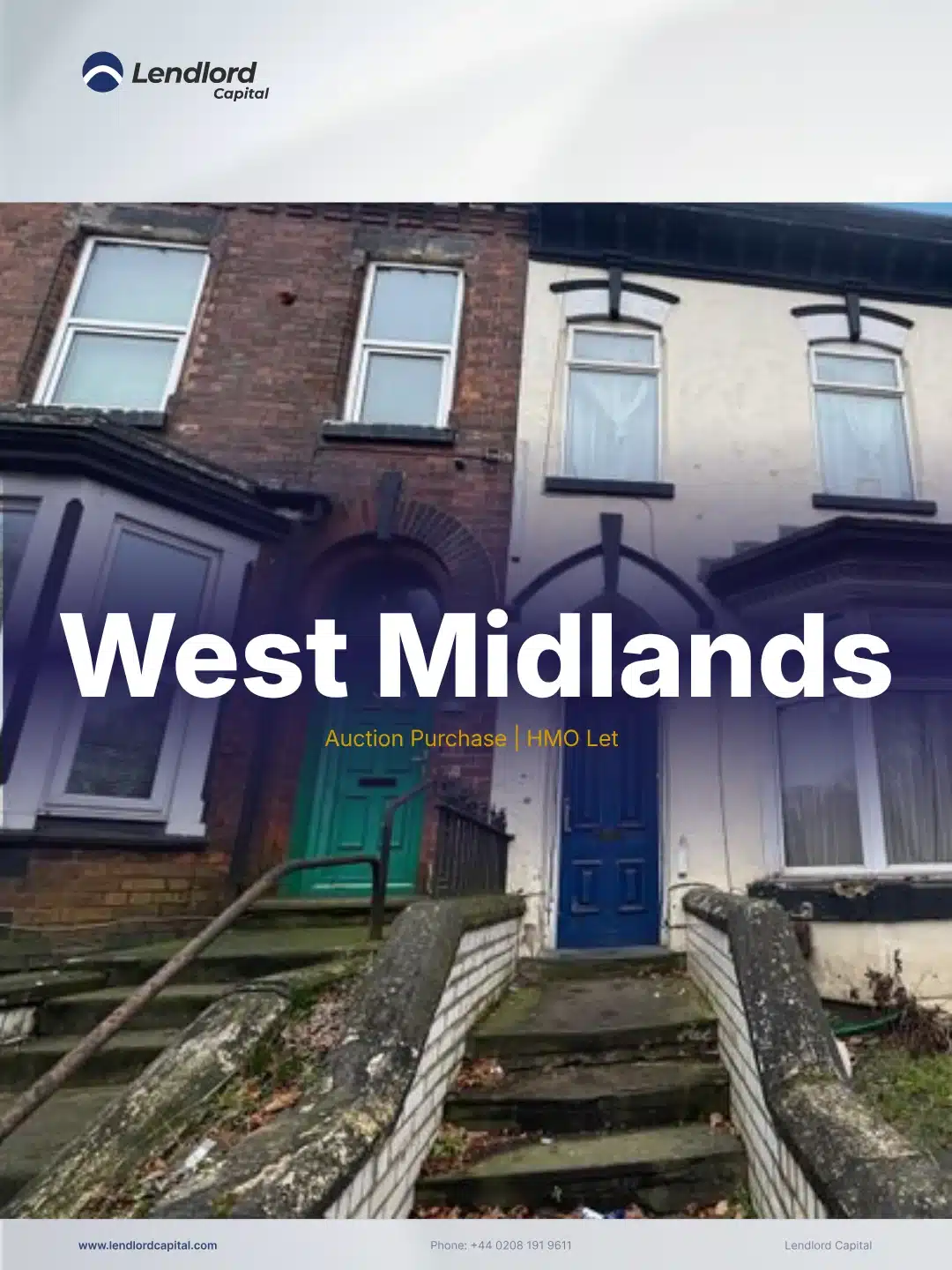
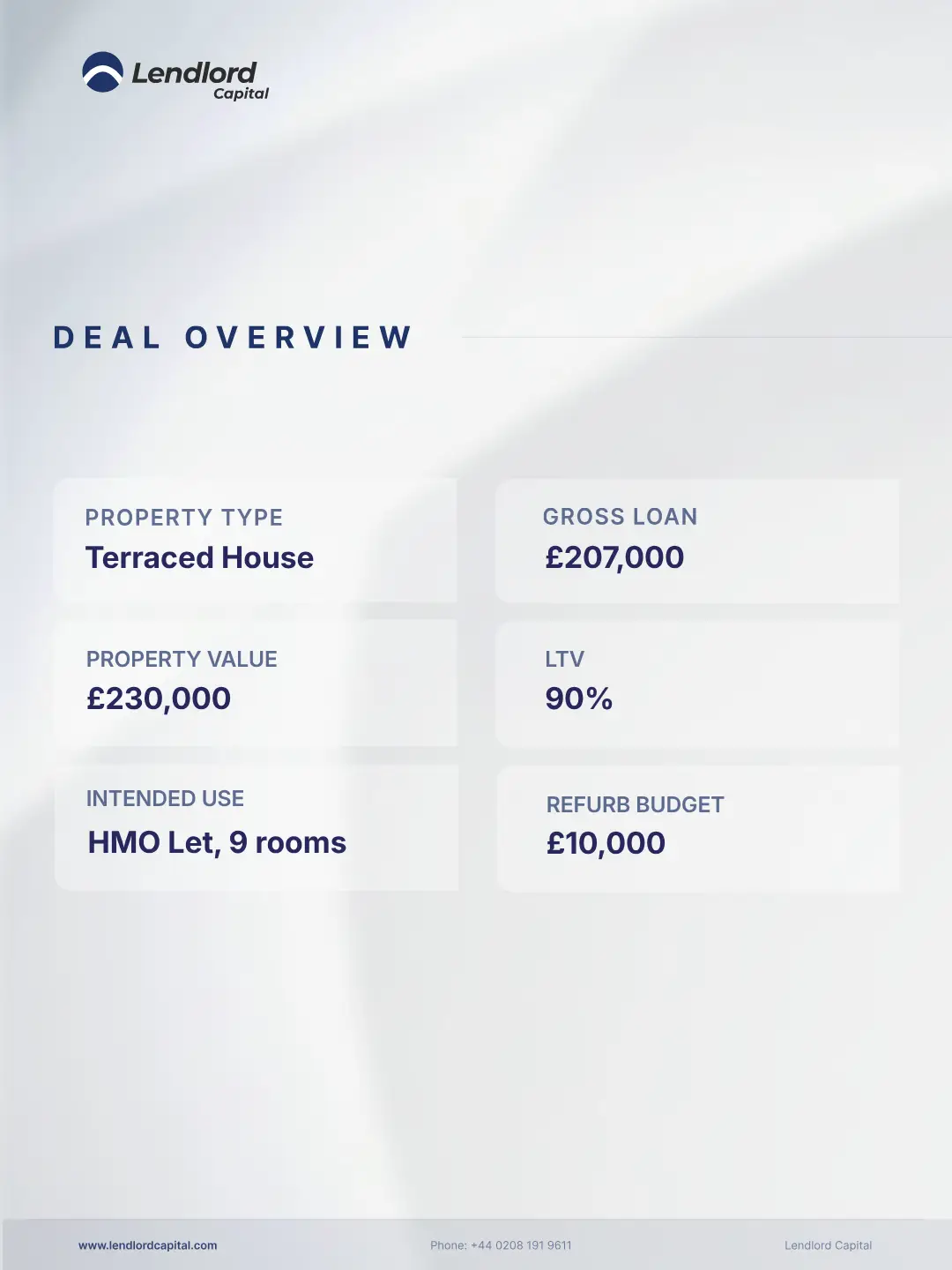
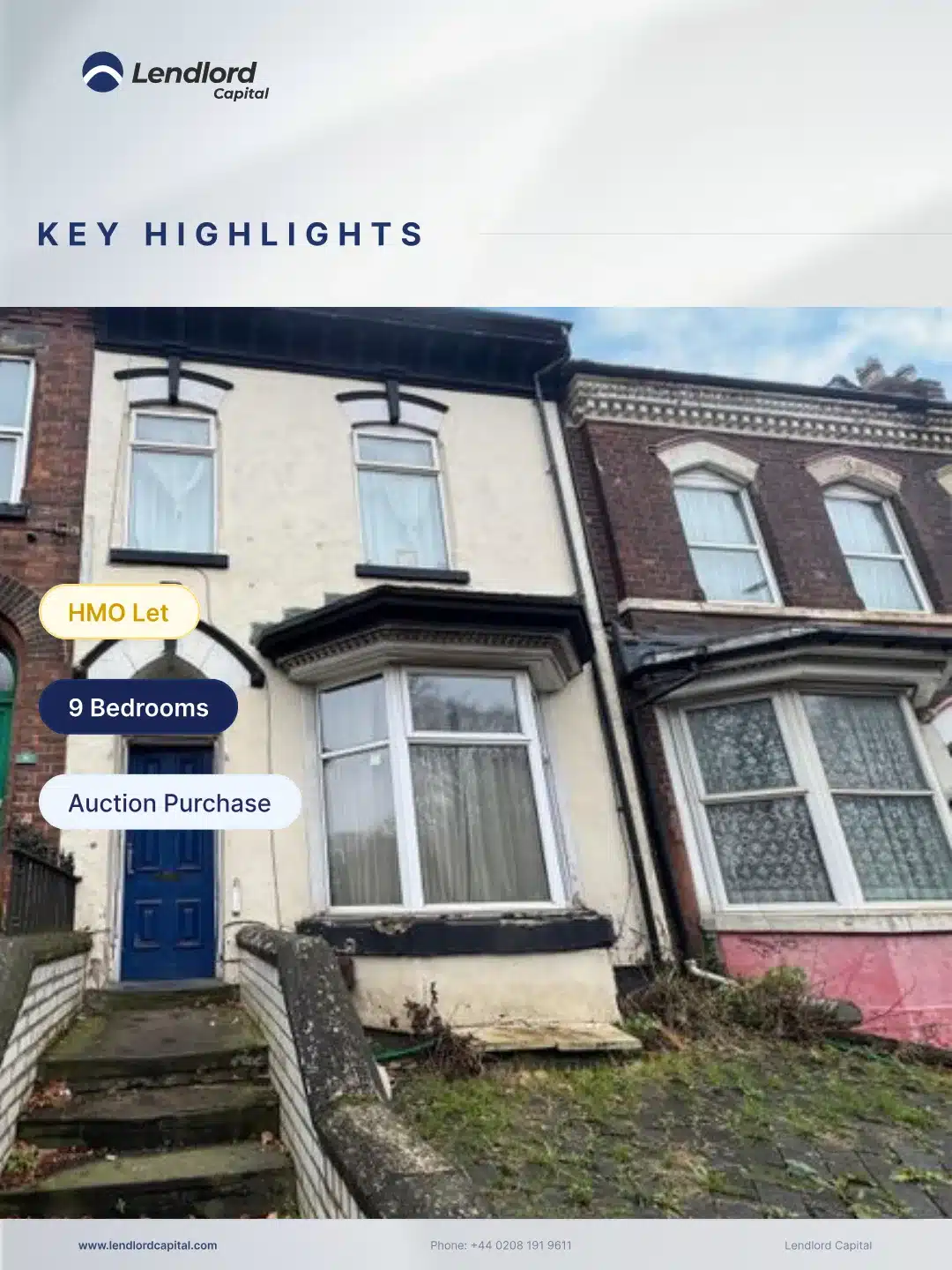
For a worked example of a high-leverage auction-to-HMO deal, see how an investor bought a £276k 9-bed HMO for £23k down in our 9-bed HMO auction case study.
How fast can an HMO conversion bridge complete?
Speed lets you secure the right stock before another buyer does. Here is a typical timeline:
Day 1: Submit the property and your conversion plan online - indicative terms the same day.
Days 1-2: Heads of Terms issued; the valuation and schedule of works are reviewed together.
Days 2-4: Valuation returned and legals instructed with dual representation.
Days 4-5: Purchase funds released - works tranches then drawn as each stage signs off.
HMO conversion bridge vs buy-to-let mortgage
| Feature | Lendlord HMO Bridge | BTL Mortgage |
|---|---|---|
| Funds mid-conversion property | Yes | No |
| Funds the works | Up to 70% of GDV | No |
| Time to complete | 5-7 days | 6-8 weeks |
| Unmortgageable / part-built | Yes | Usually declined |
| Broker fees | £0 (direct lender) | Varies |
| Term | 1-18 months | 25-35 years |
See how the same approach powers a BRRR strategy.
What you need to apply
- Photo ID and proof of address
- Details of the property and the purchase price
- A schedule of works and conversion plan (rooms, layout, costs)
- The planning position - including whether the property sits in an Article 4 area
- A clear exit strategy - typically refinance onto an HMO mortgage once let
- Asset & liability summary (and company docs if buying through an SPV)
Adverse credit, CCJs and limited-company (SPV) applicants are all considered - we assess each conversion on the strength of the scheme and the refinance exit.
Planning an HMO conversion?
Get an agreement in principle in minutes - indicative terms for your conversion, no obligation, no credit check.
Get Your Instant Quote Calculate My CostsDirect lender • No broker fees • Purchase + works in one facility
HMO conversion finance - frequently asked questions
What is HMO conversion finance?
HMO conversion finance is a short-term bridging loan used to buy a property and convert it into a House in Multiple Occupation, funding both the purchase and the refurbishment works in one facility. It is repaid by refinancing onto a long-term HMO mortgage once the property is finished and let.
How much can I borrow to convert a property into an HMO?
Lendlord lends up to 75% of the property value towards the purchase and up to 70% of the gross development value (GDV) to cover the works, released in tranches against monitoring surveyor sign-off. The exact figure depends on the deal, the works schedule and the end value once converted.
Do I need planning permission to convert a house into an HMO?
A small HMO of up to six occupants is usually permitted development, but in an Article 4 area you need planning permission. Larger or sui generis HMOs (seven or more occupants) require full planning. We lend against the scheme either way and assess planning risk as part of the exit.
How is a converted HMO valued?
Smaller HMOs are usually valued on bricks-and-mortar comparables, while larger, professionally managed HMOs (typically seven beds or more) can be valued on a commercial, yield-based basis - which often produces a higher value and a stronger refinance exit.
What is the exit strategy on an HMO conversion bridge?
The standard exit is to refinance onto a long-term HMO buy-to-let mortgage once the conversion is complete and the rooms are let, releasing capital and repaying the bridge. Some investors instead sell the finished HMO to a portfolio landlord.
Do you charge broker fees on HMO conversion finance?
No. As a direct HMO conversion lender, Lendlord charges no broker fees or intermediary commissions - you work directly with the specialists assessing your scheme, works budget and exit.
Related bridging finance
Bridging loan deals case studies
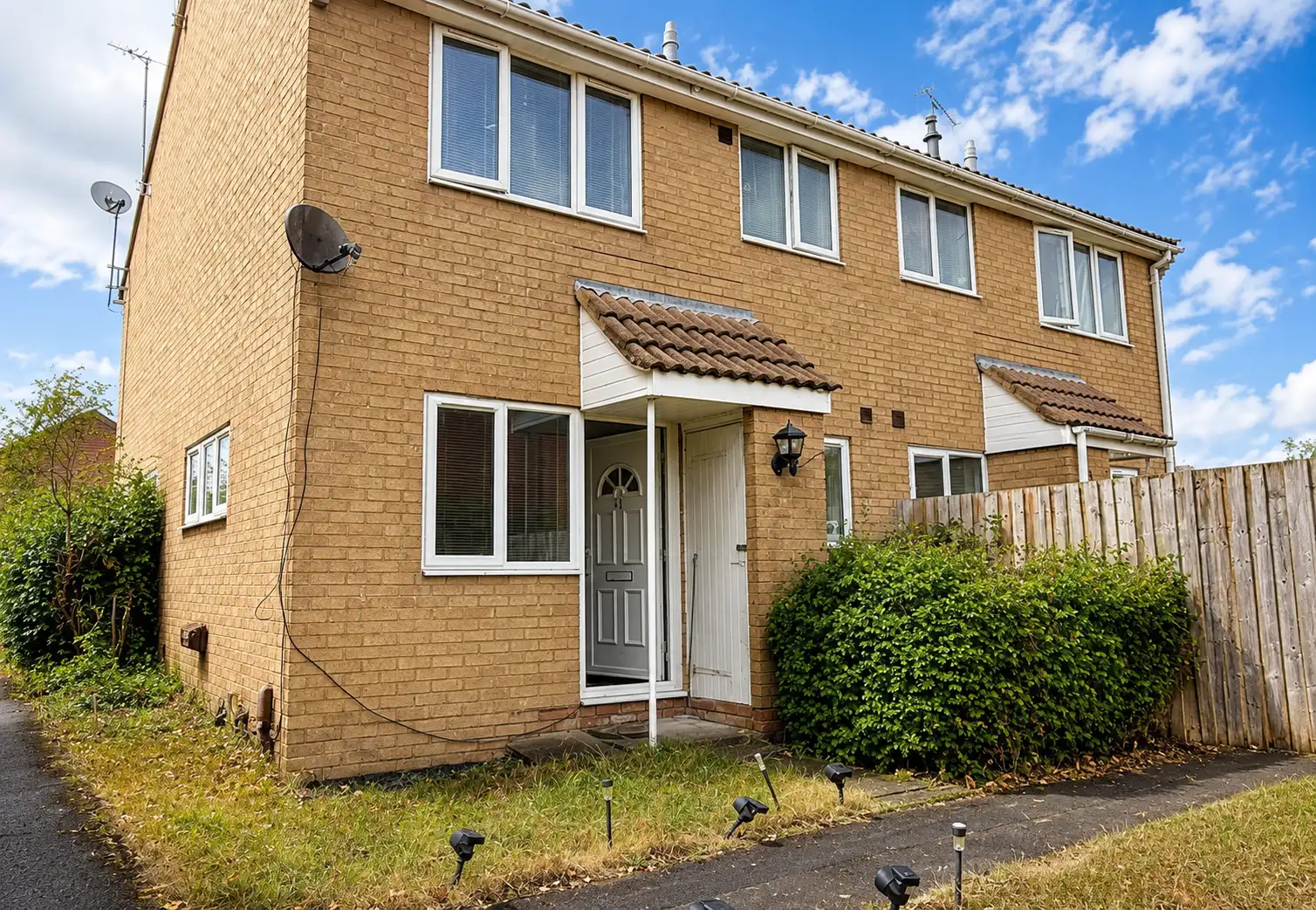
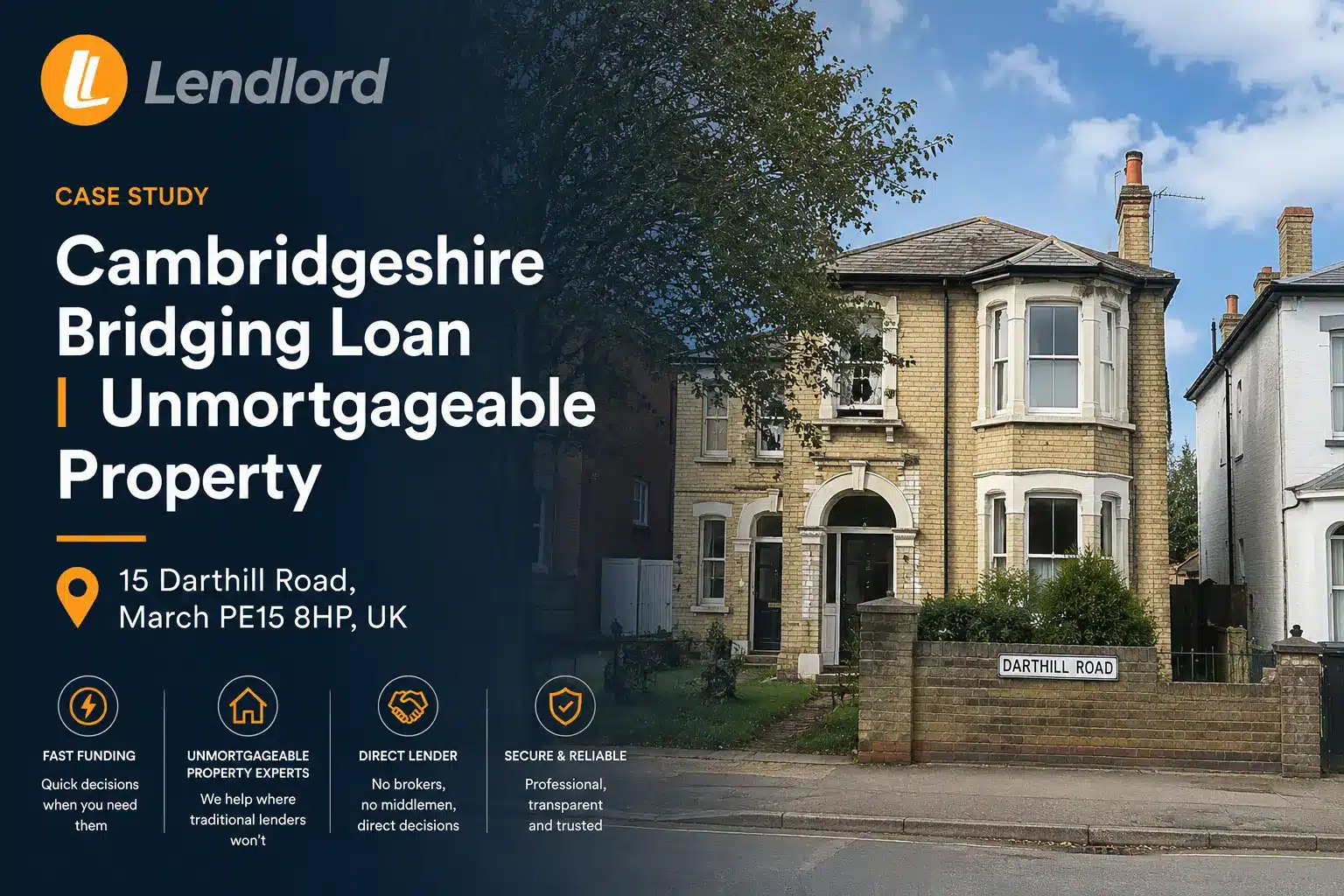
Guides & tools
What Is a Bridging Loan?How bridging works, rates and uses Bridging Loan Rates 2026LTV tiers, fees and total cost Bridging CalculatorModel your deal costs and feesDeal types
Auction FinanceComplete inside the 28-day deadline Buy-to-Let BridgingClose fast, let and refinance Refurbishment BridgingPurchase plus works in one facility Unmortgageable Property BridgingFund stock standard lenders decline Chain Break BridgingBuy before you sell BRRR Bridging FinanceBuy, refurbish, refinance, repeat Bad Credit BridgingCCJs, IVAs and defaults consideredOther UK locations
Bridging Loans LondonSouth East borough data and commuter deals Bridging Loans CambridgeshireCambridge and county district data and deals Short Term Bridging Loans WiltshireSwindon and county district data and deals Bridging Loans BirminghamWest Midlands borough data and deals Bridging Loans ManchesterGreater Manchester borough data and deals Bridging Loans LeedsWest Yorkshire district data and deals Reviewed by Claire - Senior Bridging Specialist
12+ years in property finance - CeMAP qualified - HMO & BRRR specialist
Reviewed by Claire - Senior Bridging Specialist
12+ years in property finance - CeMAP qualified - HMO & BRRR specialist
About Lendlord
Lendlord is a UK PropTech platform that helps property investors source, analyse, fund, and manage property deals in one place. As a direct bridging lender, Lendlord provides bridging loans from £30k-£3M at rates from 0.75% pm, with completions from 5 days and no broker fees. The platform serves investors across the UK, US, and Canada, with tools including AI sourcing, BTL/BRRR/flip analysers, portfolio management, and Making Tax Digital compliance.
Commercial Property Awards 2026 Finalist. Property Reporter Awards 2022 Winner.
Lendlord is a direct lender of short-term property finance to UK investors. This page is informational and does not constitute financial advice. Your property may be repossessed if you do not keep up repayments or repay the loan at the end of the term. Rates and terms are indicative and subject to individual assessment.