Bridging Loans Cambridgeshire - Fast Finance for Cambridge & County Investors
Cambridgeshire moves fast. Lendlord funds bridging loans across the city and Cambridgeshire from 0.75% pm , with up to 75% of purchase price and up to 90% of market valuation , completion in as little as 5 working days , and purchase plus refurbishment in one facility. Direct lender, no broker fees - built for auction lots, refurbs, HMO conversions and refinance exits.
Last Updated: June 24, 2026
- 0.75%
- From p/m
- 90%
- Max LTV
- 5 days
- To Fund
- £30k-£3M
- Loan Size

Bridging loans Cambridgeshire investors use when speed beats a mortgage timeline: auction completions, chain breaks, refurbs and refinance exits across the city and Cambridgeshire. Lendlord is a direct lender - get short term bridging loans from £30k to £3M at rates from 0.75% pm, with up to 75% of purchase price and up to 90% of market valuation.
Why Cambridgeshire investors use bridging finance
Cambridge is one of the UK’s strongest professional and student rental markets outside London. Average house prices in the city sit around £475k with estimated gross yields near 4.5%, while Fenland stock from £230k and South Cambridgeshire from £430k offer varied entry points across the county. However, that spread only creates opportunity when your exit strategy matches the district, not just the headline rate.
Bridging solves three Cambridgeshire-specific problems:
- Speed - auction deadlines at SDL Property Auctions and Allsop, chain breaks and off-market deals need certainty in days, not the 6–8 weeks a mortgage takes
- Leverage - up to 75% of purchase price, or up to 90% of market valuation, keeps more capital free across Cambridge city and county deals
- Flexibility - fund unmortgageable stock, heavy refurbs and HMO conversions in one facility, then refinance or sell at the new value

“In Cambridgeshire, planning, licensing and flood risk matter as much as price. A bridge that funds the purchase is only as good as the area where your refinance or sale exit still works once Article 4, selective licensing and due diligence costs are in.”
Claire - Senior Bridging Specialist, LendlordCambridgeshire property investment data (2026)
City-wide snapshot for UK property investors and landlords. Estimated gross yield = (average monthly rent × 12) ÷ average house price. House prices from ONS UK HPI (provisional April 2026); rents from ONS Private Rents (May 2026).
Cambridge Property Investment Data 2026
Prices, rents, estimated yields and bridging loan use cases for UK landlords
- £475k
- Avg house price
- £1,795/mo
- Avg private rent
- 4.5%
- Est. gross yield
- Speed
- Bridging angle
| Data point | Cambridge 2026 figure | Investor meaning | Bridging loan angle |
|---|---|---|---|
| Average house price | £475,000 (Feb 2026 ONS HPI) | Entry price, equity buffer, LTV screening | Size purchase bridge & refinance exit |
| Average private rent | £1,795/mo (Mar 2026 ONS) | Baseline rental income | Bridge-to-let & refinance modelling |
| Estimated gross yield | 4.5% | Rent-to-price strength indicator | BTL refinance exit viability |
| Detached average price | £795k | Premium stock, lower yield | Resale or high-spec refurb exit |
| Terraced average price | £495k | Core Cambridge investor stock | Professional let & refurb potential |
| Flats/maisonettes average price | £325k | City-centre entry point | Apartment purchase bridges |
| 1-bed average rent | £1,350/mo | Single-let / professional demand | City flat purchase bridges |
| 2-bed average rent | £1,650/mo | Couple & small family lets | Terraced BTL exits |
| 3-bed average rent | £1,950/mo | Family rental core | Refurb-to-let bridges |
| 4-bed+ average rent | £2,400/mo | HMO & large family lets | Conversion & multi-let exits |
Investor takeaway: Cambridge city prices sit well above the county average - model bridging costs against district-level yields from Fenland (£230k) to Cambridge (£475k) and verify postcode-level rents before you commit.
Indicative figures for deal screening only, not net returns or lending decisions. Verify with official ONS releases and local comparables before purchase.Cambridgeshire market snapshot (2026)
Updated figures for Cambridge and Cambridgeshire, sourced from the UK House Price Index, April 2026, ONS Cambridge local data and Lendlord market analysis:
| Metric | Cambridge / Cambridgeshire data | Investor takeaway |
|---|---|---|
| Average property price (Cambridge LA) | £475,000 (Feb 2026) | Entry cost and likely loan size; Cambridgeshire county median ~£305k |
| 12-month price change | -1.7% YoY (Cambridge); +1.2% YoY (East of England) | Cambridge prices broadly flat; outer districts vary |
| Flat / maisonette average | £325k (Cambridge) | City-centre flats offer lower entry than houses; check lease and service charges |
| Terraced average | £495k (Cambridge) | Core investor stock in city terraces; strong professional tenant demand |
| Approx. price per sq ft | ~£520 / sq ft (Cambridge) | Refurb and conversion appraisal benchmark |
| Cambridge sales volume (12m) | ~926 transactions | Solid liquidity for sale exits (median ~£489k) |
| Average days to sell | ~38 days (East of England sample) | Sale exit inside a 12–18 month bridge is realistic in liquid districts |
| Auction activity | SDL Eastern & Allsop regional catalogues | BMV terraced and ex-local authority stock in Fenland and Huntingdonshire |
| Discount to asking (UK avg.) | 3.5% below asking (Q1 2026) | Margin for bridging costs on negotiated buys |
Cambridgeshire district bridging data (2026)
Five Cambridgeshire local authority districts illustrate how different markets suit different bridge strategies. Prices and yields reflect Q1–Q2 2026 ONS and market data; sales volumes are indicative HMLR/Lendlord sample figures.
| District | Avg price | Yield | 12m price | Sales (12m) | HMO status | Best strategy |
|---|---|---|---|---|---|---|
| Cambridge | £475k | 4.5% | -1.7% | ~926 | Article 4 in designated areas | Professional BTL, refurb |
| South Cambridgeshire | £430k | 4.0% | +0.6% | ~1,100 | Selective licensing varies | Family BTL, resale |
| Huntingdonshire | £308k | 4.3% | +3.3% | ~1,074 | Medium HMO density | Commuter BTL, auction |
| East Cambridgeshire | £335k | 4.2% | +2.5% | ~845 | Lower HMO pressure | Family homes, BTL |
| Fenland | £230k | 5.1% | -2.8% | ~350 | Lower licensing density | High-yield BTL, auction |
Highlights: Highest headline price - Cambridge (£475k). Highest yield - Fenland (~5.1%). Most liquid - Huntingdonshire (~1,074 sales). Lowest entry - Fenland (£230k).
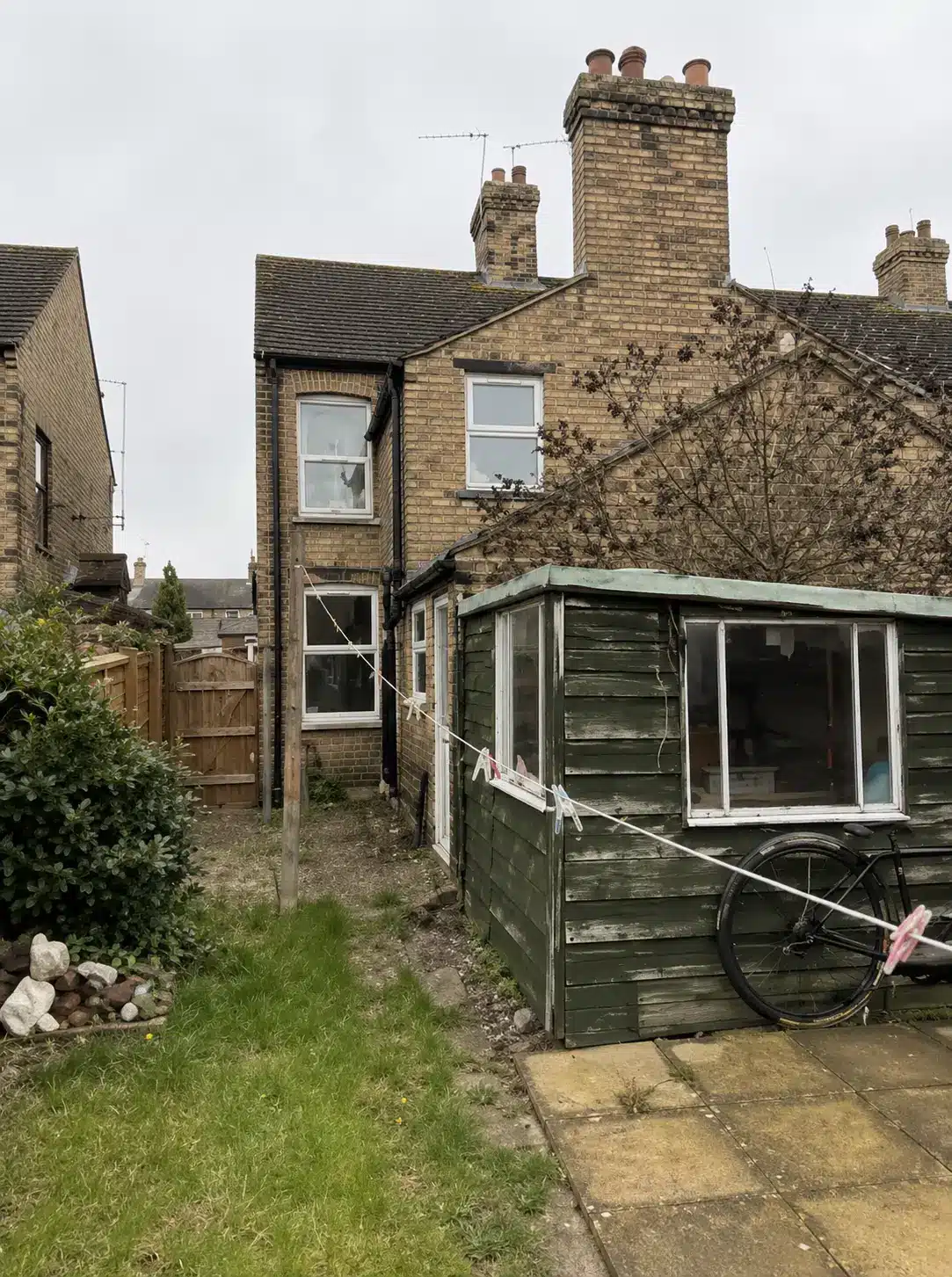
Real Cambridgeshire Bridging Loan Example: Unmortgageable Terrace House in March
One recent Cambridgeshire bridge involved a vacant mid-terrace house in March, Fenland, where a standard mortgage was difficult because of structural movement, suspected subsidence, damp and general modernisation works. The investor used short-term bridging finance to complete the purchase, carry out works and target a refinance exit once the property became mortgageable.
| Deal point | Case-study detail |
|---|---|
| Location | March, Cambridgeshire / Fenland |
| Property | Vacant mid-terrace house |
| Purchase price | £119,000 |
| Gross loan | £107,000 |
| Refurb budget | £16,000 |
| Expected GDV | £200,000 |
| Loan term | 12 months |
| Exit | Refinance onto buy-to-let mortgage |
| Main issue | Structural movement, suspected subsidence and damp |
This type of case shows why Cambridgeshire bridging finance is not only about speed. In lower-entry markets such as Fenland, the underwriting still depends on valuation evidence, property condition, works scope, GDV, borrower contribution and the strength of the refinance or sale exit.
Read the full Cambridgeshire unmortgageable property bridge case study
Which Cambridgeshire deal type fits your property?
Six common use cases for bridging loans in Cambridge and Cambridgeshire - auction purchases, buy-to-let, refurbishment, unmortgageable stock, chain breaks and HMO conversions:
- Auction finance - complete inside the 28-day deadline
- Buy-to-let bridging - close fast, let and refinance
- Refurbishment bridging - purchase plus works in one facility
- Unmortgageable bridging - fund stock standard lenders decline
- Chain break bridging - buy before you sell
- HMO conversion finance - fund purchase and works, exit onto HMO mortgage
Top 10 Cambridge & Cambridgeshire Landlord Investment Data Points for 2026
Key property, rental, planning and risk data Cambridgeshire landlords should check before investing, refinancing or using bridging finance.
Before investing in Cambridge and Cambridgeshire, landlords should look beyond headline city prices. In addition, the strongest deals are usually supported by district-level yield, realistic rental evidence, Article 4 and licensing checks, sale-exit liquidity and a credible refinance or resale strategy.
2026 Landlord Data Cambridgeshire BTL / HMO / Refurb / Bridge-to-LetPrices, rents and yields
| # | Data point | Cambridgeshire 2026 snapshot | Why landlords should care | Bridging finance relevance |
|---|---|---|---|---|
| 1 | Average house price | Cambridge LA average property price £475,000 in February 2026 (ONS HPI, provisional). Cambridgeshire districts range £230k (Fenland) to £475k (Cambridge). | Entry price, equity buffer and LTV all depend on district averages. | Purchase bridge size, valuation risk and refinance exit all flow from this baseline. |
| 2 | Average private rent | Average monthly private rent £1,795 in Cambridge in March 2026 (ONS Private Rents, provisional). | Rental income estimates and cross-market comparisons start here. | Bridge-to-let and refinance modelling rely on realistic rent assumptions. |
| 3 | Estimated gross yield | Approx. 4.5% gross yield at Cambridge city average; district sample range roughly 4.0% (South Cambridgeshire) to 5.1% (Fenland). | Gives a high-level view of rent-to-price strength, before postcode-level checks. | Whether the deal can support a BTL refinance exit depends on yield strength. |
| 4 | Rent by bedroom count | Indicative Cambridge average rents: 1-bed £1,350, 2-bed £1,650, 3-bed £1,950, 4+ bed £2,400. | Single-let, family-let and larger property strategies compare differently by bedroom count. | Modelling rental uplift after refurbishment or conversion needs bedroom-level rents. |
| 5 | Property type pricing | Indicative Cambridge average prices: detached £795k, semi-detached £575k, terraced £495k, flats/maisonettes £325k. | Budget, yield and strategy all shift by property type across Cambridgeshire. | Auction refurb, terrace conversion, flat purchase or portfolio growth each need different bridge sizing. |
Planning, licensing and tenant demand
| # | Data point | Cambridgeshire 2026 snapshot | Why landlords should care | Bridging finance relevance |
|---|---|---|---|---|
| 6 | Article 4 HMO restriction | Cambridge operates Article 4 Directions in designated areas. C3 to C4 HMO conversions need planning permission in affected zones. | A property near students is not automatically a viable HMO investment. | HMO conversion bridges need planning, licensing and exit checks before completion. |
| 7 | Selective licensing risk | Cambridge, Fenland and other districts operate selective and additional licensing in designated areas. | Landlords may need a licence before renting property in certain areas. | Licensing delays can affect letting, rental income and refinance timing. |
| 8 | Student demand zones | Cambridgeshire has major universities including the University of Cambridge and Anglia Ruskin University (Cambridge campus), plus regional colleges. | Student demand can support HMOs and shared accommodation, but planning rules still matter. | Strong tenant demand can support the exit strategy, especially for refurb-to-let or bridge-to-let deals. |
Risk checks and regeneration
| # | Data point | Cambridgeshire 2026 snapshot | Why landlords should care | Bridging finance relevance |
|---|---|---|---|---|
| 9 | Flood risk checks | Investors should check Environment Agency Flood Zone 2 and Flood Zone 3 data before buying. | Flood risk can affect insurance, valuation, saleability and lender appetite. | Flood risk can change loan appetite, legal checks and exit certainty. |
| 10 | Regeneration and infrastructure | Key areas include Cambridge Biomedical Campus, Eddington, South Cambridgeshire growth corridor, Ely and Huntingdon commuter towns. | Regeneration can support long-term demand, but investors should verify actual delivery. | Refurbishment and value-add deals may benefit from improving local demand and future resale/refinance potential. |
Prices, rents and yields
1 Average house price- Cambridgeshire 2026 snapshot
- Cambridge LA average property price £475,000 in February 2026 (ONS HPI, provisional). Cambridgeshire districts range £230k (Fenland) to £475k (Cambridge).
- Why landlords should care
- Entry price, equity buffer and LTV all depend on district averages.
- Bridging finance relevance
- Purchase bridge size, valuation risk and refinance exit all flow from this baseline.
- Cambridgeshire 2026 snapshot
- Average monthly private rent £1,795 in Cambridge in March 2026 (ONS Private Rents, provisional).
- Why landlords should care
- Rental income estimates and cross-market comparisons start here.
- Bridging finance relevance
- Bridge-to-let and refinance modelling rely on realistic rent assumptions.
- Cambridgeshire 2026 snapshot
- Approx. 4.5% gross yield at Cambridge city average; district sample range roughly 4.0% (South Cambridgeshire) to 5.1% (Fenland).
- Why landlords should care
- Gives a high-level view of rent-to-price strength, before postcode-level checks.
- Bridging finance relevance
- Whether the deal can support a BTL refinance exit depends on yield strength.
- Cambridgeshire 2026 snapshot
- Indicative Cambridge average rents: 1-bed £1,350, 2-bed £1,650, 3-bed £1,950, 4+ bed £2,400.
- Why landlords should care
- Single-let, family-let and larger property strategies compare differently by bedroom count.
- Bridging finance relevance
- Modelling rental uplift after refurbishment or conversion needs bedroom-level rents.
- Cambridgeshire 2026 snapshot
- Indicative Cambridge average prices: detached £795k, semi-detached £575k, terraced £495k, flats/maisonettes £325k.
- Why landlords should care
- Budget, yield and strategy all shift by property type across Cambridgeshire.
- Bridging finance relevance
- Auction refurb, terrace conversion, flat purchase or portfolio growth each need different bridge sizing.
Planning, licensing and tenant demand
6 Article 4 HMO restriction- Cambridgeshire 2026 snapshot
- Cambridge operates Article 4 Directions in designated areas. C3 to C4 HMO conversions need planning permission in affected zones.
- Why landlords should care
- A property near students is not automatically a viable HMO investment.
- Bridging finance relevance
- HMO conversion bridges need planning, licensing and exit checks before completion.
- Cambridgeshire 2026 snapshot
- Cambridge, Fenland and other districts operate selective and additional licensing in designated areas.
- Why landlords should care
- Landlords may need a licence before renting property in certain areas.
- Bridging finance relevance
- Licensing delays can affect letting, rental income and refinance timing.
- Cambridgeshire 2026 snapshot
- Cambridgeshire has major universities including the University of Cambridge and Anglia Ruskin University (Cambridge campus), plus regional colleges.
- Why landlords should care
- Student demand can support HMOs and shared accommodation, but planning rules still matter.
- Bridging finance relevance
- Strong tenant demand can support the exit strategy, especially for refurb-to-let or bridge-to-let deals.
Risk checks and regeneration
9 Flood risk checks- Cambridgeshire 2026 snapshot
- Investors should check Environment Agency Flood Zone 2 and Flood Zone 3 data before buying.
- Why landlords should care
- Flood risk can affect insurance, valuation, saleability and lender appetite.
- Bridging finance relevance
- Flood risk can change loan appetite, legal checks and exit certainty.
- Cambridgeshire 2026 snapshot
- Key areas include Cambridge Biomedical Campus, Eddington, South Cambridgeshire growth corridor, Ely and Huntingdon commuter towns.
- Why landlords should care
- Regeneration can support long-term demand, but investors should verify actual delivery.
- Bridging finance relevance
- Refurbishment and value-add deals may benefit from improving local demand and future resale/refinance potential.
Fast funding helps, but Cambridgeshire investors should check district yield, Article 4, licensing, sale-exit liquidity and refinance appetite before completion.
Estimated gross yield is a high-level indicator only. Always validate with postcode-level comparables, property condition, finance costs, tax, licensing and refurbishment budget.
Interactive Cambridgeshire Property Investment Map
Explore Cambridge and Cambridgeshire by district boundary, yields, selective licensing, Article 4 HMO zones, rail hubs, universities, brownfield sites, flood risk and investor notes. Toggle layers in the filter panel to screen deals before you apply for bridging finance. However, data is indicative - always verify with official sources.
Scroll to load map…Cambridgeshire map data
| Layer | Area / location | Investor angle | Bridging use case | Exit route |
|---|---|---|---|---|
| District yield | Cambridge | 4.5% est. gross yield, £475k avg price | Purchase bridge & BTL refinance | BTL mortgage once let |
| District yield | Fenland | Lowest entry, higher yield postcodes | Auction refurb bridges | BTL or resale post-works |
| District yield | South Cambridgeshire | Family rental market, Cambridge fringe | Premium BTL bridges | BTL refinance |
| Article 4 | Cambridge designated areas | C3 to C4 needs planning | HMO conversion bridge with planning buffer | HMO mortgage post-consent |
| Universities | UoC, Anglia Ruskin | Student & professional demand | Bridge-to-let near campuses | BTL or HMO refinance |
| Rail | Cambridge station | London Liverpool Street ~50 min | Commuter corridor purchase bridges | BTL refinance |
| Investor note | Chesterton | City fringe professional lets | Apartment purchase bridges | BTL refinance |
| Investor note | Cherry Hinton | Family rental suburb | Terraced refurb bridges | BTL refinance |
| Investor note | Cambridge Biomedical Campus | Life-sciences employment hub | Professional let bridges | BTL refinance |
| Flood risk | Zones 2 & 3 | River Cam & Ouse corridors | Due diligence before bridge drawdown | Confirm lender acceptance pre-exit |
| Planning | Brownfield register | South Cambridgeshire & Eddington | Development & refurb bridges | Sale or refinance at GDV |
This map is for editorial and research purposes only. Investors should verify licensing, planning, flood risk and local authority requirements with official sources before making a purchase decision.
Map data sources: ONS Open Geography Portal (LAD boundaries); ONS HPI & Private Rents (district yields); Cambridge City Council (selective licensing & Article 4 HMO); Great Northern / Greater Anglia rail; planning.data.gov.uk brownfield register; Environment Agency Flood Map for Planning; HESA university data; Lendlord editorial investor notes.
Basemap: OpenFreeMap / OpenStreetMap.
How to assess a Cambridgeshire bridge exit
Before you price a Cambridge city or Cambridgeshire deal, score the district against seven data points that drive whether your bridge repays cleanly. Because exit risk varies by area, use the table below as a screening guide:
| Data point | Why it matters |
|---|---|
| Typical LTV appetite | Some districts and asset types fund more easily than others. Premium Cambridge city stock may cap at lower LTV; below-market terraced stock in Fenland or Huntingdonshire often supports higher leverage. |
| Estimated bridge rate range | Useful for comparing total cost, not just the headline monthly rate. |
| Typical valuation confidence | Liquid, well-traded districts usually have stronger comparable evidence, which speeds valuation and supports tighter pricing. |
| Refinance risk score | Based on yield, rent levels, property value and lender appetite for the asset class on exit. |
| Sale-exit risk score | Based on transaction volume, price trend and days-on-market. Weak liquidity extends holding cost. |
| Heavy refurb suitability | Flags areas where GDV uplift from works may justify funding the refurbishment in tranches. |
| Auction bridge suitability | Measures auction stock, typical discounts and post-auction liquidity for resale or refinance. |
District exit scores (indicative)
Scores are illustrative guides for deal screening, not lending decisions. Low = favourable, High = more caution needed.
| District | LTV appetite | Rate range p/m | Valuation confidence | Refinance risk | Sale-exit risk | Heavy refurb | Auction bridge |
|---|---|---|---|---|---|---|---|
| Cambridge | Medium | 0.88–1.05% | High | Medium | Low | Medium | Medium |
| South Cambridgeshire | Medium | 0.88–1.02% | High | Medium | Medium | Medium | Medium |
| Huntingdonshire | High | 0.82–0.98% | Medium | Low | Medium | High | High |
| East Cambridgeshire | Medium-High | 0.85–1.00% | Medium | Medium | Medium | Medium | Medium |
| Fenland | High | 0.80–0.95% | Medium | Low | Medium | High | High |
Indicative scores only. Your actual rate and LTV depend on the property, works, exit and security. Model your deal on the bridging calculator.
Key location factors across Cambridge & Cambridgeshire
Price and yield are not the whole story. These location drivers affect tenant demand, resale strength and whether a refinance exit stacks up:
- Cambridge employment cluster - life sciences, tech and university spin-outs; Biomedical Campus and Science Park drive professional tenant demand
- London commuter rail - Cambridge to Liverpool Street in under an hour supports city and South Cambridgeshire rental demand
- Universities - University of Cambridge and Anglia Ruskin drive student and graduate rental demand in city fringe postcodes
- Growth corridors - South Cambridgeshire, Eddington and Cambourne; verify delivery timelines before pricing refurb exits
- Article 4 HMO (designated areas) and selective licensing - check planning and licensing before HMO conversion bridges
- Auction depth - SDL Eastern and Allsop catalogues support auction bridges in Fenland and Huntingdonshire
- Flood risk - River Cam, Great Ouse and Nene corridors; check Environment Agency zones 2 & 3 before drawdown
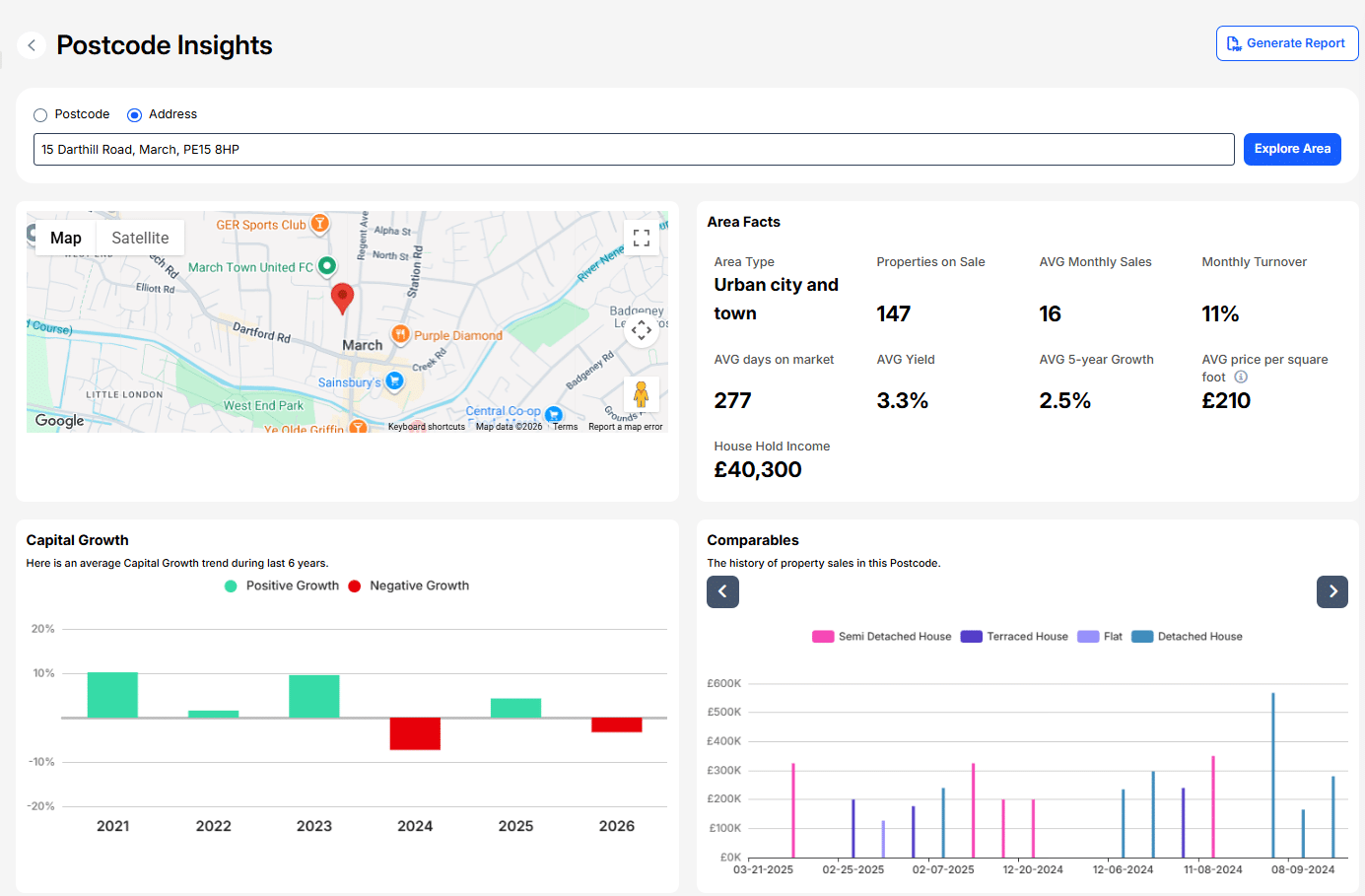
Cambridgeshire auction finance
Cambridge and Cambridgeshire have active auction stock through SDL Property Auctions, Allsop and regional catalogues across Fenland, Huntingdonshire and outer districts. When the hammer falls, you typically have 28 days to complete - which rules out standard mortgage timelines.
Lendlord funds Cambridgeshire auction purchases at up to 75% of purchase price, or up to 90% of market valuation where the security supports it, with indicative terms returned the same day you apply. Therefore, pre-auction Heads of Terms are available so you can bid with confidence.
How much can you borrow in Cambridgeshire?
| Facility | Maximum | Notes |
|---|---|---|
| Purchase price | Up to 75% of purchase price | Standard cap against what you pay |
| Market valuation | Up to 90% of market valuation | Where security and valuation support higher leverage |
| Refurbishment works | Up to 70% of GDV | Released in tranches against surveyor sign-off |
| Loan size | £30k to £3M | Direct lender, no broker fees |
| Term | 1 to 18 months | Structured around your exit |
Refinance exits in Cambridgeshire
Most Cambridgeshire bridges exit onto a long-term mortgage once the property is let or refurbished. In 2026, that means matching asset class to lender appetite - for example, BTL refi once let, or HMO refi after consent:
- Article 4 in Cambridge - C3 to C4 HMO conversions need planning permission in designated areas; factor 8–12 week consent timelines into HMO bridge terms
- Selective and additional licensing in designated areas across Cambridge, Fenland and other districts - factor licence cost and compliance into your bridge term
- Student demand near the University of Cambridge and Anglia Ruskin supports HMO and shared-house exits, but Article 4 rules still apply
- Six-month rule - many BTL lenders want six months’ ownership before remortgaging at post-works value; structure your bridge term accordingly
Funding a Cambridgeshire deal?
Get indicative Cambridgeshire bridging terms in minutes - no obligation, no credit check.
See Your Cambridgeshire Loan Options Model Your CostsDirect lender • Cambridgeshire • No broker fees
Cambridgeshire bridging loan case studies
Real deal examples from across the county - how investors used short-term finance where standard mortgages were not available. See the Fenland terrace preview above or open the full write-up below.
- Unmortgageable terrace in March - £119k purchase, £200k GDV target, structural and damp risk, dynamic bridge to refinance exit (Fenland)
Cambridgeshire bridging finance - frequently asked questions
Can you get a bridging loan in Cambridgeshire?
Yes, because Lendlord funds bridging loans across Cambridge and Cambridgeshire for purchases, refurbishments, auction lots, HMO conversions and refinance exits. Loans from £30k to £3M at rates from 0.75% per month, with completion in as little as 5 working days.
How much can you borrow on a Cambridgeshire bridging loan?
In most cases, Lendlord lends up to 75% of purchase price, or up to 90% of market valuation. Purchase and refurbishment works can be funded in one facility, with up to 70% of GDV for the works element.
Does Cambridgeshire Article 4 affect bridging finance for HMOs?
Yes. Cambridge operates Article 4 Directions in designated areas for HMOs, so C3 to C4 conversions need planning permission. As a result, factor consent timelines into your bridge term and confirm exit lender appetite before you complete.
How fast can Cambridgeshire bridging complete?
Lendlord returns indicative terms within minutes and can release funds in as little as 5 working days. Because speed matters in Cambridgeshire - where auction deadlines at SDL Property Auctions and Allsop, and competitive purchases, require certainty - you should apply before you commit.
What is the typical exit on a Cambridgeshire bridge?
The most common exits are refinance onto a buy-to-let or HMO mortgage once the property is let, or sale after refurbishment. For example, match exit type to area yield, selective licensing, student demand and flood-risk checks.
Do you charge broker fees on Cambridgeshire bridging?
No. Lendlord funds Cambridgeshire deals directly, so there are no broker fees or intermediary commissions on investor applications.
Related bridging finance
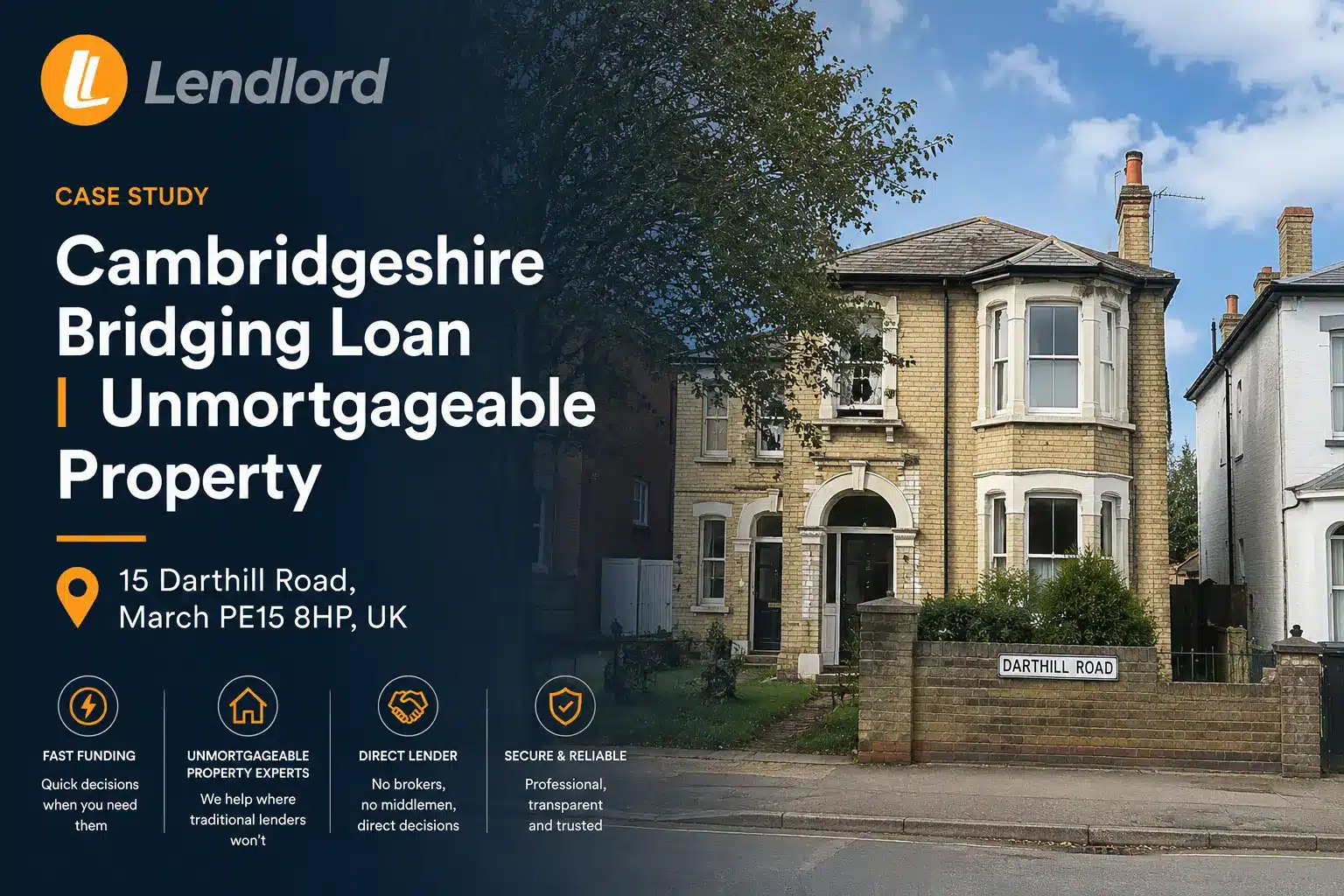
Bridging loan deals case studies
Guides & tools
What Is a Bridging Loan?How bridging works, rates and uses Bridging Loan Rates 2026LTV tiers, fees and total cost Bridging CalculatorModel your Cambridgeshire deal costsDeal types
Auction FinanceComplete inside the 28-day deadline Buy-to-Let BridgingClose fast, let and refinance Refurbishment BridgingPurchase plus works in one facility Unmortgageable Property BridgingFund stock standard lenders decline Chain Break BridgingBuy before you sell HMO Conversion FinanceArticle 4 areas and HMO exits BRRR Bridging FinanceBuy, refurbish, refinance, repeat Bad Credit BridgingCCJs, IVAs and defaults consideredOther UK locations
Bridging Loans LondonSouth East borough data and commuter deals Bridging Loans BirminghamWest Midlands borough data and deals Bridging Loans ManchesterGreater Manchester borough data and deals Bridging Loans LeedsWest Yorkshire district data and deals Short Term Bridging Loans WiltshireSwindon and county district data and deals
Reviewed by Claire - Senior Bridging Specialist
12+ years in property finance - CeMAP qualified - Cambridgeshire and East of England specialist
About Lendlord
Lendlord is a UK PropTech platform that helps property investors source, analyse, fund, and manage property deals in one place. As a direct bridging lender, Lendlord provides bridging loans from £30k-£3M at rates from 0.75% pm, with completions from 5 days and no broker fees. The platform serves investors across the UK, US, and Canada, with tools including AI sourcing, BTL/BRRR/flip analysers, portfolio management, and Making Tax Digital compliance.
Commercial Property Awards 2026 Finalist. Property Reporter Awards 2022 Winner.
Lendlord is a direct lender of short-term property finance to UK investors. Property data and map layers on this page are indicative guides for deal screening, not lending decisions or financial advice.
Sources include ONS UK HPI and Private Rents (2026) and Lendlord market analysis. Your property may be repossessed if you do not keep up repayments or repay the loan at the end of the term.