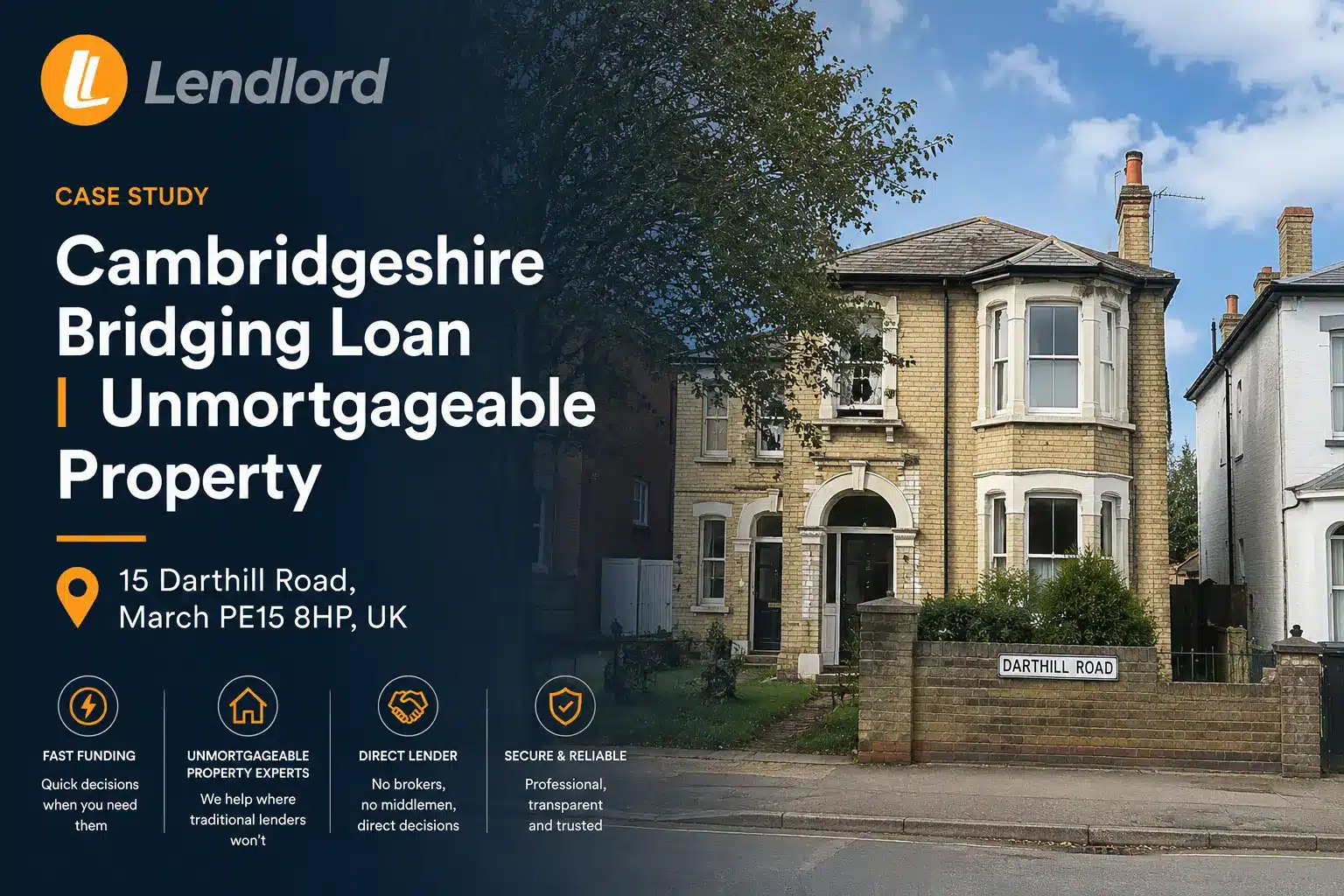
Cambridgeshire Bridging Loan Case Study: Funding an Unmortgageable Terrace House in March
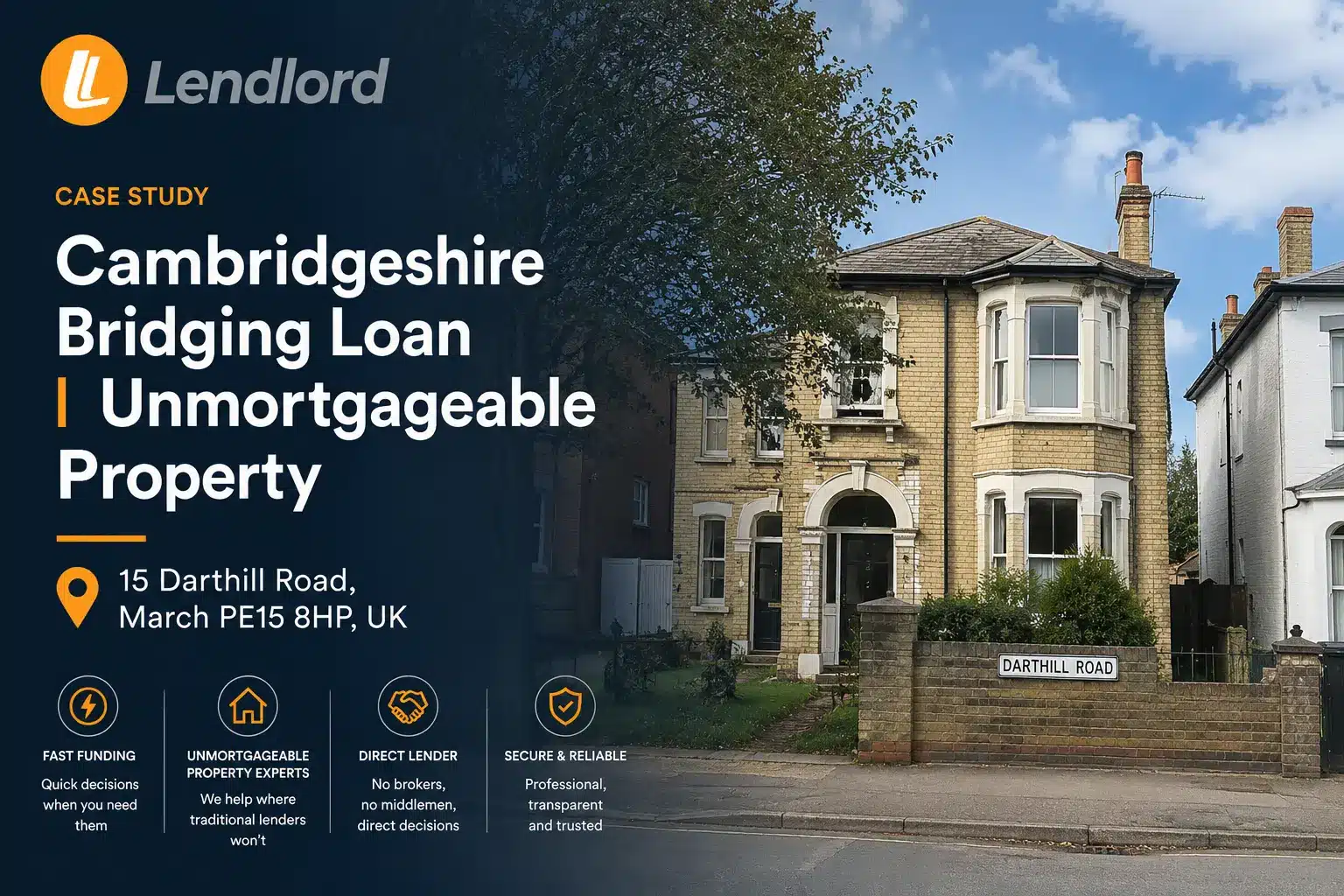
This Cambridgeshire bridging loan case study shows how short-term property finance can help where a standard mortgage is difficult or unavailable. The security was a vacant freehold mid-terrace house in March , close to the town centre; the investor bought below nearby comparable sales but took on structural movement, suspected subsidence and damp. However , the deal required a lender to look beyond the purchase price and assess value, condition, remedial-work risk and the exit route.
Last Updated: June 17, 2026
- 89.9%
- LTV (purchase)
- 53.5%
- LTGDV
- 79.3%
- LTC
- 68.1%
- Uplift to GDV
The Investor Objective
The borrower, a private limited company property investor, acquired a vacant terrace house on Darthill Road through an auction route (Auction House Lincolnshire). The strategy was to buy below the level of nearby March sales, complete light refurbishment and reposition the asset for rental income, then exit by refinance onto a buy-to-let mortgage once remedial works made the property mortgageable.
The commercial logic was not the purchase price alone. Therefore, the upside sat in the gap between £119,000 paid, a £16,000 refurbishment budget and an expected value after works of £200,000 - a projected uplift of £81,000 (68.1%) from purchase price to GDV.
| Location | March, Cambridgeshire (Fenland) |
|---|---|
| Property type | Mid-terrace house (1914, solid brick, ~94 sq m) |
| Tenure | Freehold |
| Occupancy | Vacant |
| Property purpose | Let after works |
| Main issue | Structural movement, suspected subsidence, rising damp, roof loading |
| Mortgageability | Not suitable for standard mortgage without specialist reports and remedial works |
| Purchase price | £119,000 |
| Required loan (gross) | £107,000 |
| Refurbishment budget | £16,000 (light refurbishment) |
| Expected property value / GDV | £200,000 |
The Property
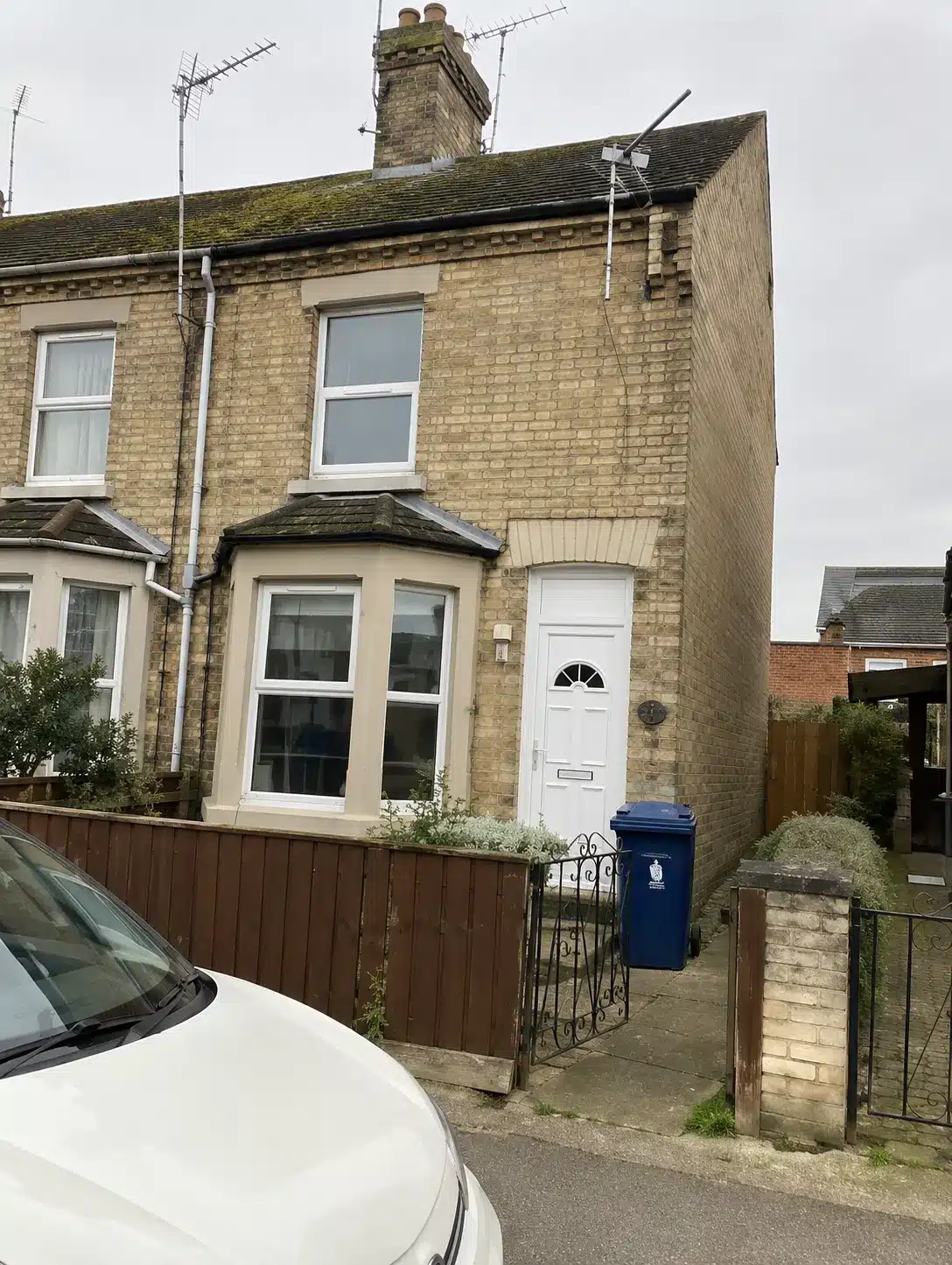
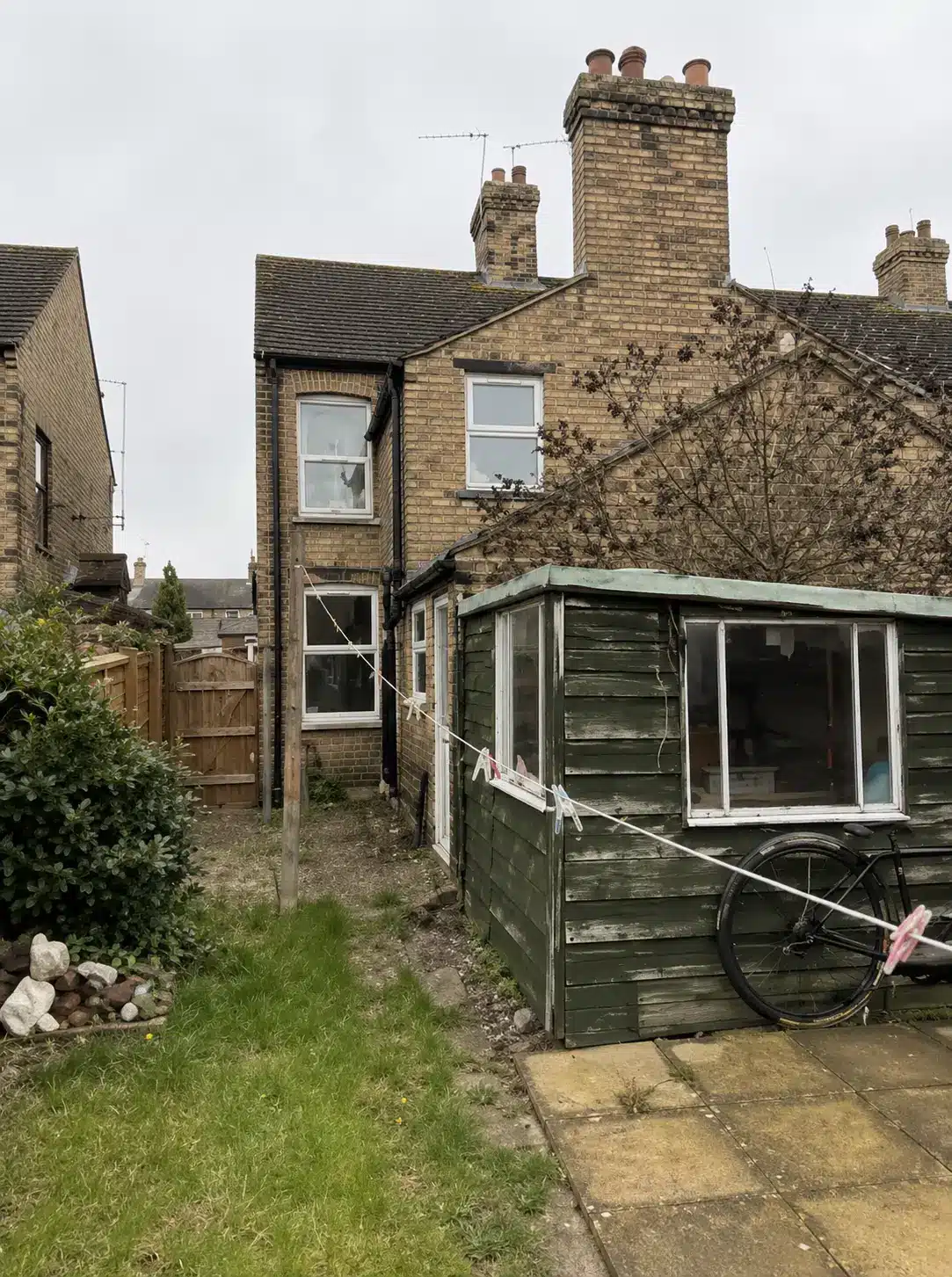
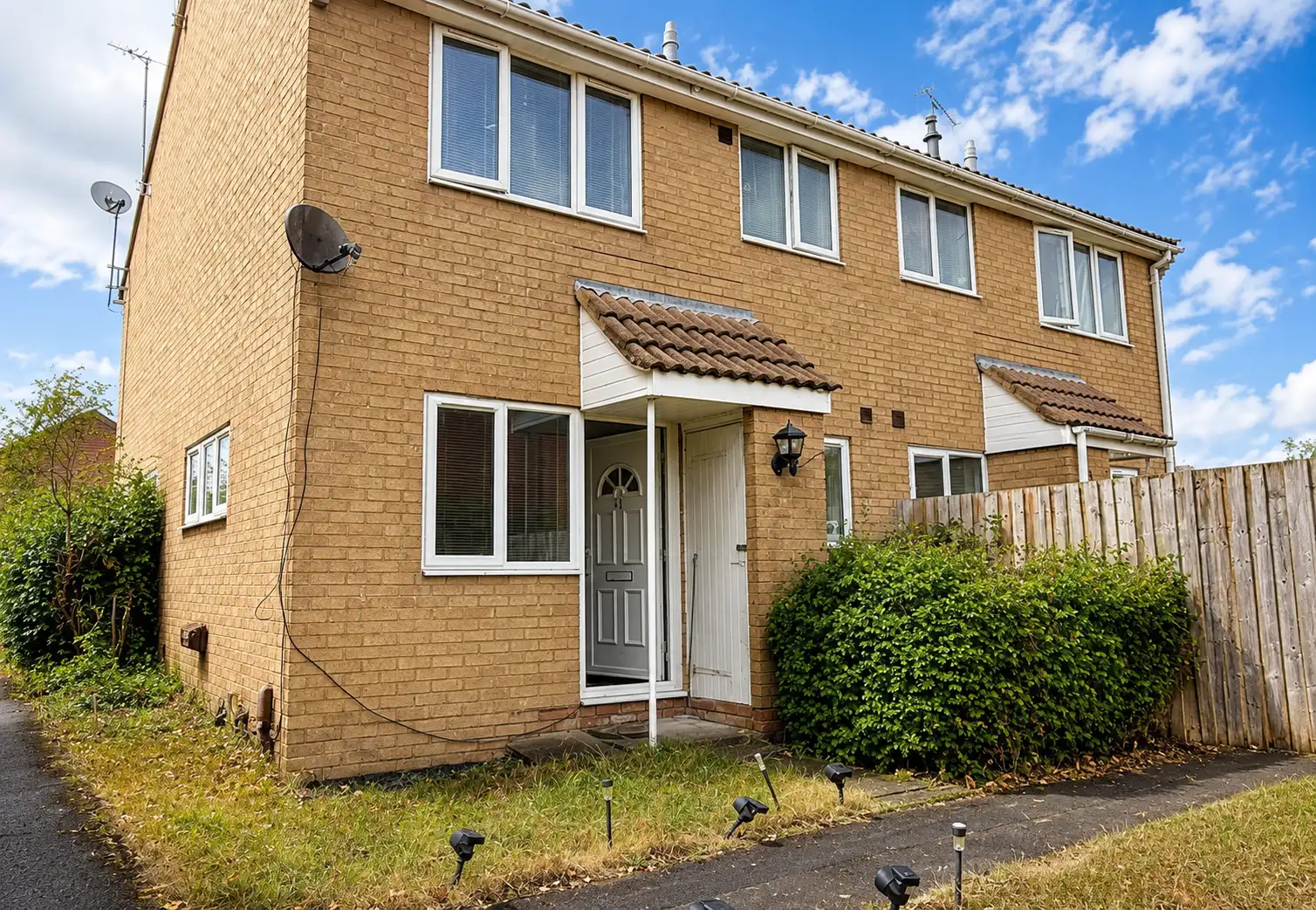
15 Darthill Road is a 1914 mid-terrace house with solid brick walls, concrete tile roof, approximately 94 sq m of living space and front and rear gardens totalling around 100 sq m. Council Tax Band A. Inspectors found the property vacant, with gas central heating and mains electricity, water, drainage and gas connected.
Accommodation comprises two reception rooms and one bedroom on the ground floor, two bedrooms and one bathroom on the first floor, plus an attached outside WC. The valuer rated overall condition and structure as poor, and assessed external, internal, garden and locality as fair.
The Challenge: A Below-Market Purchase with Structural Risk
The property offered a lower entry price than several nearby March sales, but in particular, the valuation raised serious condition concerns that would block most standard residential or buy-to-let lenders immediately.
- The house stood vacant and needed general modernisation.
- The valuer recorded significant subsidence in the central part of the house and distortion to the side wall.
- Previous owners fitted concrete roof tiles without strengthening the roof timbers.
- The valuer found rising damp in parts of the rear ground-floor rooms.
- The valuer could not determine market value in existing condition until a structural engineer’s report arrived.
- Mainstream lenders would not mortgage the property in its current state.
Cracking was visible in a rear bedroom and at doorways on the ground floor. Because of this, the lender needed comfort around security value, specialist reports, works scope and a credible refinance or sale exit - not just speed of completion.

“Unmortgageable does not mean unfinanceable. The question is whether the works plan, the reports, the GDV assumption and the exit stack up before you commit.”
Claire - Senior Bridging Specialist, LendlordWhy a Bridging Loan Was the Right Fit
A standard mortgage lender may decline because of structural issues, damp and the inability to value the property in its current condition. For example, a bridging loan for unmortgageable property can fund against short-term security value where there is a credible works plan and exit.
- The borrower could use the 12-month term to obtain engineer and damp reports, complete remedial works and prepare for refinance.
- Lendlord structured the facility as a dynamic bridge with retained interest, keeping monthly servicing out of the cash flow during the works phase.
- The case was not just “fast finance”; it was risk-managed finance against purchase price, current value and projected GDV.
Important: This kind of case depends heavily on valuation, structural reports, borrower experience, available contingency, proposed works and the exit strategy. Not every subsidence or damp case will meet lending criteria.
Expected Value After Works / GDV
The borrower planned to improve the property and target an expected property value of £200,000 after refurbishment and repositioning. Against the £119,000 purchase price, that implies the uplift below. In addition, the lender assesses how purchase price, refurbishment budget, expected GDV and the exit route fit together.
| Metric | Amount |
|---|---|
| Uplift from purchase price to GDV | £81,000 |
| Uplift percentage | 68.1% |
The mortgage valuation separately noted a £140,000 suggested cost for completion of essential repairs and an estimated value of £225,000 on completion of those works. That is a useful reminder that borrower refurb budgets and valuer essential-repair estimates are not always the same - contingency and specialist reports matter.
Security, Valuation and Comparable Evidence
The RICS mortgage valuation (J F Canton MRICS, Jolliffe Daking LLP, inspection 26 January 2026) used nearby March comparables. Specifically, the key underwriting question was not simply “what did the borrower pay?” but “what is the property worth once the borrower understands and addresses the main defects?”
| Comparable | Location | Type | Condition | Sale / asking evidence |
|---|---|---|---|---|
| Comp 1 | 11 North Street, March PE15 8LS | Mid-terrace | Needs modernisation | £145,000 sale (Aug 2025) |
| Comp 2 | 10 Gaul Road, March PE15 9RF | Semi-detached | Needs modernisation | £160,000 sale / £175,000 asking |
| Comp 3 | 1 Elliott Road, March PE15 8BL | End-terrace | Modernised | £165,000 sale (Sep 2025) |
All three comparables sat within roughly 0.25 to 0.5 miles. Comments noted similar modernisation needs but no apparent structural issues, or better internal condition with a garage. Consequently, local Darthill Road sales on the deal record included £120,000–£135,000 (2019–2021), supporting why the borrower viewed £119,000 as below the refurbished end value.
The Bridging Loan Structure
Lendlord sized the facility around purchase price, projected GDV and a borrower-funded light refurb budget. Meanwhile, retained interest kept monthly servicing out of the cash flow during the works phase, and the lender required specialist reports and reinspection before refinance.
| Item | Detail |
|---|---|
| Loan type | Dynamic bridge |
| Gross loan | £107,000 |
| Net advance | £90,132.61 |
| Loan-to-purchase price | 89.92% |
| Loan-to-GDV | 53.5% |
| Loan-to-cost (LTC) | 79.26% |
| Term | 12 months |
| Interest type | Retained (1% pm on gross loan) |
| Arrangement fee | 2% (£2,140) |
| Retained interest (12 months) | £12,840 |
| Valuation fee | £387.39 |
| Legal fees | £1,500 |
| Security | First charge |
| Works funded in loan? | No - light refurb budget held by borrower |
| Key conditions | Structural engineer report, damp/timber report, valuation, legal checks, reinspection |
| Exit route | Refinance onto buy-to-let mortgage |
Key Risks the Lender Had to Consider
With structural movement, damp and an unmortgageable starting point, as a result, underwriting had to stress-test security value, works scope and the refinance exit - not just headline LTV. The table below summarises the main risks and how to mitigate each one.
| Risk | Why it mattered | How to mitigate it |
|---|---|---|
| Structural movement | Possible subsidence and side-wall distortion | Structural engineer report and remedial works |
| Roof loading | Concrete tiles without strengthened timbers | Structural review and roof remedial works |
| Damp | Rising damp in rear ground-floor rooms | Damp and timber specialist report |
| Mortgageability | Standard lenders may decline pre-works | Bridge until issues resolved |
| GDV assumption | £200k target must survive scrutiny | Comparable sales, conservative refurb scope, exit modelling |
| Works cost gap | Valuer cited £140k essential repairs vs £16k budget | Contingency, phased works, revised scope if reports require |
| Exit risk | Refinance depends on post-works condition | Sale fallback, extended term contingency, rental plan |
The Exit: Refinance or Sale After Remedial Works
Typically, the intended exit would be either refinance once the borrower resolves structural and damp issues, or sale once the property meets mainstream buyer and lender criteria.
- Refinance exit - complete reports and works, let the property, remortgage at post-works value. Fenland gross yields can support BTL exits where rental evidence stacks up.
- Sale exit - refurb and sell to an owner-occupier or investor once the borrower addresses defects and marketing compares favourably to North Street, Gaul Road and Elliott Road evidence.
- Retain and let - viable only if valuation, rental demand and licensing checks support long-term hold.
Indicative Timeline
- 23 January 2026 - purchase completed at £119,000 (freehold, vacant).
- 26 January 2026 - RICS mortgage valuation inspection.
- 27 January 2026 - the valuer issued the report and could not determine market value in existing condition; essential repairs and specialist reports still required.
- Bridge term - 12 months to obtain reports, complete works and execute refinance or sale exit.
What Cambridgeshire Property Investors Can Learn from This Deal
- A low purchase price does not automatically mean a safe deal - condition risk can erase the discount.
- Structural issues can make a property unmortgageable even where comparables sell for £145k–£165k nearby.
- Bridging finance can help where timing and condition block a standard mortgage - see our Cambridgeshire bridging loans guide for district data.
- The valuation and specialist reports can be more important than the purchase price.
- GDV-based underwriting must be tested against comparables, works cost and exit appetite.
- Exit planning should be modelled before completion, including refinance LTV at £200k GDV.
- A contingency budget is essential where damp, roof loading or subsidence are present - valuer essential-repair estimates may exceed a light refurb allowance.
- Comparable sales - investors should adjust for condition, not just location and bedroom count.
Bridging Loans in March and Cambridgeshire
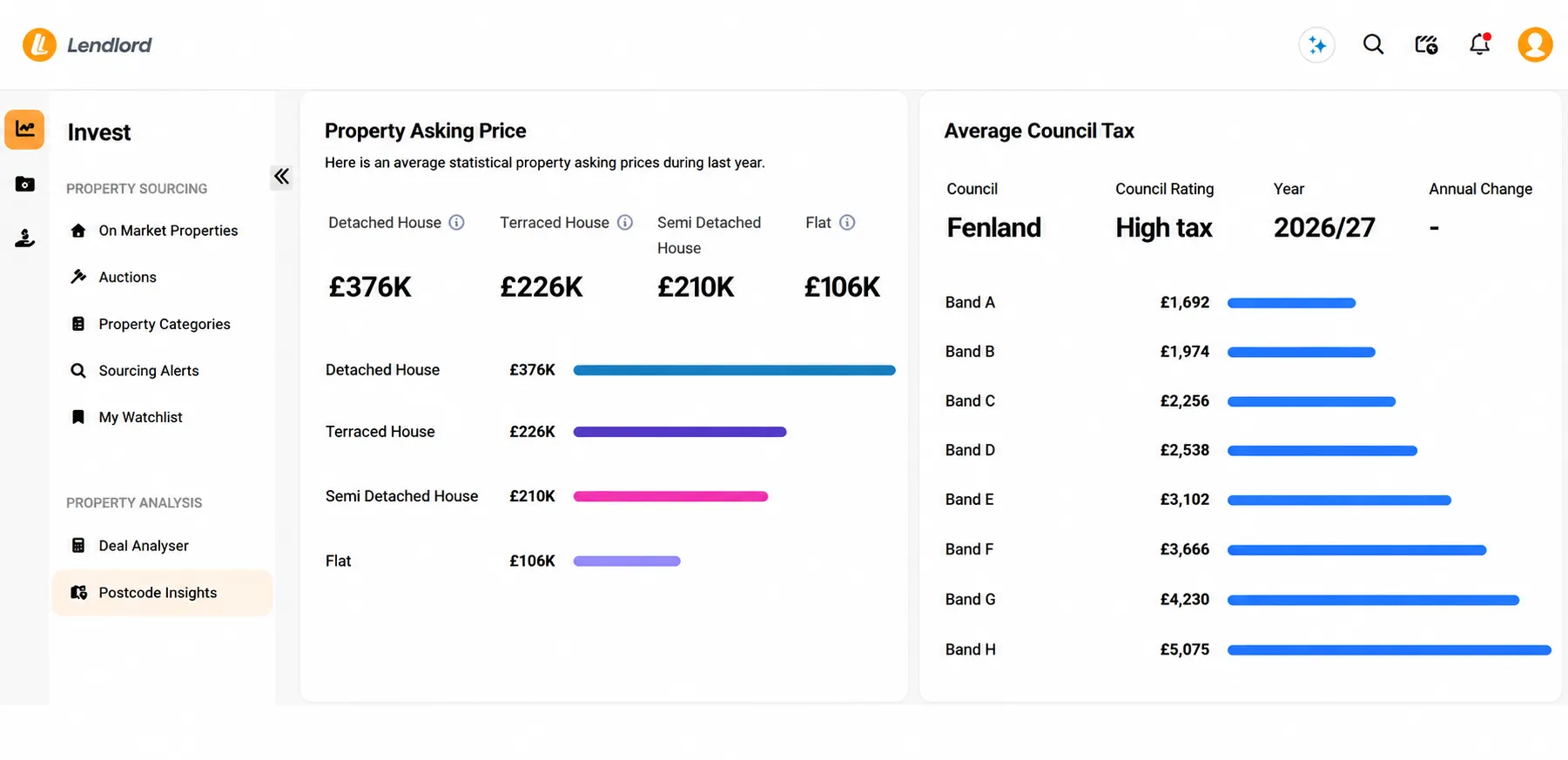
March and the wider Fenland district can attract investors looking for lower entry prices than Cambridge city, but older housing stock may bring condition, damp and structural risks. In contrast to premium Cambridge stock, nearby investor markets include Peterborough, Wisbech, Ely, Huntingdon and Cambridge.
Property types in this corridor include terraces, auction lots, renovation projects and unmortgageable houses. Common use cases include auction purchase, refurbishment, refinance, structural works and chain-break purchases.
Furthermore, for investors buying at auction or taking on heavy refurbishment in Cambridgeshire, bridging finance can help bridge the gap between purchase, works and a longer-term refinance or sale. Fenland’s indicative gross yields (~5%+) can support BTL exits where rental evidence is robust.
Funding a similar property?
If you are buying an unmortgageable, auction or refurbishment property in Cambridgeshire, Lendlord can assess the deal quickly and structure short-term finance around the purchase, valuation, works and exit route.
Get a Bridging Loan Quote ☎ Discuss a Similar DealDirect lender · No broker fees · Indicative terms in minutes
Frequently Asked Questions
Can I get a bridging loan on a property with subsidence?
Yes, because it may be possible - but it depends on the severity of the movement, the valuation, structural engineer reports, remedial works plan, borrower experience and exit route. However, not every subsidence case will meet lending criteria.
Can a bridging loan be used for an unmortgageable property?
Yes, because bridging finance is often used where a property is not immediately suitable for a standard mortgage, including properties with structural issues, damp, short leases, missing planning documents or heavy refurbishment needs.
Can I use bridging finance to buy an auction property in Cambridgeshire?
Yes. In most cases, bridging loans fund auction purchases where completion is required quickly and standard mortgage timescales are too slow. For example, March and Fenland see regular auction activity through regional auction houses.
What does a bridging lender check on a property with structural issues?
Typically, the lender considers the valuation, engineer reports, cost of works, borrower contribution, exit route, comparable evidence and whether the property remains acceptable security throughout the loan term.
Is bridging finance based on purchase price or market value?
It depends on the lender and the deal. In most cases, facilities are structured against purchase price, open market value or after-works value, subject to valuation and risk appetite.
Can bridging finance be based on GDV after refurbishment?
Yes, where supported by valuation and exit planning. For example, in this case the borrower targeted £200,000 GDV against a £119,000 purchase, with loan-to-GDV of approximately 53.5%.
Will a bridging lender accept damp issues?
Damp alone does not always block bridging, but rising damp usually requires a specialist report, a works budget and a credible exit. As a result, the borrower must show a clear plan once remedial works are complete.
Related bridging finance
Bridging loan deals case studies
Guides & tools
What Is a Bridging Loan?How bridging works, rates and uses Bridging Loan Rates 2026LTV tiers, fees and total cost Bridging CalculatorModel your Cambridgeshire deal costsDeal types
Auction FinanceComplete inside the 28-day deadline Buy-to-Let BridgingClose fast, let and refinance Refurbishment BridgingPurchase plus works in one facility Unmortgageable Property BridgingFund stock standard lenders decline Chain Break BridgingBuy before you sell HMO Conversion FinanceArticle 4 areas and HMO exits BRRR Bridging FinanceBuy, refurbish, refinance, repeat Bad Credit BridgingCCJs, IVAs and defaults consideredCambridgeshire & UK locations
Bridging Loans CambridgeshireDistrict data, map and local deals Short Term Bridging Loans WiltshireSwindon and county district data and deals Bridging Loans LondonSouth East borough data and commuter deals Bridging Loans BirminghamWest Midlands borough data and deals Bridging Loans ManchesterGreater Manchester borough data and deals Bridging Loans LeedsWest Yorkshire district data and deals
Reviewed by Claire - Senior Bridging Specialist
12+ years in property finance - CeMAP qualified - Cambridgeshire and unmortgageable exit specialist
About Lendlord
Lendlord is a UK PropTech platform that helps property investors source, analyse, fund, and manage property deals in one place. As a direct bridging lender, Lendlord provides bridging loans from £30k-£3M at rates from 0.75% pm, with completions from 5 days and no broker fees.
Commercial Property Awards 2026 Finalist. Property Reporter Awards 2022 Winner.
Lendlord is a direct lender of short-term property finance to UK investors. Case study figures are based on a real Cambridgeshire deal record and RICS valuation data; they are illustrative of deal structure and do not constitute an offer or financial advice. Your property may be repossessed if you do not keep up repayments or repay the loan at the end of the term.