Chain Break Bridging Loan - Buy Before You Sell
When a property chain stalls, your onward purchase is at risk. Lendlord chain break bridging finance lets you buy before you sell , complete on the same day as your sale where needed, and bridge the deposit gap - from 0.75% pm , with up to 75% of purchase price and up to 90% of market valuation . Direct lender, no broker fees.
Last Updated: June 17, 2026
- 0.75%
- From p/m
- 90%
- Max LTV
- 5 days
- To Fund
- £30k-£3M
- Loan Size

A chain break bridging loan is short-term finance secured against property that lets you complete a new purchase before your existing sale finishes. It bridges the timing gap so you do not lose the deal when a buyer pulls out, dates slip, or sale proceeds are not ready. Repay when your existing property sells or you refinance. Lendlord is a direct lender - apply for online bridging loans with no broker fees.
Why property chains break
A chain is only as strong as its weakest link. One buyer withdrawing, a failed survey, or a mortgage delay can collapse the whole sequence - and leave you unable to complete on the property you have committed to buy.
Chain break bridging solves the timing problem:
- Buy before you sell - complete on your onward purchase without waiting for your buyer's funds
- Simultaneous completion - align buy and sell on the same day where both transactions are ready
- Deposit bridge - release capital tied up in equity to fund the deposit on the next deal
- Chain-free status - present as a stronger buyer in competitive markets
"Chain break is rarely planned - it is reactive. Speed and a clear exit on the property you are selling matter more than squeezing the last 0.05% off the rate."
Claire - Senior Bridging Specialist, LendlordBuy before you sell vs emergency chain break
UK borrowers search for both terms, but the product structure is the same. The difference is timing and urgency:
| Scenario | When it applies | Typical exit |
|---|---|---|
| Buy before you sell | Proactive: you have found your next property and plan to market or complete your sale | Sale of existing property or refinance |
| Chain break (reactive) | Emergency: your sale falls through, a buyer withdraws, or the chain collapses at the last moment | Remarket and sell existing property |
| Deposit bridge | Equity is locked in your current property but you need cash for the next deposit now | Sale proceeds repay the bridge |
| Simultaneous completion | Both transactions ready but funds cannot clear in sequence on the same day | Bridge repaid from sale completion same day or shortly after |
How a chain break bridging loan works
Six stages from enquiry to exit:
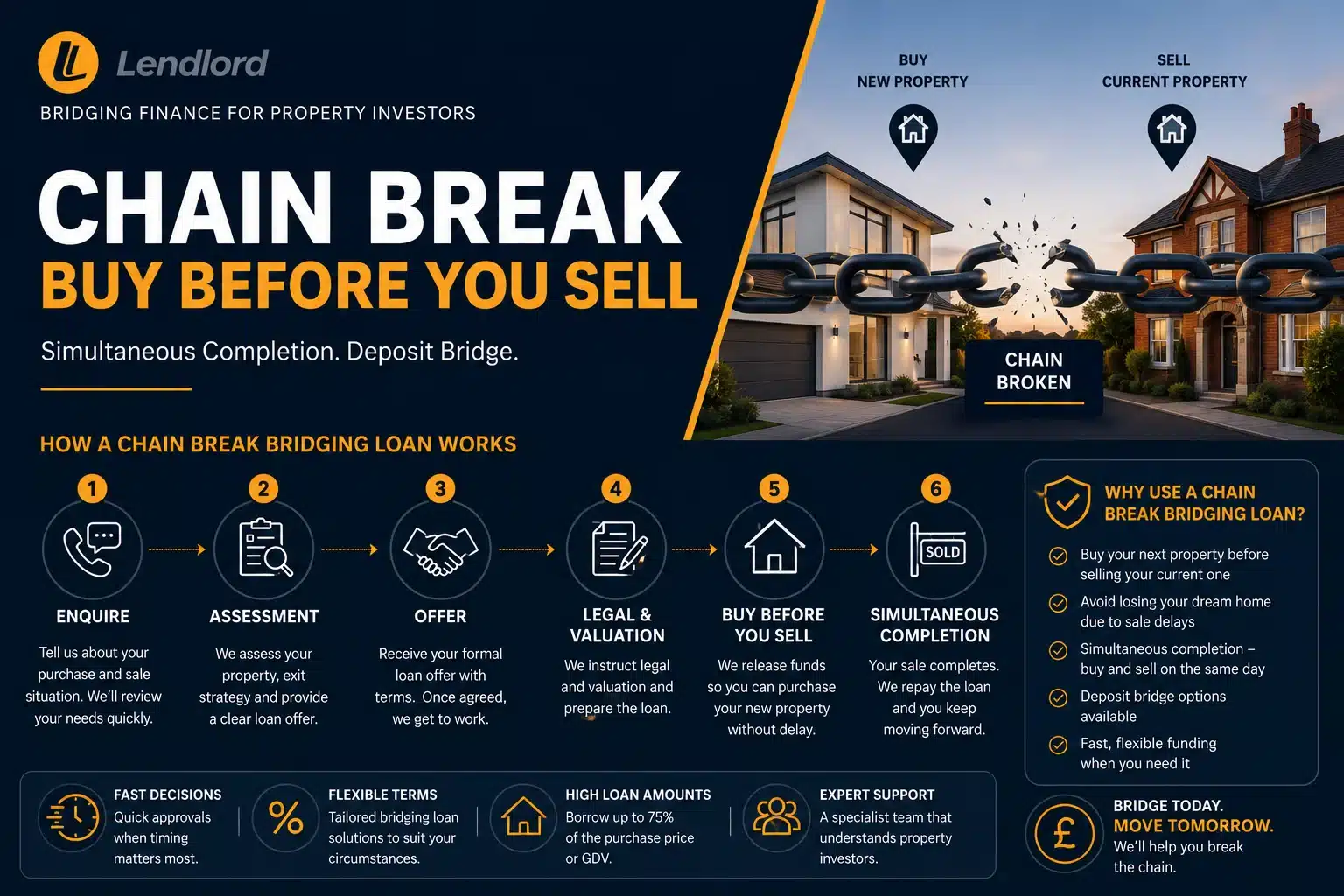
1. Enquire: Share both properties, your sale status and the purchase deadline.
2. Assessment: Indicative terms against security, combined LTV and your exit plan.
3. Offer: Formal Heads of Terms with clear repayment trigger.
4. Legal and valuation: Valuations on the security property or properties; legals in parallel.
5. Buy before you sell: Funds release so you complete the onward purchase.
6. Simultaneous completion: Your sale completes; bridge repaid from proceeds.
Key benefits for investors and landlords
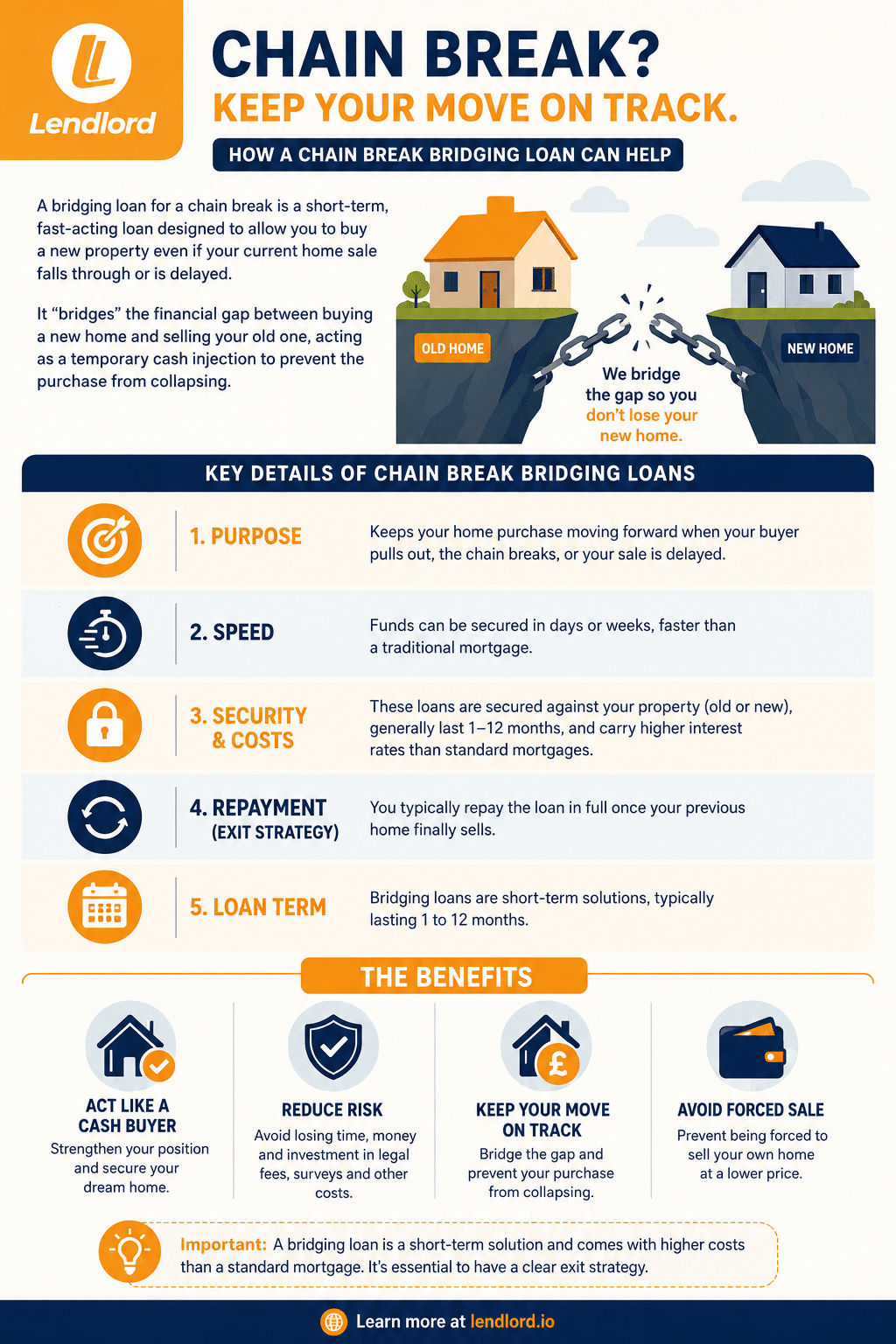
- Act like a cash buyer - secure the next BTL or flip without waiting on your sale
- Reduce wasted costs - avoid losing survey, legal and search fees when a chain collapses
- Keep the move on track - bridge the gap instead of restarting your search
- Avoid a forced sale - do not have to drop your asking price under time pressure on the property you are selling
Important: Bridging is short-term and costs more than a standard mortgage. Always model interest for your realistic sale timeline and have a clear exit before you commit.
Yorkshire case study: auction purchase with a chain gap
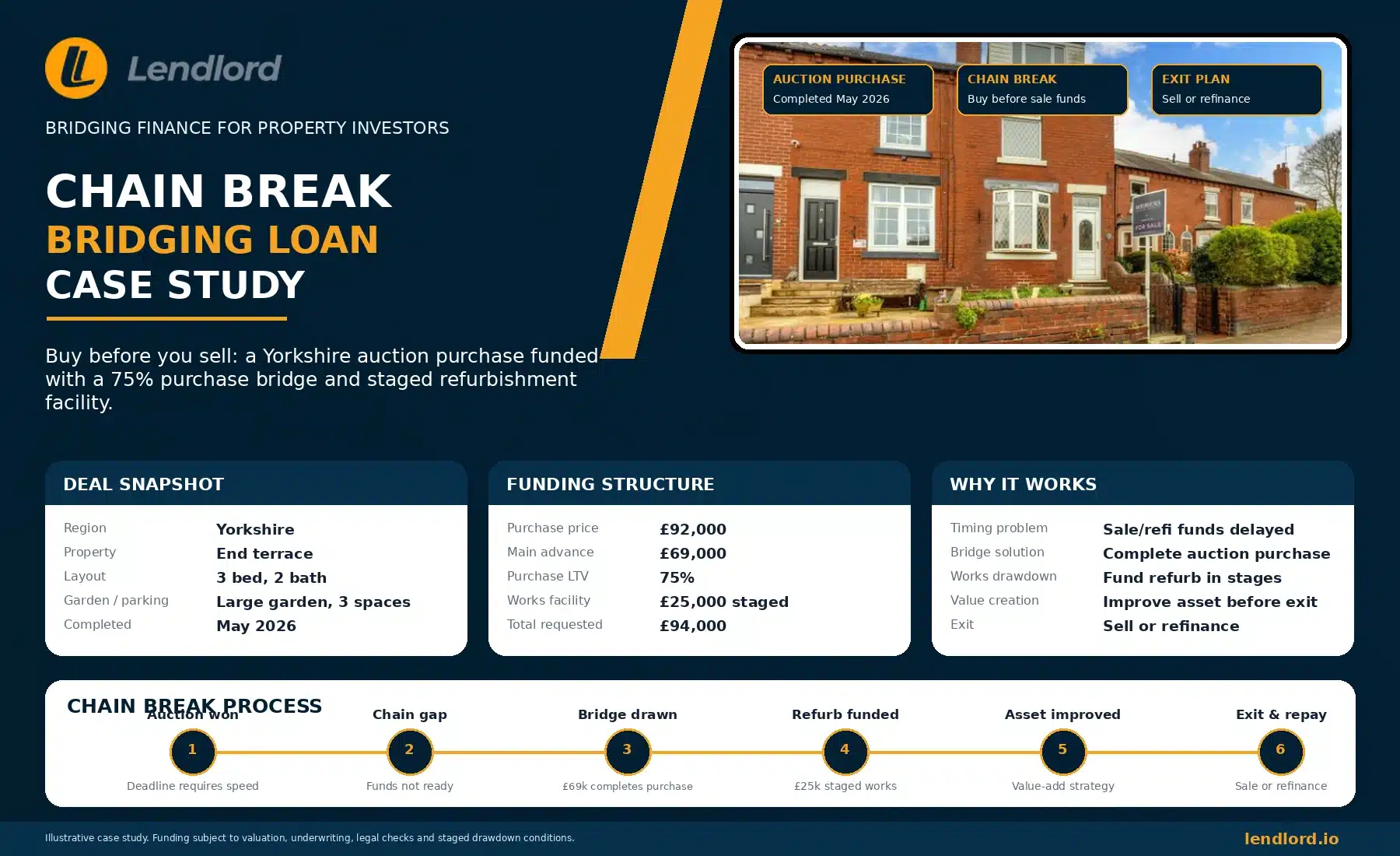
An investor won a Yorkshire auction lot but sale or refinance funds from an existing property were not ready in time. A chain break bridge completed the purchase, with a staged works facility on top:
| Detail | Figure |
|---|---|
| Property | 3-bed end terrace, Yorkshire |
| Purchase price | £92,000 |
| Main advance (purchase) | £69,000 (75% LTV) |
| Works facility (staged) | £25,000 |
| Total facility | £94,000 |
| Problem | Sale/refinance funds delayed |
| Exit | Sell or refinance after works |
| Completed | May 2026 |
Combining a chain break with a refurbishment bridge is common when the onward purchase also needs works before exit.
How much can you borrow?
| Facility | Maximum | Notes |
|---|---|---|
| Purchase price | Up to 75% of purchase price | On the property you are buying |
| Market valuation | Up to 90% of market valuation | Where security supports higher leverage |
| Combined LTV | Assessed per case | Both properties may be valued for security |
| Loan size | £30k to £3M | Direct lender, no broker fees |
| Term | 1 to 18 months | Structured around your sale or refinance exit |
What you need to apply
- Details of the property you are buying and the one you are selling (or equity being released)
- Evidence your existing property is marketable - on the market, realistic asking price, comparables
- Memorandum of sale, offer letter or agent valuation where available
- Clear exit strategy - confirmed sale date, or realistic remarketing plan
- Photo ID, proof of address and asset/liability summary
Chain holding up your next purchase?
Get indicative chain break terms in minutes - no obligation, no credit check.
Get Your Instant Quote Model Your CostsDirect lender • Buy before you sell • No broker fees
Chain break bridging - frequently asked questions
What is a chain break bridging loan?
A chain break bridging loan is short-term secured finance that lets you complete a new property purchase before your existing sale has finished. It bridges the gap between buying and selling, so you do not lose the onward purchase when a chain collapses, a buyer pulls out, or completion dates do not align.
What is the difference between chain break and buy before you sell bridging?
They use the same product structure. Buy before you sell is proactive: you plan the bridge when you have found your next property and intend to market or complete your sale. Chain break is reactive: your sale falls through or the chain breaks and you need emergency funding to save the purchase. Both exit by selling or refinancing the existing property.
How much can I borrow on a chain break bridge?
Lendlord lends up to 75% of purchase price on the new property, or up to 90% of market valuation where security supports it. Combined loan-to-value across both properties is assessed on each case. Loans from £30k to £3M.
What happens if my existing property does not sell in time?
Bridging is short-term, typically 1 to 18 months. If your sale takes longer than expected, you may need to extend the bridge, refinance, or adjust your asking price to exit. Model a realistic sale timeline before you commit and keep the property genuinely marketable throughout the term.
How quickly can chain break bridging complete?
Lendlord returns indicative terms within minutes and can release funds in as little as 5 working days. Chain break cases are often time-critical, so valuation and legal work run in parallel rather than in sequence.
Can I get chain break bridging if I still have a mortgage on my existing property?
Yes. The bridging loan can sit as a first or second charge depending on structure. Your existing mortgage is repaid from sale proceeds on exit, or the bridge may be secured against equity in the property you are selling or the one you are buying.
What evidence do I need that my existing property will sell?
Lenders look for a credible exit: the property on the market or about to be listed, a realistic asking price, recent comparable sales, and ideally an offer or memorandum of sale. An estate agent valuation and clear marketing plan strengthen the application.
Do you charge broker fees on chain break bridging?
No. Lendlord is a direct chain break bridging lender, so investor applications carry no broker fees or intermediary commissions.
Related bridging finance
Bridging loan deals case studies
Guides & tools
What Is a Bridging Loan?How bridging works, rates and uses Bridging Loan Rates 2026LTV tiers, fees and total cost Bridging CalculatorModel your deal costs and feesDeal types
Auction FinanceComplete inside the 28-day deadline Buy-to-Let BridgingClose fast, let and refinance Refurbishment BridgingPurchase plus works in one facility Unmortgageable Property BridgingFund stock standard lenders decline HMO Conversion FinanceArticle 4 areas and HMO exits BRRR Bridging FinanceBuy, refurbish, refinance, repeat Bad Credit BridgingCCJs, IVAs and defaults consideredOther UK locations
Bridging Loans LondonSouth East borough data and commuter deals Bridging Loans CambridgeshireCambridge and county district data and deals Short Term Bridging Loans WiltshireSwindon and county district data and deals Bridging Loans BirminghamWest Midlands borough data and deals Bridging Loans ManchesterGreater Manchester borough data and deals Bridging Loans LeedsWest Yorkshire district data and deals Reviewed by Claire - Senior Bridging Specialist
12+ years in property finance - CeMAP qualified - Chain break and portfolio exit specialist
Reviewed by Claire - Senior Bridging Specialist
12+ years in property finance - CeMAP qualified - Chain break and portfolio exit specialist
About Lendlord
Lendlord is a UK PropTech platform that helps property investors source, analyse, fund, and manage property deals in one place. As a direct bridging lender, Lendlord provides bridging loans from £30k-£3M at rates from 0.75% pm, with completions from 5 days and no broker fees. The platform serves investors across the UK, US, and Canada, with tools including AI sourcing, BTL/BRRR/flip analysers, portfolio management, and Making Tax Digital compliance.
Commercial Property Awards 2026 Finalist. Property Reporter Awards 2022 Winner.
Lendlord is a direct lender of short-term property finance to UK investors. Case study figures are illustrative. This page is informational and does not constitute financial advice. Your property may be repossessed if you do not keep up repayments or repay the loan at the end of the term.