Bridging Loan for Refurbishment - Buy, Refurb and Exit
Fund the purchase and the works in one facility. Lendlord provides refurbishment bridging finance from 0.75% pm , with up to 75% of purchase price , up to 90% of market valuation , and works to 70% of GDV released in tranches. Direct lender, no broker fees - built for light refurbs, heavy refurbs and GDV exits.
Last Updated: June 17, 2026
- 0.75%
- From p/m
- 70%
- Of GDV
- 5 days
- To Fund
- £30k-£3M
- Loan Size
A bridging loan for refurbishment is short-term secured finance that funds both the purchase and the renovation works in one bridge. The purchase tranche releases on completion; works are drawn in stages against surveyor sign-off. Repay by refinancing at the new GDV or selling the finished property. Lendlord is a direct lender offering fast bridging finance with no broker fees.
Why refurbishment needs bridging finance
Refurbishment stock is often unmortgageable on day one: no working kitchen, missing bathroom, or in serious disrepair. A standard buy-to-let mortgage will not lend until the works are done - but you need capital to buy and renovate first.
Bridging closes that gap. It funds the purchase regardless of condition, releases works in tranches as you progress, and completes in days rather than the 6-8 weeks a mortgage takes. Your exit is the bit that makes the refurb pay: refinance at the new value or sell at GDV once the uplift is locked in.
"The refurb bridge is not just about buying cheap. It is about whether the GDV exit still works once interest, fees and your works budget are in."
Claire - Senior Bridging Specialist, LendlordLight refurb vs heavy refurb
Not every refurbishment project is the same. Lenders assess the scope of works, the timeline and the GDV uplift when pricing your bridge.
| Type | Typical works | Timeline | Bridging fit |
|---|---|---|---|
| Light refurb | Decoration, new kitchen/bathroom, flooring, minor repairs | 4-8 weeks | Fast drawdown, lower GDV risk, often shorter bridge term |
| Medium refurb | Full internal refit, reconfiguration, new heating/electrics | 2-4 months | Tranche schedule essential; refinance or sale exit at new value |
| Heavy refurb | Structural works, extensions, loft conversions, HMO conversion | 4-12 months | Detailed schedule of works, GDV evidence, longer bridge term |
Light refurbs suit investors flipping or refinancing quickly. Heavy refurbs need stronger GDV comparables and a realistic works programme - but the uplift can justify a longer bridge and a larger works facility.
The refurbishment bridging process
From enquiry to exit, a typical refurb bridge follows six stages:
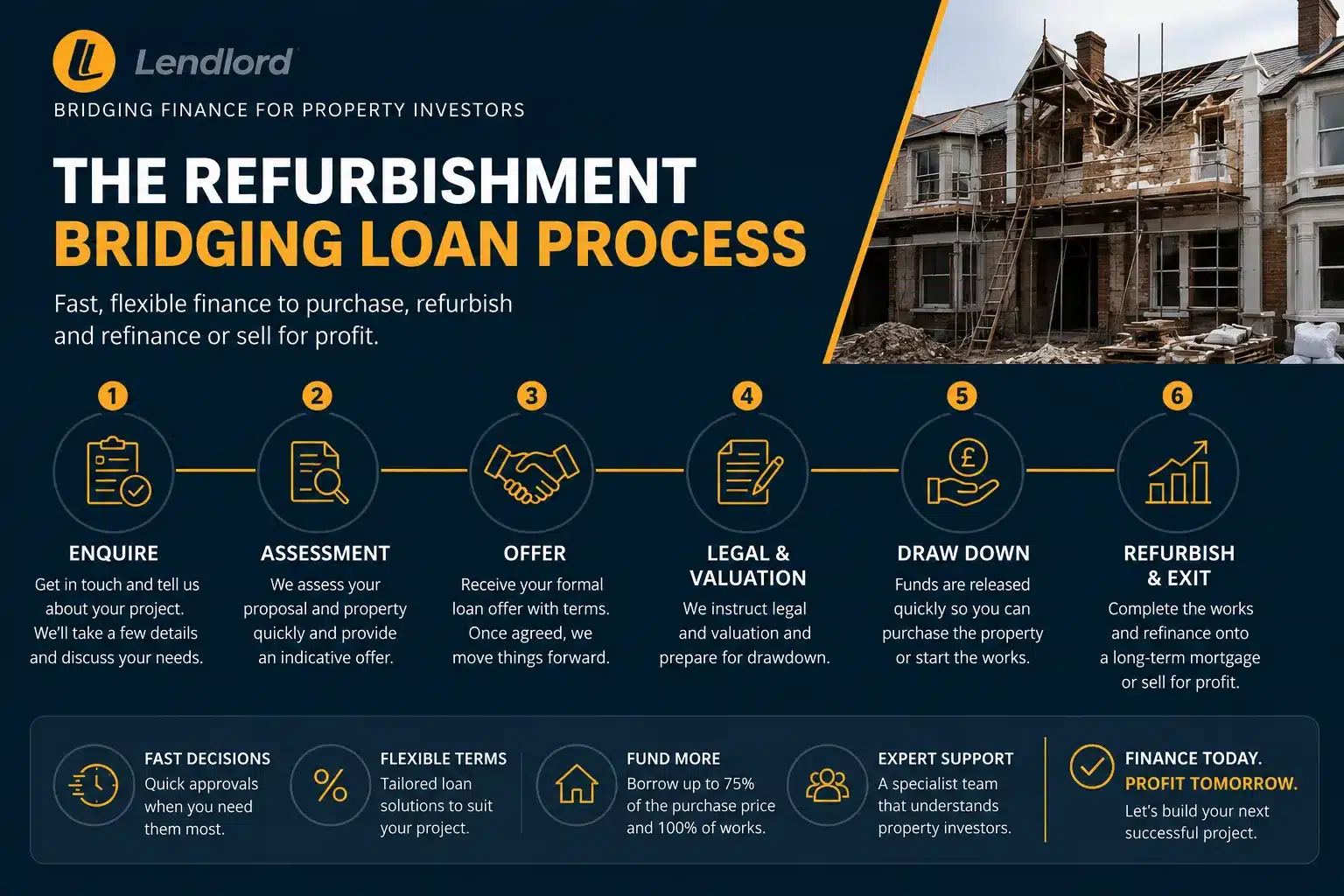
1. Enquire: Share the property, purchase price, works budget and exit plan.
2. Assessment: Indicative terms returned quickly against your GDV and schedule of works.
3. Offer: Formal Heads of Terms with purchase and works elements split.
4. Legal and valuation: Valuation confirms day-one and GDV figures; legals run in parallel.
5. Draw down: Purchase funds on completion; works tranches held for staged release.
6. Refurbish and exit: Complete the works, then refinance or sell at the new value.
How tranche releases work
Refurbishment bridging splits the loan into a purchase tranche and a works tranche. The purchase element releases when you complete. The works element is retained and released in stages as a monitoring surveyor signs off each milestone on your schedule of works.
That protects you from over-spending upfront and gives the lender visibility on progress. Typical stages might include:
- Strip-out and first fix (electrics, plumbing, plasterboard)
- Second fix (kitchen, bathroom, flooring)
- Completion and snagging
Each draw requires evidence of spend and a surveyor visit. Plan your cash flow around the gap between spending and the next tranche landing - especially on heavy refurbs where material costs run ahead of drawdowns.
GDV exits: refinance or sale
Every refurb bridge needs a credible exit against gross development value (GDV) - the estimated value once works are complete. Your two main routes:
- Refinance exit - remortgage onto a buy-to-let or HMO mortgage once the property is finished and let. Many lenders want six months' ownership before lending at post-works value, though early-remortgage products exist. See our BRRR bridging guide for the recycle-your-cash model.
- Sale exit - sell the finished property at GDV, repay the bridge from proceeds, and keep the profit. Works best where local liquidity is strong and your margin covers bridging costs plus selling fees.
Model GDV conservatively. Use sold comparables for the finished spec, not asking prices. If the refinance at 75% of GDV will not cover the gross loan plus costs, you need more deposit or a sale exit instead.
Heavy refurb case study: low-leverage bridge
Not every refurb bridge runs at maximum leverage. A well-structured heavy refurb can use lower LTV, dual security and planning-efficient execution to reduce risk:
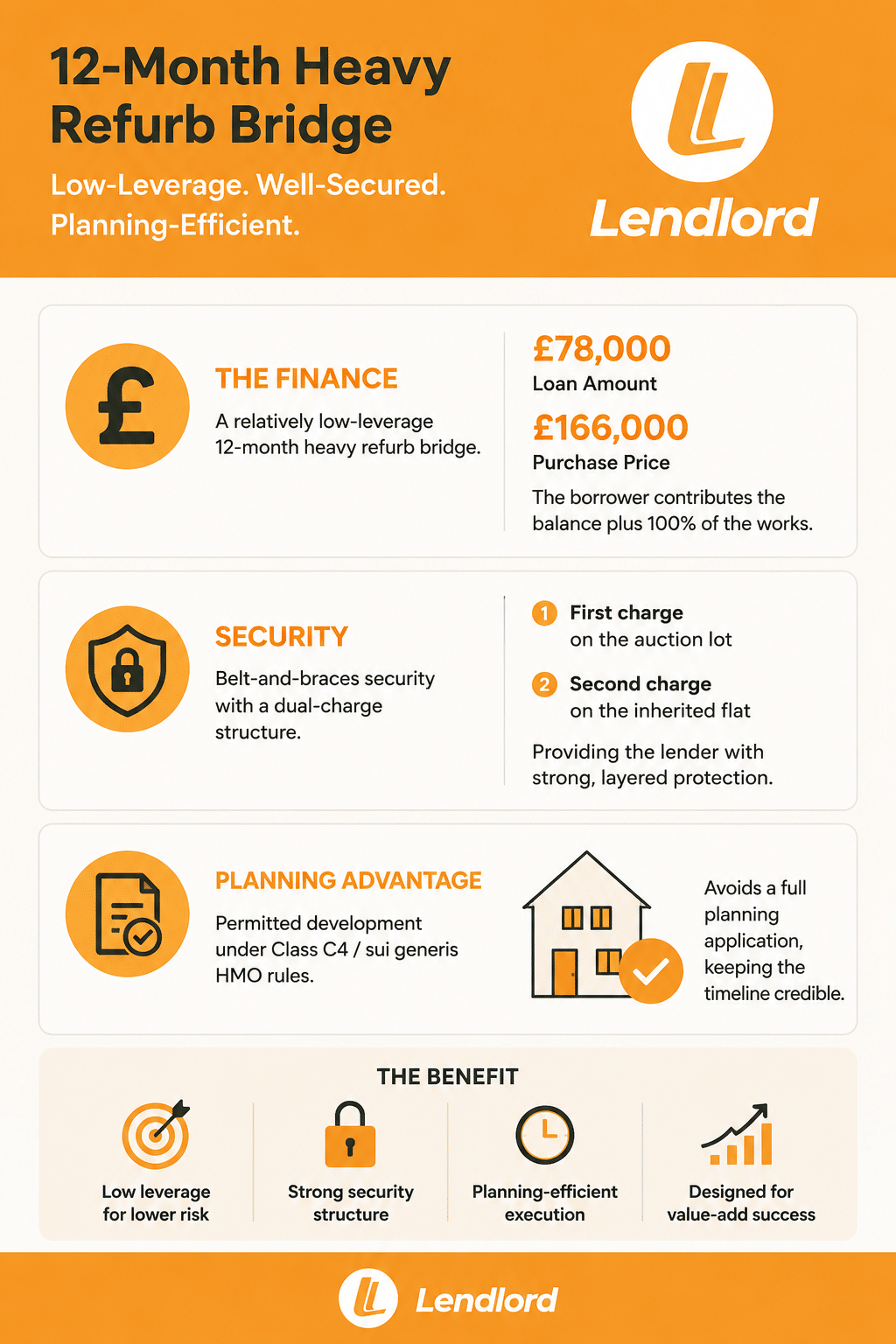
| Element | Detail |
|---|---|
| Loan amount | £78,000 |
| Purchase price | £166,000 |
| Term | 12 months |
| Security | First charge on auction lot + second charge on inherited flat |
| Planning | Permitted development under Class C4 / sui generis HMO rules |
| Borrower contribution | Balance of purchase plus 100% of works funded from equity/JV |
Low leverage, layered security and a planning-efficient route kept this heavy refurb credible within a 12-month bridge term.
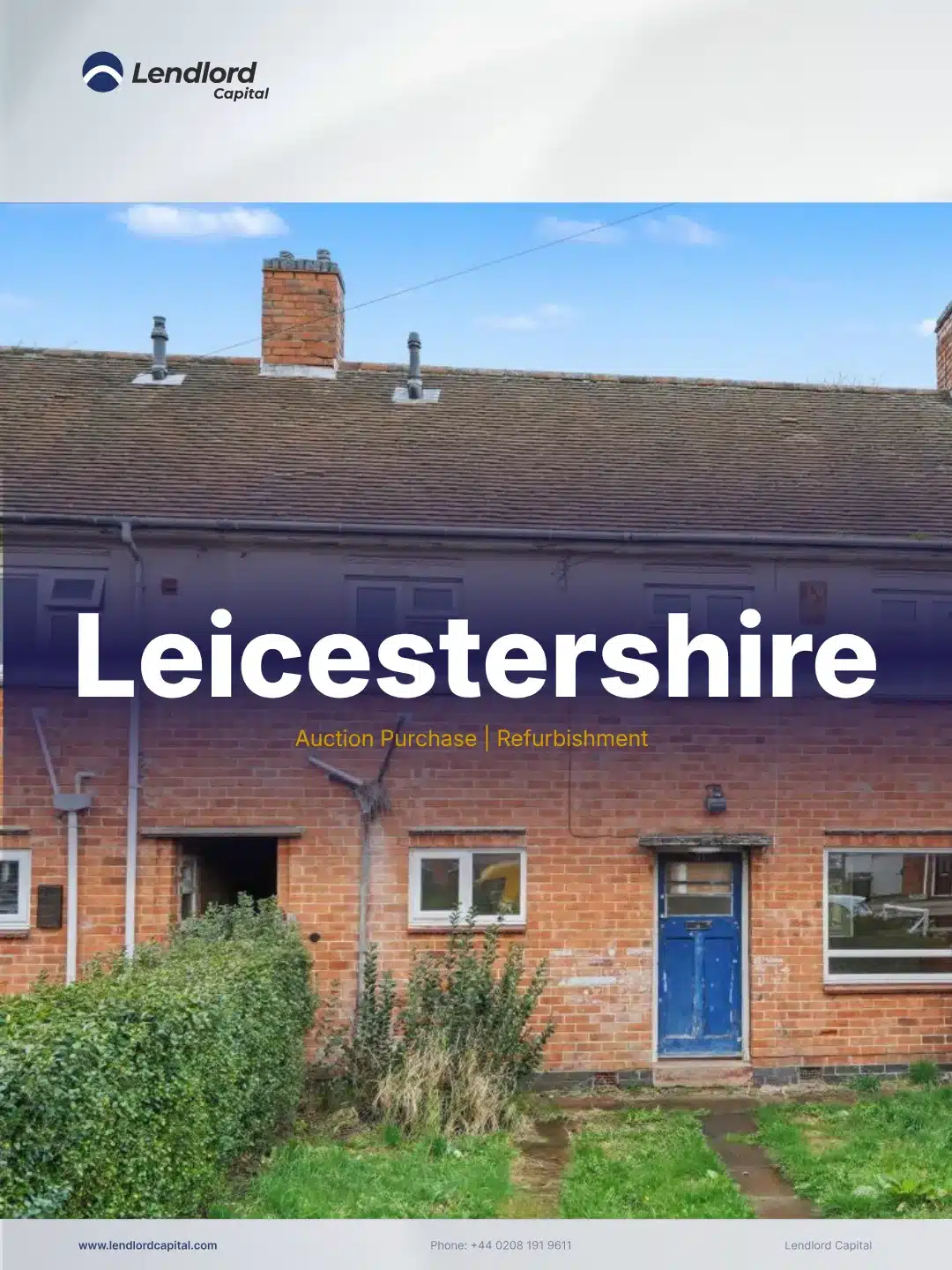
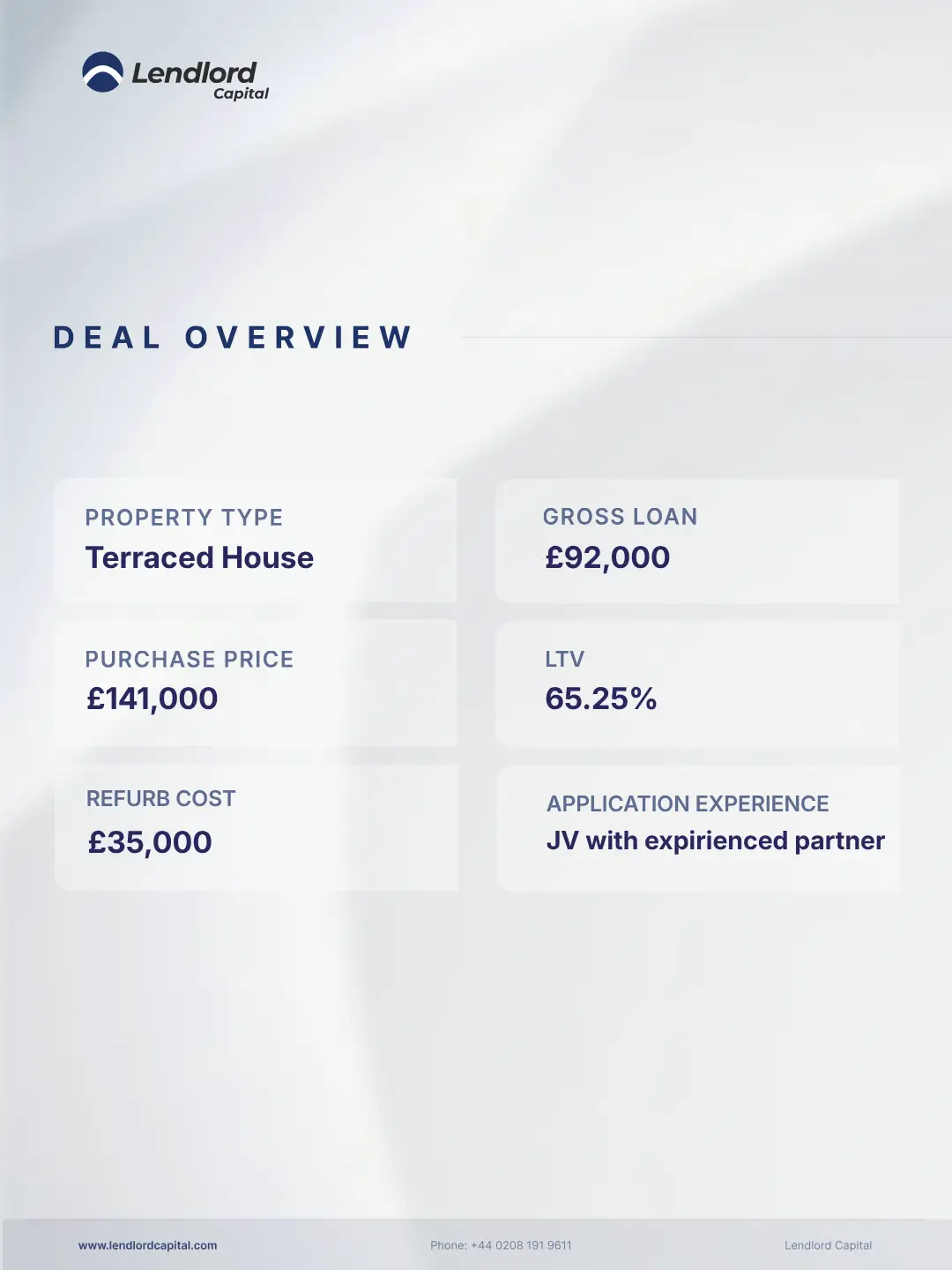
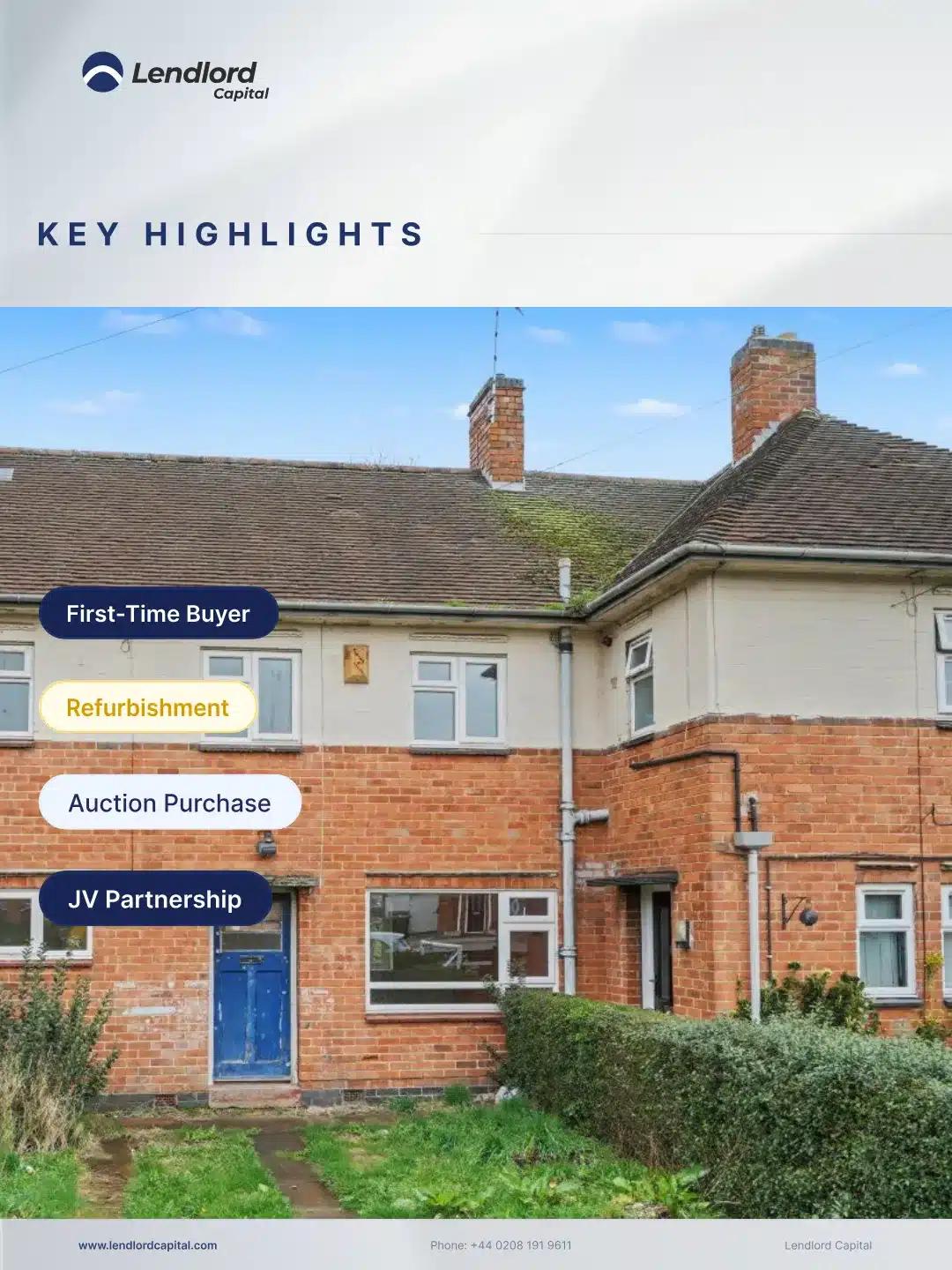
Leicestershire case study: auction purchase plus refurb
A first-time buyer funded an auction purchase and refurbishment through a JV with an experienced partner - completed inside the auction window:
Buying at auction? Pair this with our auction finance guide for the 28-day completion timeline.
How much can you borrow?
| Facility | Maximum | Notes |
|---|---|---|
| Purchase price | Up to 75% of purchase price | Released on completion |
| Market valuation | Up to 90% of market valuation | Where security supports higher leverage |
| Refurbishment works | Up to 70% of GDV | Released in tranches against surveyor sign-off |
| Loan size | £30k to £3M | Direct lender, no broker fees |
| Term | 1 to 18 months | Structured around works programme and exit |
Model your deal on the bridging calculator or see current rate tiers for 2026.
What you need to apply
- Photo ID and proof of address
- Property details and agreed or guide purchase price
- A schedule of works with line-item costs
- Estimated GDV with sold comparables for the finished spec
- Clear exit strategy - refinance lender and timing, or sale plan
- Asset and liability summary (plus company docs if buying via SPV)
Funding a refurbishment project?
Get indicative terms in minutes - purchase plus works, no obligation, no credit check.
Get Your Instant Quote Model Your CostsDirect lender • Tranche drawdowns • No broker fees
Refurbishment bridging - frequently asked questions
What is a bridging loan for refurbishment?
A refurbishment bridging loan is short-term secured finance used to buy a property and fund renovation works in one facility. The purchase element is released on completion; the works are drawn in tranches as each stage is signed off. The loan is repaid by refinancing at the new value or selling the finished property.
How much can I borrow for a refurbishment project?
Lendlord lends up to 75% of purchase price, or up to 90% of market valuation where the security supports it. Refurbishment works can be funded up to 70% of gross development value (GDV), released in tranches against monitoring surveyor sign-off.
What is the difference between light and heavy refurb bridging?
Light refurb covers cosmetic works such as decoration, kitchens and bathrooms with minimal structural change. Heavy refurb involves structural works, extensions or full conversions where GDV uplift is larger but the project takes longer. Both can be funded in one bridge; heavy schemes need a detailed schedule of works and a credible GDV exit.
How do tranche releases work on a refurb bridge?
The purchase tranche is released on completion. Works tranches are held back and released stage by stage once a monitoring surveyor confirms each milestone on your schedule of works. That protects both you and the lender and keeps the project on track.
What is the exit on a refurbishment bridge?
The two main exits are refinance onto a buy-to-let or HMO mortgage once the property is finished and let, or sale at the new GDV after works. Your bridge term should cover the works programme plus any minimum ownership period your refinance lender requires.
Do you charge broker fees on refurbishment bridging?
No. Lendlord is a direct refurbishment bridging lender, so investor applications carry no broker fees or intermediary commissions.
Related bridging finance
Bridging loan deals case studies
Guides & tools
What Is a Bridging Loan?How bridging works, rates and uses Bridging Loan Rates 2026LTV tiers, fees and total cost Bridging CalculatorModel your deal costs and feesDeal types
Auction FinanceComplete inside the 28-day deadline Buy-to-Let BridgingClose fast, let and refinance Unmortgageable Property BridgingFund stock standard lenders decline Chain Break BridgingBuy before you sell HMO Conversion FinanceArticle 4 areas and HMO exits BRRR Bridging FinanceBuy, refurbish, refinance, repeat Bad Credit BridgingCCJs, IVAs and defaults consideredOther UK locations
Bridging Loans LondonSouth East borough data and commuter deals Bridging Loans CambridgeshireCambridge and county district data and deals Short Term Bridging Loans WiltshireSwindon and county district data and deals Bridging Loans BirminghamWest Midlands borough data and deals Bridging Loans ManchesterGreater Manchester borough data and deals Bridging Loans LeedsWest Yorkshire district data and deals Reviewed by Claire - Senior Bridging Specialist
12+ years in property finance - CeMAP qualified - Refurbishment and GDV exit specialist
Reviewed by Claire - Senior Bridging Specialist
12+ years in property finance - CeMAP qualified - Refurbishment and GDV exit specialist
About Lendlord
Lendlord is a UK PropTech platform that helps property investors source, analyse, fund, and manage property deals in one place. As a direct bridging lender, Lendlord provides bridging loans from £30k-£3M at rates from 0.75% pm, with completions from 5 days and no broker fees. The platform serves investors across the UK, US, and Canada, with tools including AI sourcing, BTL/BRRR/flip analysers, portfolio management, and Making Tax Digital compliance.
Commercial Property Awards 2026 Finalist. Property Reporter Awards 2022 Winner.
Lendlord is a direct lender of short-term property finance to UK investors. Case study figures are from completed deals and are illustrative only. This page is informational and does not constitute financial advice. Your property may be repossessed if you do not keep up repayments or repay the loan at the end of the term.