MTD 7 August 2026: In Scope, Common Q1 Mistakes, and What to Do If You’re Late
Published · Updated · 5 min read

Before you hit Submit on your first Making Tax Digital quarterly update, confirm you are in scope and scan for seven common Q1 mistakes. If 7 August 2026 has passed, know what the 2026/27 grace year allows. HMRC is not issuing penalty points for late quarterly updates this year, but other tax penalties still apply.
Before you hit Submit on your first Making Tax Digital quarterly update, read this once. It covers MTD scope, seven Q1 mistakes, and what to do if 7 August 2026 has passed. For full filing steps, use the linked guides below.
At a glance
- Scope: Gross UK property plus self-employment over £50k on 2024-25.
- Check: Seven Q1 errors from gross rent to mortgage interest mapping.
- Late: No Q1 penalty points in 2026/27; file ASAP anyway.
- Next: 7 November 2026 after Q1 is submitted.
- File: Use linked MTD Hub guides when records are clean.
Tax is strategy, not just admin
Quarterly filing
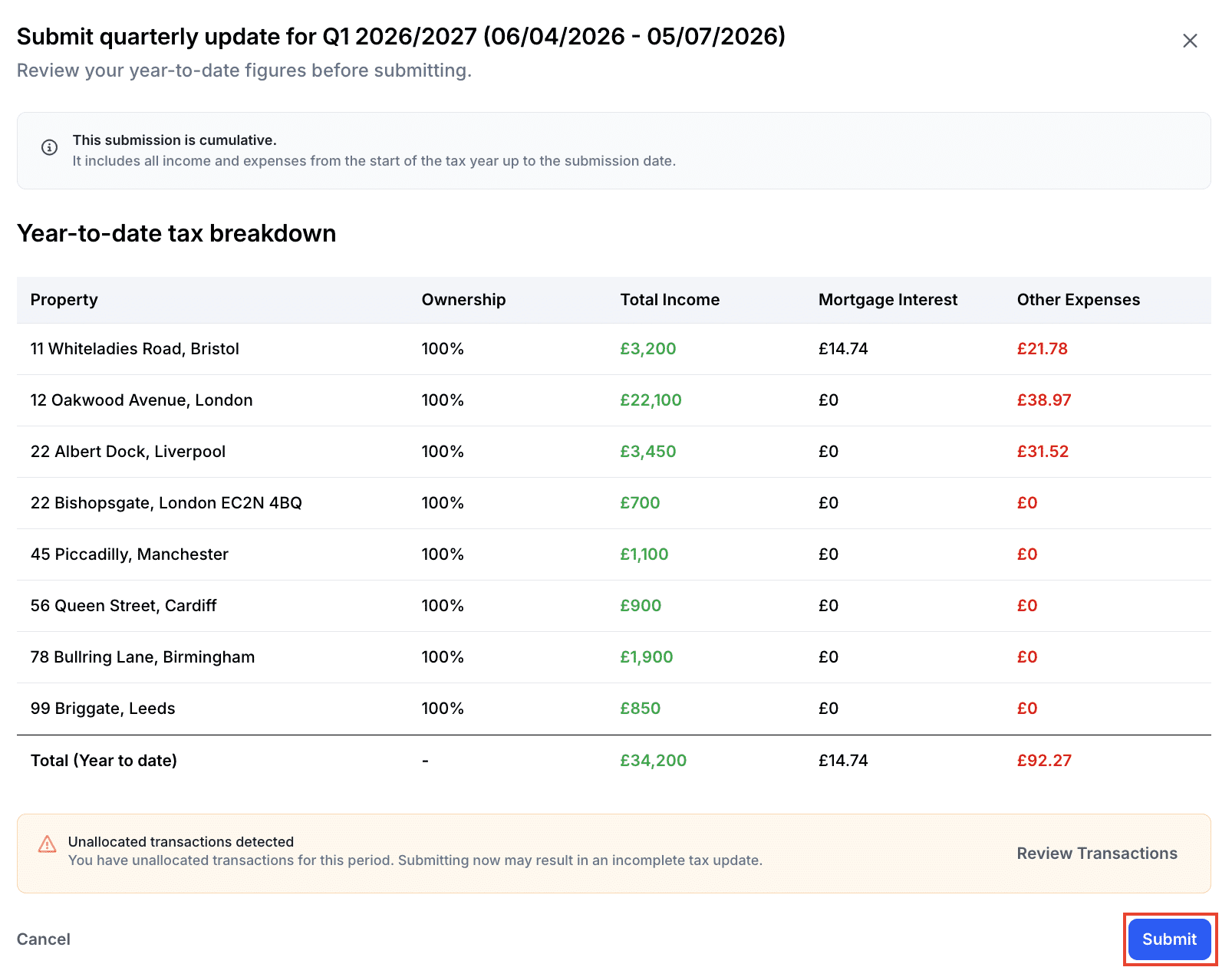
Review Q1 totals before you submit
Check income and expense categories in MTD-ready software so common Q1 errors surface before HMRC sees them.
Open MTD-ready softwareAm I in scope for the 7 August deadline?
Answer these five checks before you open software or pay for a migration you may not need.
- Threshold: Combined gross UK property and self-employment income on your 2024-25 return was over £50,000. If yes, Phase 1 applies from 6 April 2026.
- Entity: You let in your personal name or as a sole trader. Limited company and SPV landlords are out of scope for MTD for Income Tax.
- Joint ownership: Only your share of gross rent counts toward the threshold and your updates.
- Excluded income: Employment, pensions, and dividends do not count toward qualifying income.
- Below threshold: If 2024-25 qualifying gross income was £50,000 or less, 7 August 2026 does not apply to you yet (the bar falls to £30,000 from April 2027).
Still unsure? Read why your 2024-25 tax return decides MTD scope before you buy software.
First quarterly deadline: 7 August
Seven common Q1 mistakes to fix before Submit
These errors show up every August when landlords rush the first quarterly update.
- Using net rent instead of gross. Record rent received before expenses. Costs belong in expense categories, not as a reduced income line.
- Pulling Ltd company rent into personal MTD. Company property income stays in Corporation Tax, not your individual quarterly update.
- Wrong quarter dates. Standard periods run 6 April to 5 July for Q1. Calendar-quarter users follow 1 April to 30 June, but the deadline is still 7 August.
- Counting full joint rent. Split ownership means split gross figures in your records and your file.
- Mixing personal and rental bank feeds. Unmapped personal spending creates false expenses and slows review.
- Treating the update as a tax payment or full return. It is a digital summary through software, not Self Assessment and not a payment on account.
- Skipping mortgage interest categorisation. Finance costs must sit in the right expense groups. Misclassified interest is a frequent Q1 rework.
Soft tip: dry-run Q1 totals against bank statements before you connect to HMRC. If records are still messy, follow our MTD digital records checklist first.
Leave spreadsheet-only books behind
Missed 7 August: what now?
HMRC has confirmed no penalty points for late quarterly updates in 2026/27. That is a setup year, not permission to ignore MTD. File Q1 as soon as your records are credible.
Quarterly updates are cumulative. Each submission restates the year to date, so an imperfect Q1 can be corrected in Q2. From April 2027, missed quarters start earning penalty points toward a £200 fixed penalty after four points.
Separate rules still bite. Late Self Assessment returns and late tax payments can still attract penalties and interest. If you are late on 7 August, prioritise accurate digital records, submit Q1, then tighten categories before November.
After you submit: one thing to calendar
Once Q1 is away, your next quarterly deadline is 7 November 2026 for the period 6 July to 5 October. Use the gap to fix property mapping, mortgage interest categories, and missing agent statements so Q2 is faster. You do not need a full-year calendar here: keep one reminder for November and build the habit quarter by quarter.
Ready to file? Use the detailed guides
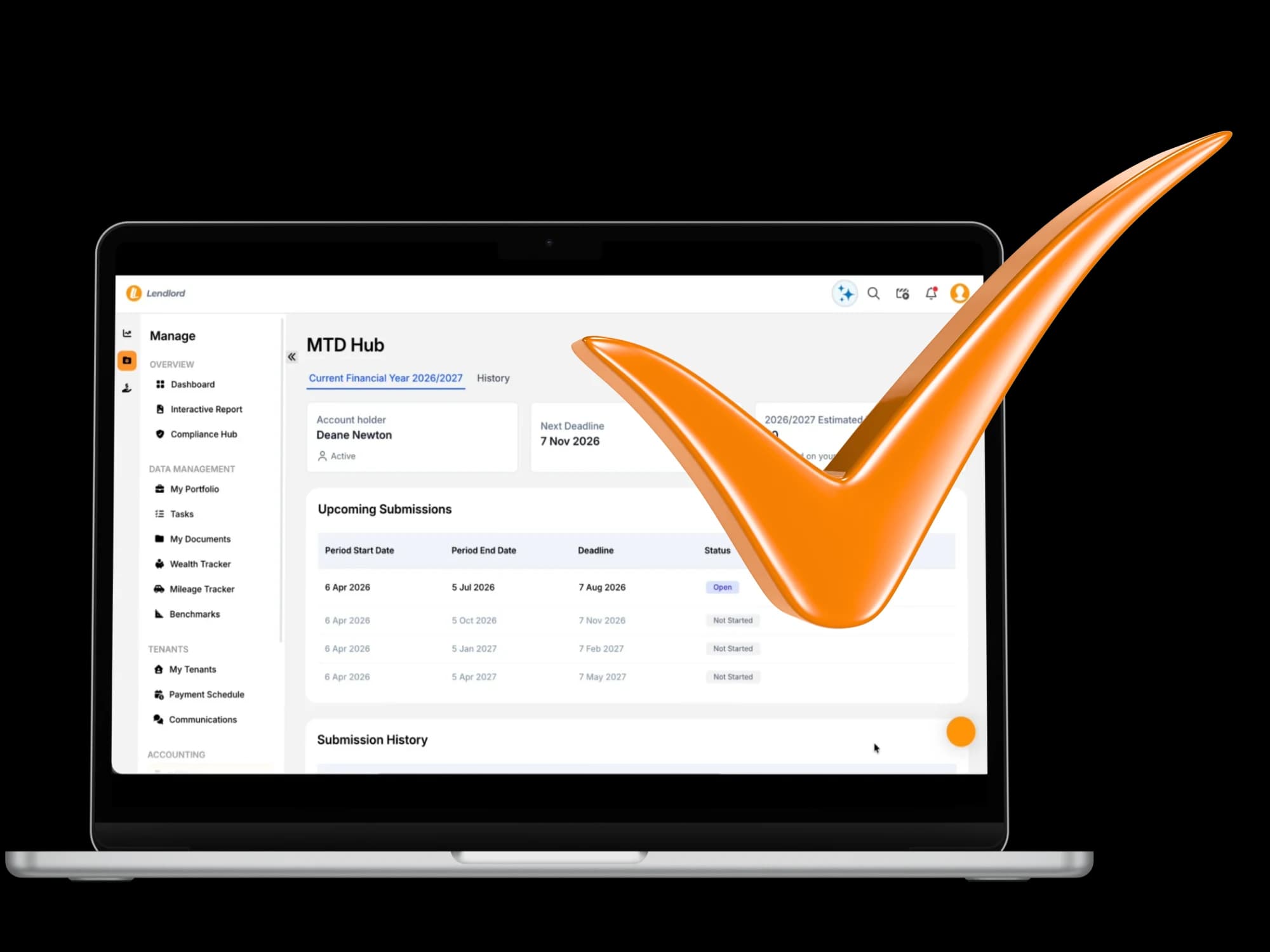
This page stops at scope, mistakes, and recovery. When your numbers are clean, watch the MTD Hub submit walkthrough below, then open the written guide that matches your next step.
Submit your MTD quarterly update
- Step-by-step MTD Hub filing guide for 7 August with Help Center screenshots from registration through Submit.
- MTD Hub compliance slide walkthrough if you prefer the slide-by-slide format.
- Making Tax Digital rules and quarterly calendar for the full deadline table when you need it.
Frequently asked questions
How do I know if I must file by 7 August 2026?
Check your 2024-25 Self Assessment return. You are in Phase 1 if combined gross UK property and self-employment income exceeded £50,000. Your first quarterly update is due by 7 August 2026 and covers 6 April to 5 July.
What is the most common Q1 MTD mistake?
Reporting net rent after expenses instead of gross rent received. MTD quarterly updates start from gross income, then allowable expenses.
Will HMRC fine me if I miss 7 August 2026?
HMRC will not issue penalty points for late quarterly updates during 2026/27. File as soon as you can. Normal Self Assessment late-filing and late-payment rules still apply separately.
Can I fix Q1 errors in my next update?
Yes. Quarterly updates are cumulative year to date. A reasonable Q1 file can be corrected when you submit Q2 by 7 November 2026.
Where do I file once my records are ready?
Use MTD-compatible software. Follow our MTD Hub filing walkthrough for 7 August, or the slide-by-step MTD Hub compliance guide if you prefer that format.
Confirm scope, fix the seven mistakes, then file through MTD-ready software.
Get MTD-ready on Lendlord
Expert insight from Aviram Shahar, Co-Founder and CEO of Lendlord · PropTech entrepreneur · Last updated August 2026
Official data sources
Confirm scope, penalty rules, and software requirements on GOV.UK before you submit or recover a late Q1 file.