Refurbishment Bridging Loan Case Study: Costs, Timeline and Exit
Published · Updated · 3 min read
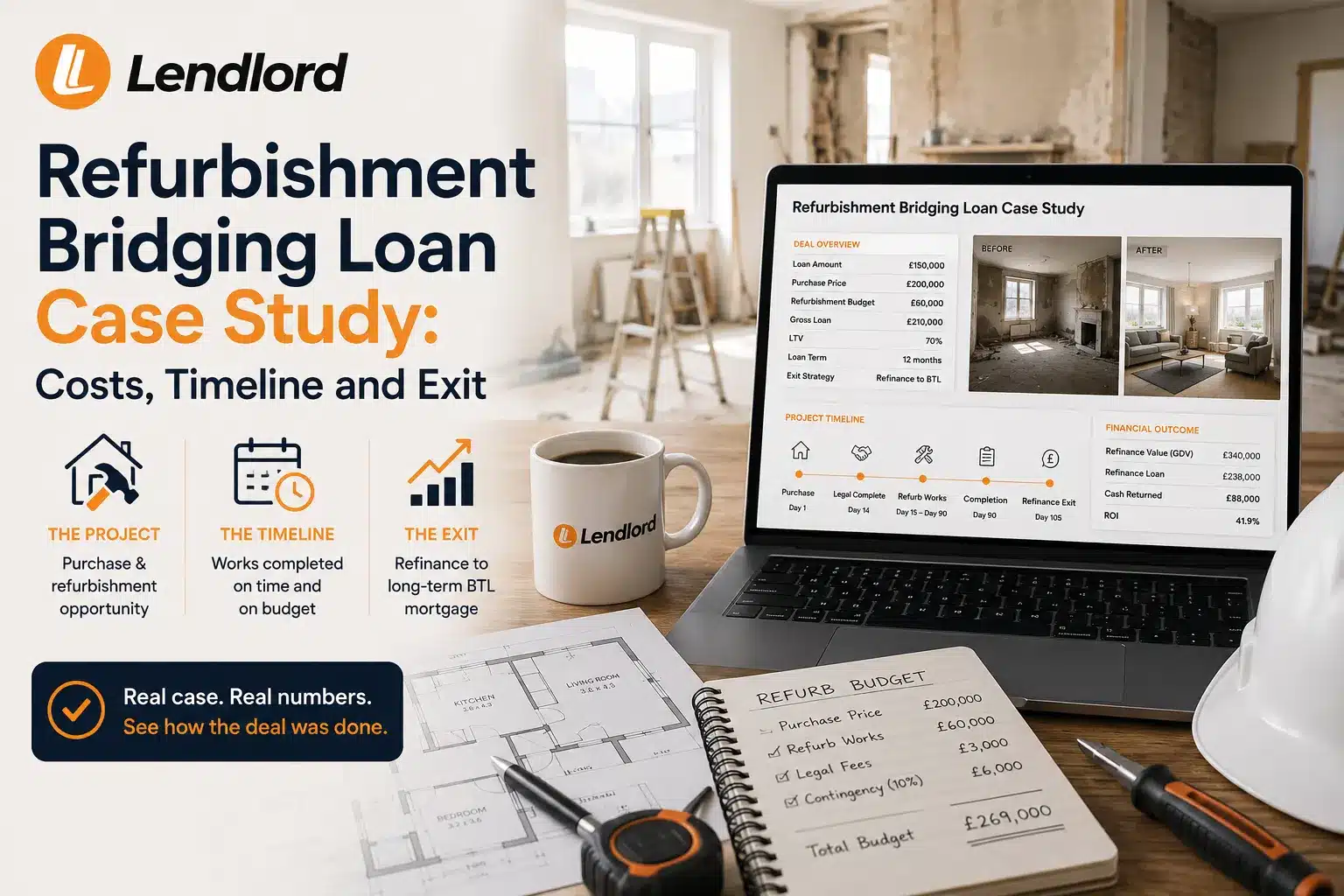
A refurbishment bridging loan funds purchase and works until a sale or BTL remortgage exit. Success depends on a realistic works budget, enough interest runway, and an exit valuation that clears capital plus fees - not on finding the lowest headline monthly rate.
This refurbishment bridging loan case study walks through a realistic UK buy-refurb-refinance path: purchase price, works, drawdown timing, interest and the remortgage exit. Use it with the step-by-step bridging loan for refurbishment guide when you price your next unmortgageable or auction refurb.
At a glance
- Case shape: Auction purchase + light-to-medium refurb + BTL remortgage exit.
- Bridge job: Cover purchase, fees and works until the property is mortgageable again.
- Critical path: Works budget accuracy and exit valuation - not just the monthly rate.
- Process guide: Follow the linked refurbishment process walkthrough for lender stages.
- Model: Stress-test a longer hold and higher works spend before you apply.
Stop guessing refurb costs
Refurb planning
Estimate works before you size the bridge
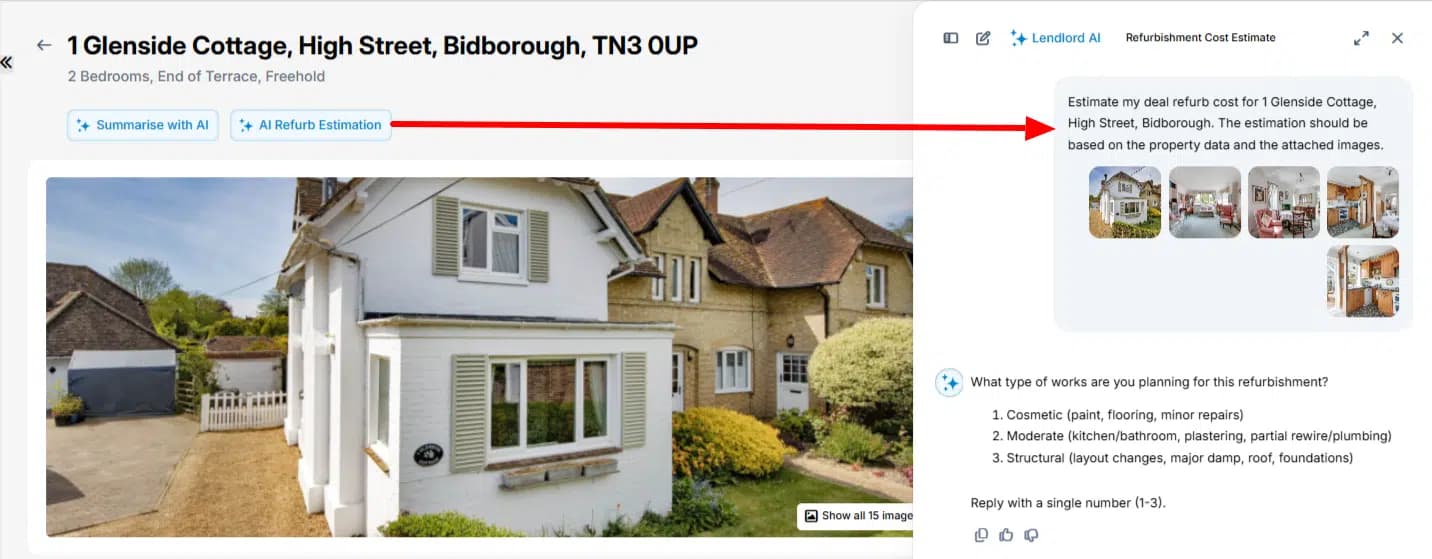
Use AI-assisted refurb estimates to build a schedule of works that matches your bridging term, net advance and exit valuation.
Start a free accountThe deal outline
Assume a regional auction purchase that needs kitchens, bathrooms, decoration and an EPC uplift before a BTL lender will take it. Illustrative figures (for teaching, not a live quote): purchase £180,000, works £35,000, fees £8,000, target GDV £250,000, planned bridge 9 months, exit via BTL remortgage at 75% LTV on GDV.
Your numbers will differ. The method does not: size the bridge to the cash peak (purchase + fees + works - any cash you inject), then confirm the exit clears capital plus interest.
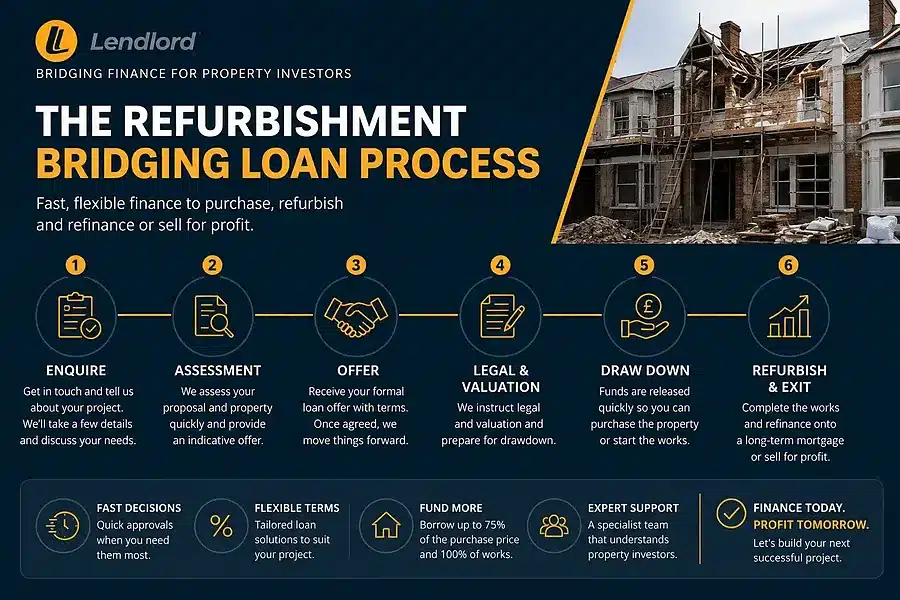
Month-by-month timeline
| Phase | Months | Focus |
|---|---|---|
| Purchase & mobilisation | 0-1 | Complete, strip-out, contractor start |
| Heavy works | 1-4 | Kitchens, bathrooms, electrics, heating |
| Finish & compliance | 4-6 | Decoration, EPC, certificates |
| Exit prep | 6-9 | Valuation, BTL application, redeem bridge |
Build contingency into both the works budget and the interest term. If month 6 becomes month 10, rolled-up interest and empty periods compound quickly. Compare structures in our rolled-up vs retained vs serviced interest guide.
Costs that trip investors up
Arrangement fees, exit fees, valuation and legal costs sit on top of interest. Retained interest also reduces day-one cash, which can starve the works budget if you only modelled gross loan. Price total cost on a bridging loan calculator, then re-check with the dynamic bridging loan calculator when rates move.
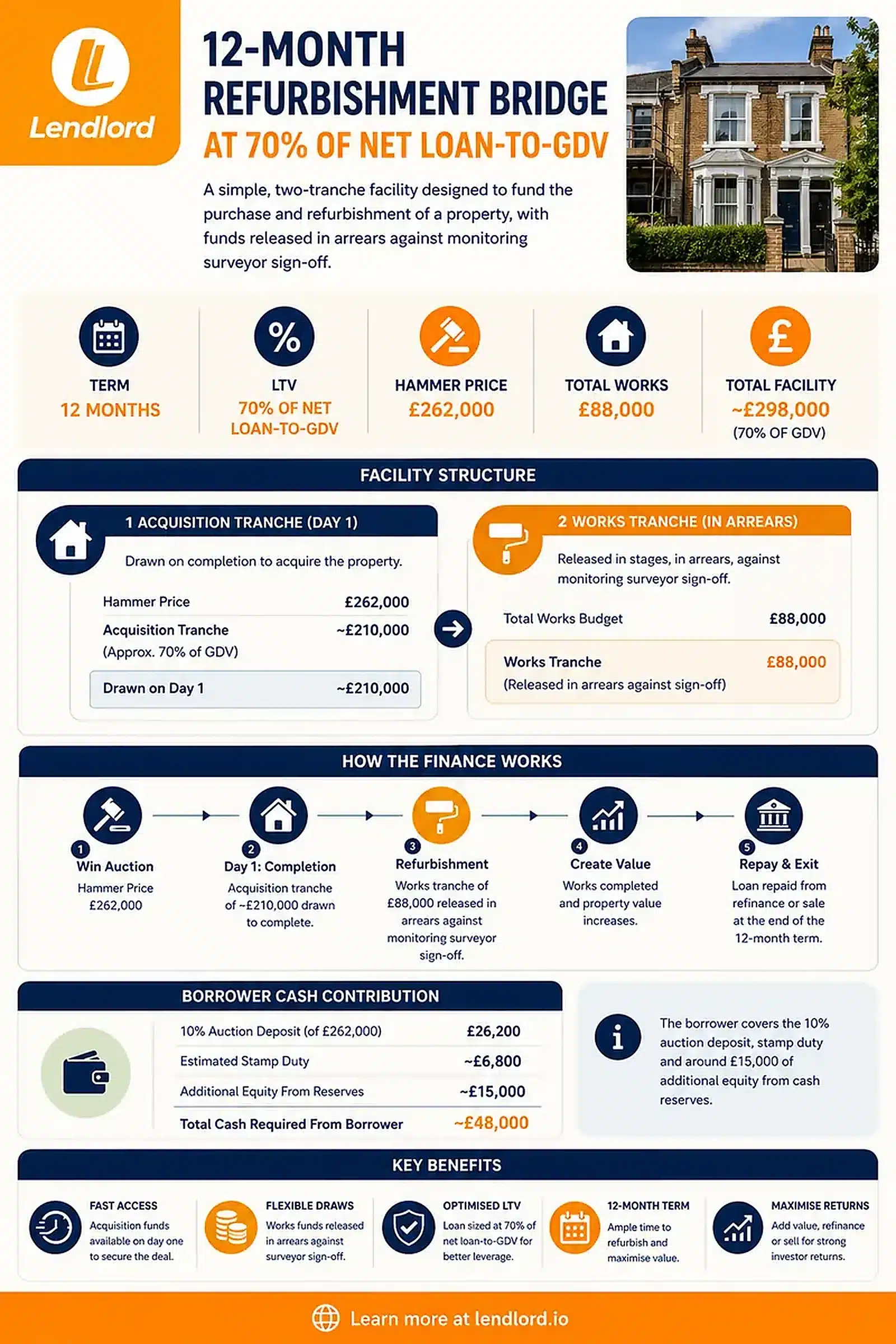
Exit: remortgage maths
Illustrative exit: GDV £250,000 at 75% LTV gives £187,500 BTL advance. If the bridge redemption (capital + interest + fees) sits under that figure after costs, the exit clears. If works undershoot GDV or the valuer haircuts, you need cash or a longer hold.
Document the exit early. Lenders assess applications on exit credibility as much as LTV. Use our bridging loan application documents checklist and the deeper process notes in how a bridging loan application is assessed.
What this case study teaches
Refurb bridges fail on three predictable points: under-scoped works, optimistic GDV, and interest structures that leave too little cash for contractors. Fix those on paper first, then return to the process guide above and the rates and requirements playbook before you apply.
Plan the refurb bridge end to end
Walk the full process, then open an application when purchase, works and exit line up.
Open the refurbishment bridging guideFrequently asked questions
How long does a refurbishment bridge usually last?
Many investors plan 6-12 months. Build in contingency for planning, contractor delays and valuation. Model a longer hold in a calculator before you commit.
Should interest be rolled up on a refurb bridge?
Often yes, because works absorb cash. Compare rolled-up and retained net advances against your schedule of works. See also our guide to interest charge structures for bridging loans.
What exit do lenders expect?
Usually a BTL remortgage once the property is lettable, or a sale. Document GDV, EPC path and rental evidence early - weak exits stall underwriting.
Where do I find the full process steps?
Use the refurbishment process guide linked in this case study for lender stages and document timing, then return here for the worked numbers.

Expert insight from Claire Harris, Bridging Loan Specialist · Director of Growth, 12+ years in loans and lending · Last updated August 2026
Official data sources
- Bank of England - Bank Rate context for short-term lending and remortgage pricing.
- GOV.UK / EPC guidance - energy performance requirements that can affect refinance eligibility.
- Lendlord bridging and refurb analysis tools for illustrative deal modelling (August 2026).