One in Six Landlords Record Rent Above the £50,000 MTD Threshold
17.7% of landlords on Lendlord recorded annual rent above £50,000 on 30 September 2026, the income line for Making Tax Digital for Income Tax this tax year. The line falls to £30,000 in April 2027, and the second quarterly update is due on 7 November 2026.
Lendlord data · 30 September 2026 · Making Tax Digital
17.7%Over £50,000 in recorded rent
Of landlords with at least one owned property, from Lendlord accounts approved for disclosure. Recorded rent is not the same as HMRC qualifying income: see the methodology.
The £50,000 line in three figures
From Lendlord accounts approved for disclosure, snapshot of 30 September 2026.
- 53%
- Of landlords over the line have 4 to 10 homes
- 5 homes
- At the £900 median rent on Lendlord, enough to pass £50,000 (£54,000 a year)
- 7 Nov
- Second quarterly update due (2026-27 tax year)
Who crosses the line, by portfolio size
The line sits in the middle of the market. Under 3% of landlords with 1 to 3 homes cross it, against more than half of those with 4 to 10 homes and almost everyone with 11 or more.
- 1 to 3 homes
Recorded rent over the line: 2.8%
- 4 to 10 homes
Recorded rent over the line: 57.5%
- 11 to 20 homes
Recorded rent over the line: 97.8%
- 21 or more homes
Recorded rent over the line: 95.1%
Who crosses the line, by UK region
Greater London leads, with 39.0% of landlords above the line, and Wales and the North East sit lowest at about 22%. These shares cover the landlords whose properties carry a region, about three in five of the base. They run larger portfolios than the full base, so compare regions with each other, not with the 17.7% figure.
- Greater London
Recorded rent over the line: 39%
- South West
Recorded rent over the line: 32.9%
- South East
Recorded rent over the line: 31.7%
- Northern Ireland
Recorded rent over the line: 30.6%
- East of England
Recorded rent over the line: 29.8%
- Scotland
Recorded rent over the line: 29.1%
- Yorkshire & Humberside
Recorded rent over the line: 25.3%
- West Midlands
Recorded rent over the line: 25.1%
- North West
Recorded rent over the line: 24.6%
- East Midlands
Recorded rent over the line: 23.6%
- North East
Recorded rent over the line: 22.4%
- Wales
Recorded rent over the line: 22%
Who comes into MTD in April 2027 and April 2028
The line falls twice more: to £30,000 from 6 April 2027 and to £20,000 from 6 April 2028. Each step is decided by an earlier tax return, so the figures landlords file now set their start date.
| Income over | MTD from | Set by the tax return for | Homes at £900 a month to pass it |
|---|---|---|---|
| £50,000 | 6 April 2026 | 2024-25 | 5 (£54,000 a year) |
| £30,000 | 6 April 2027 | 2025-26 | 3 (£32,400 a year) |
| £20,000 | 6 April 2028 | 2026-27 | 2 (£21,600 a year) |
The worked example uses gross rent only, for one owner with no other self-employment income. It shows why the lower lines reach the 1 to 3 homes band, where 97% of that band sits under the line today. It is not a count of who will be in scope. Your own start date comes from your return: the tax return that sets your start date explains how HMRC reads it.
What the 28 October 2026 Budget changed
The Budget on 28 October 2026 kept the £30,000 and £20,000 lines and their dates. It added a 12-month penalty easement: landlords and sole traders who join MTD from 6 April 2027 get no late-submission penalties on their quarterly updates for 2027-28.
Two things stay in force that year. Penalties for a late annual return still apply, and every quarterly update still has to be sent before the final return. The Budget also defers MTD for several taxpayer groups until further notice, without naming them in the Budget document.
What counts towards the line
Qualifying income is your total gross income from property and self-employment, before expenses. A landlord with £35,000 in rent and £20,000 from self-employment counts £55,000, even though neither figure passes £50,000 alone.
- Counts: rent from UK and overseas property, and self-employment turnover, both before any expenses or mortgage interest.
- Jointly owned homes: only your share of the rent counts.
- Does not count: wages taxed through PAYE, pensions, dividends and savings interest.
- Outside MTD for Income Tax: homes held in a limited company.
HMRC sets out the full rules in its guide to working out your qualifying income, and its eligibility checker gives your start date.
What is due on 7 November 2026
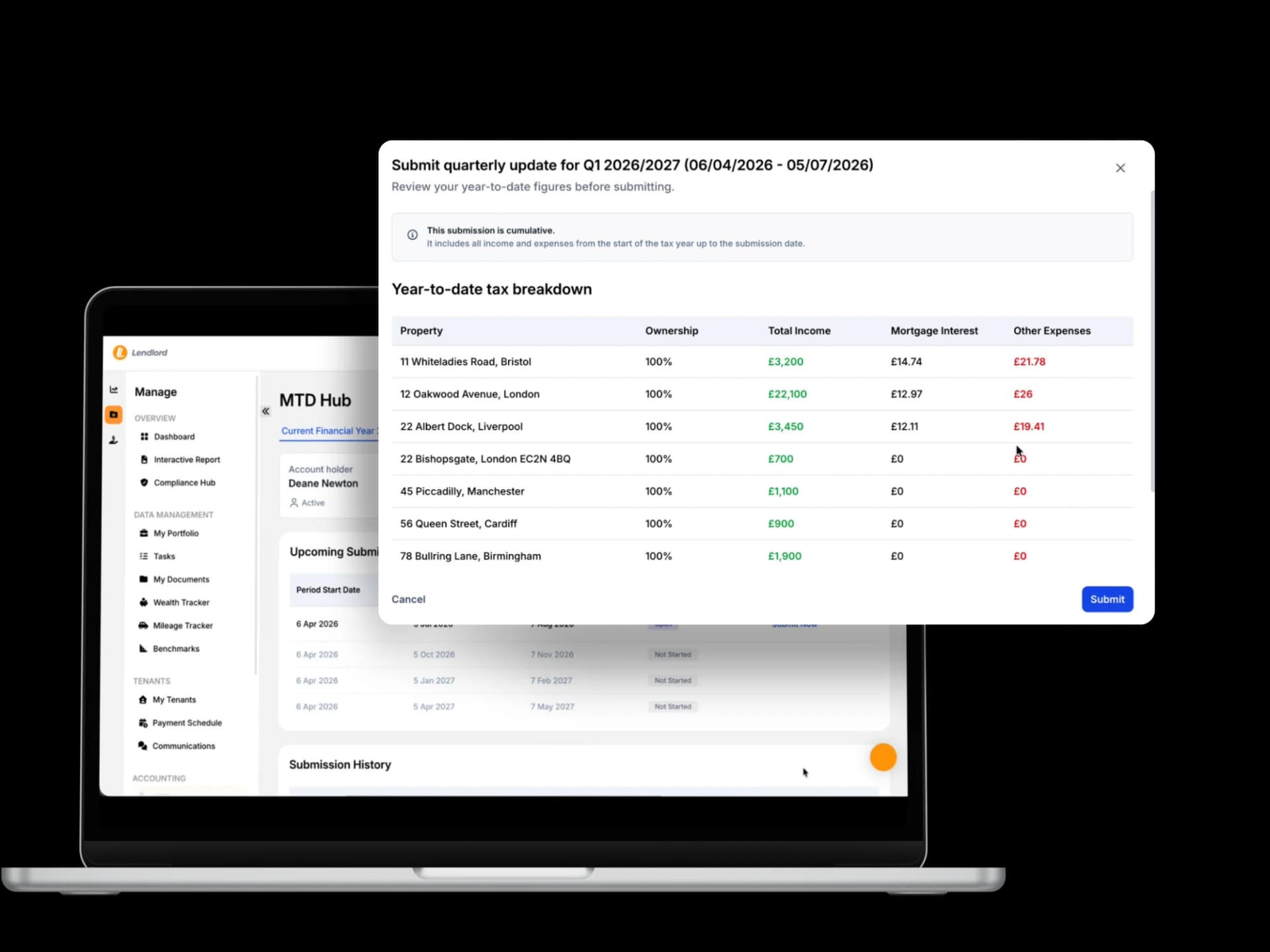
The second quarterly update of the 2026-27 tax year is due on 7 November 2026. It carries your property income and expenses from 6 April to 5 October 2026, sent from software that works with MTD.
In the first round, HMRC figures show 436,000 landlords and sole traders sent their update by 7 August. About 428,000 more did not: see how many landlords filed in August. For the records to check and the agent statements to chase before you send, see what goes into the 7 November update.
Questions landlords ask about the threshold
Who is exempt from Making Tax Digital?
HMRC can exempt people who cannot use digital tools, among other cases, and you apply to HMRC for it. The cases and the form are on GOV.UK: apply for an exemption from MTD for Income Tax.
What is qualifying income for Making Tax Digital for landlords?
Your gross rent plus any self-employment turnover, before expenses, counting only your share of jointly owned homes. PAYE wages, pensions and dividends are left out.
Can you refuse to go digital?
Not if your income is over the line and HMRC has not exempted you: quarterly updates must come from software that works with MTD. HMRC lists the products on its MTD software finder, and the step-by-step submission guide shows the process in Lendlord.
How is tax changing for landlords in 2026?
Making Tax Digital started on 6 April 2026 for landlords and sole traders over £50,000. Records are kept digitally, four quarterly updates go to HMRC each year, and a final declaration replaces the Self Assessment return for that year.
The 28 October 2026 Budget raised the tax rates on property income by a further 2 percentage points from 6 April 2027. Outside Scotland, the property rates will be 24% (basic), 44% (higher) and 49% (additional), and relief on mortgage interest stays at the property basic rate.
From the CEO
Aviram Shahar, co-founder and CEO of Lendlord.
More than one in six landlords in our analysis recorded annual rental income above £50,000. With the next quarterly deadline approaching and lower thresholds bringing more landlords into scope over the next two years, digital reporting is becoming an essential part of running a property business.
The practical challenge is keeping records organised throughout the year. Bringing rental income, expenses and bank transactions together makes quarterly reporting more manageable and gives landlords a clearer picture of their portfolio's performance.
Methodology
The analysis uses Lendlord accounts approved for disclosure, as recorded on 30 September 2026. The base is landlords with at least one owned property on the platform.
Recorded rent is the let rent on a landlord's owned properties as recorded on Lendlord, multiplied by 12.
It is not HMRC qualifying income: it leaves out self-employment income, it is not split for jointly owned homes, and it may include homes held in a company. Recorded portfolio income does not establish an individual's MTD obligations, which depend on their share of qualifying income for the relevant tax year and any applicable exemptions. MTD for Income Tax does not apply to limited companies.
The figures describe the sample analysed and are not a nationally representative survey. Regional shares cover the landlords whose properties carry a region, about three in five of the base. No published cell has fewer than 10 landlords. The worked example uses the median rent of £900 a month across 23,952 let homes on Lendlord at the same date.
About Lendlord
Lendlord is MTD-ready software for UK landlords and is approved by HMRC.
Lendlord is a property management and finance platform for landlords, investors and buy-to-let professionals, bringing portfolio, mortgage, tax and tenant data into one place.
Keep every quarter's records in one place
Rent, expenses and bank transactions, ready for each quarterly update. MTD-ready software for UK landlords, approved by HMRC.