436,000 Sent Their First MTD Update. About 428,000 Did Not
Published · Updated
4 min read
HMRC says more than 436,000 sole traders and landlords had sent their first Making Tax Digital quarterly update by 12 August 2026. About 864,000 were due to, so roughly half filed.
HMRC has not said how many of the 436,000 were landlords. Its own statistics show 259,000 of the 864,000 have rental income. If they filed at the same rate as everyone else, about 131,000 landlords sent Q1 and about 128,000 had not. That is our estimate, not an HMRC figure.
Below: who missed, what it costs this year, and what each group should send before 7 November.
Figures checked 12 October 2026 against HMRC's 12 August release and its MTD business population statistics, which use 2023 to 2024 tax returns.
How many landlords filed their first MTD update on time?
Q1 covered 6 April to 5 July 2026 and was due on 7 August. HMRC published its count five days later, so a few late filings may sit inside the 436,000. It did not split that total by income type.
The population behind it is split, though. HMRC built the 864,000 from Self Assessment returns with qualifying income over £50,000:
| Group | People | Share |
|---|---|---|
| Self-employed only | 605,000 | 70% |
| Landlord only | 118,000 | 14% |
| Landlord and self-employed | 141,000 | 16% |
| All with rental income | 259,000 | 30% |
| Total in scope | 864,000 | 100% |
Source: HMRC, Making Tax Digital for Income Tax business population statistics, 2023 to 2024 returns. Shares are Lendlord's, rounded.
Watch the 141,000 in the mixed group. HMRC wants an update for each business, so a trader who sent Q1 for the trade may still owe one for the property. Check that both show as sent in your software or HMRC online account.
Q1 still open?
Sent or still due? Check each update.
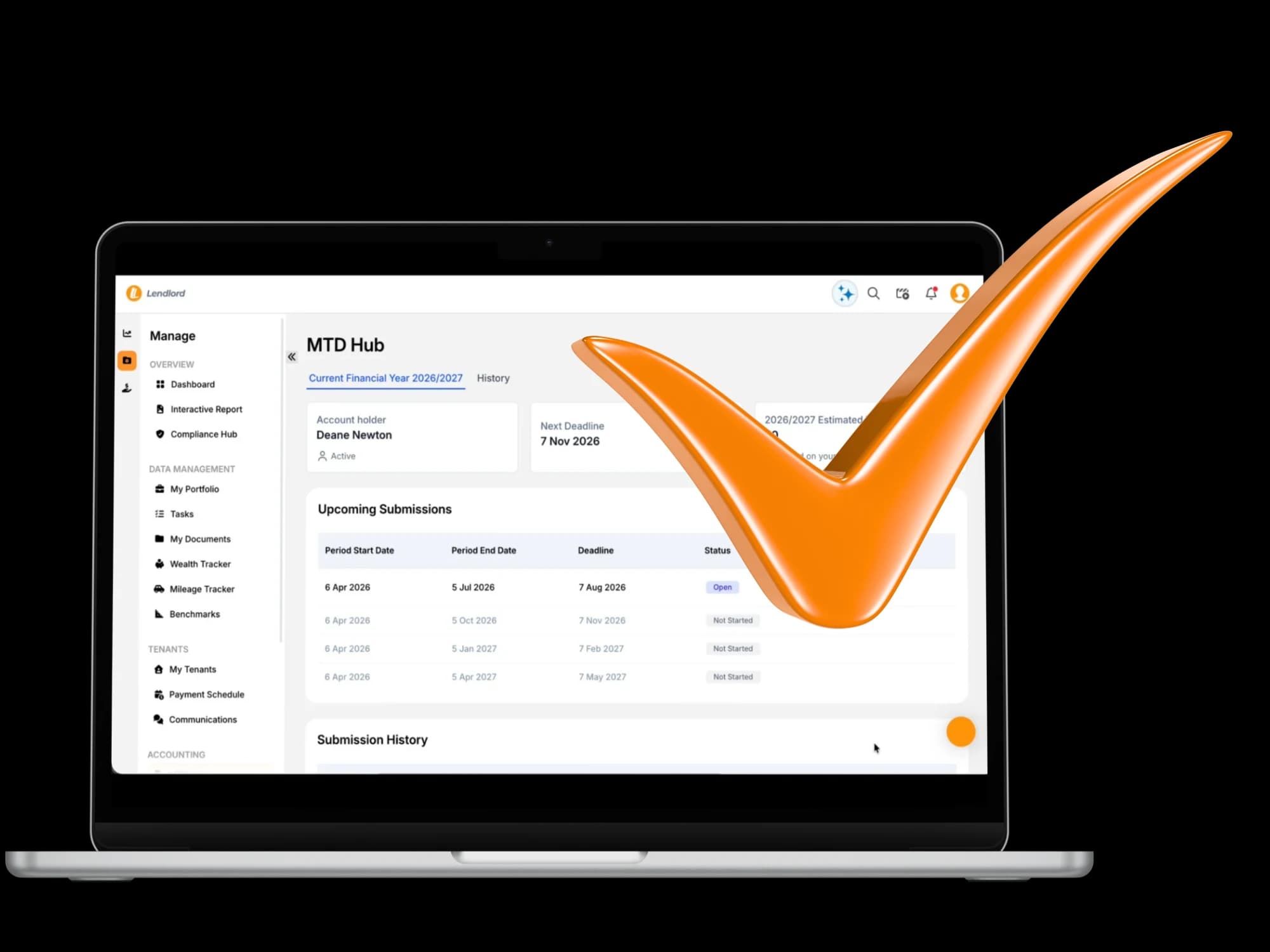
The MTD Hub lists each 2026/27 update with its period, deadline and status, then sends it to HMRC from your own records.
Check my MTD updatesWhere the other 428,000 stand
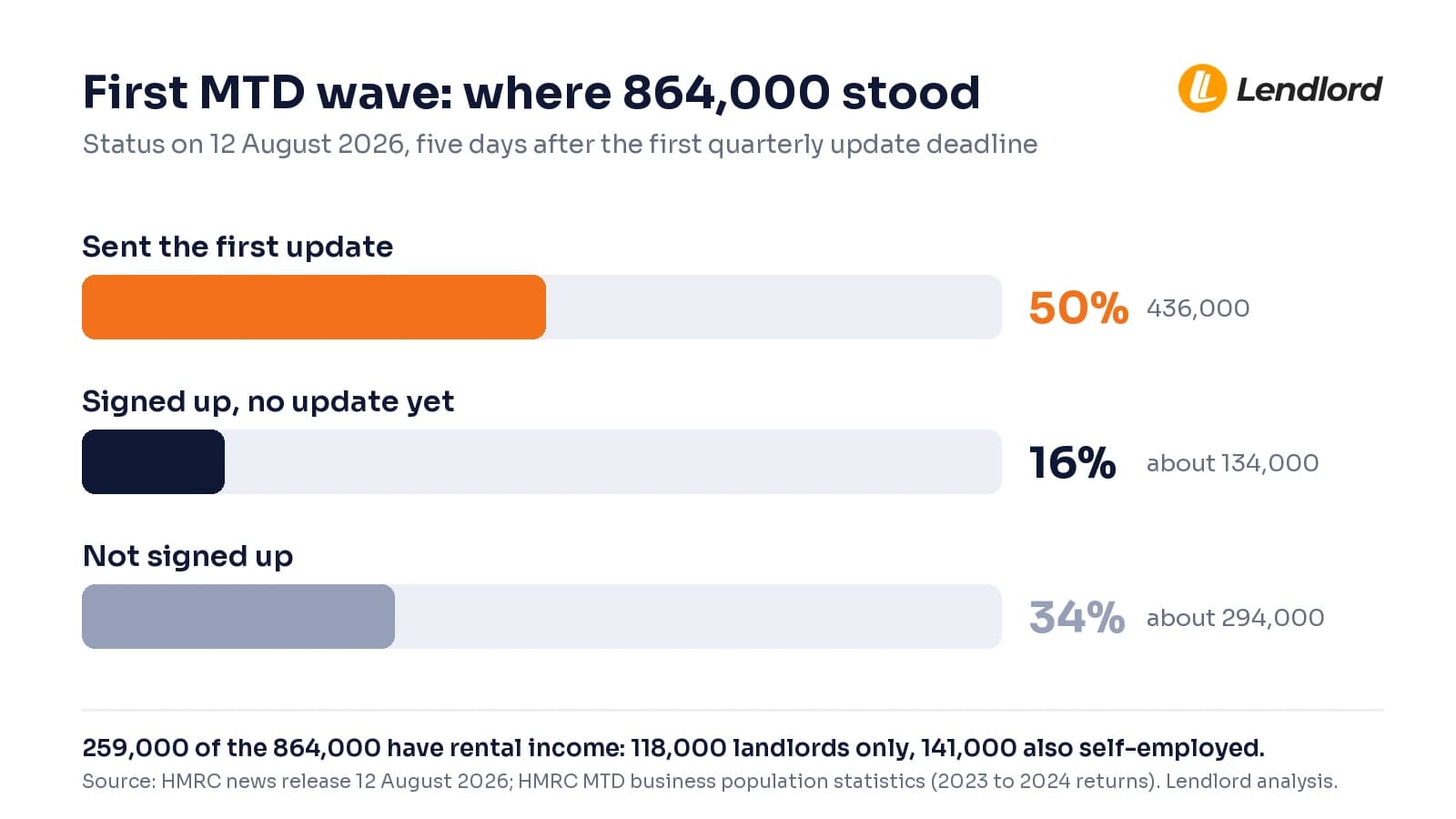
Take HMRC's two published counts away from the 864,000 and three groups appear. Each one has a different job before 7 November.
| Group | People | Share | Before 7 November |
|---|---|---|---|
| Sent the first update | 436,000+ | 50% | Send Q2, covering 6 April to 5 October |
| Signed up, no update yet | about 134,000 | 16% | Send the overdue Q1, then Q2 |
| Not signed up | about 294,000 | 34% | Sign up now, then send Q1 and Q2 |
Source: HMRC, 12 August 2026 (more than 436,000 sent; over 570,000 signed up). Lendlord analysis. HMRC gave both counts as minimums, so the two smaller groups are approximate.
Not everyone in the third group is late. HMRC tests 2024 to 2025 income for this wave, and the 864,000 comes from the year before. Some people have since dropped under £50,000, sold up, or qualify for an exemption. The rest will hear from HMRC, which began signing people up itself in September, in stages.
Missed 7 August? What it costs this year
Nothing in points. HMRC will not issue penalty points for late quarterly updates in 2026/27. The update is still compulsory, and you cannot submit your 2026/27 tax return until every update is in.
Each update is cumulative, so Q2 repeats Q1's months. That makes catching up quick once the records are clean. The late-filing notes from August also cover the scope test.
Two flats, Q1 never sent
A landlord lets two flats at £1,450 a month each. They sign up in October, connect their software and find the August update overdue.
They send Q1 first: £8,700 rent for 6 April to 5 July, with £1,900 of costs. Then they send Q2 from the same records: £17,400 rent for 6 April to 5 October, with £3,600 of costs. Both go in before 7 November, and no points apply this year.
Illustrative figures. Cash basis, standard update periods.
From 6 April 2027 that changes. Each missed quarterly deadline earns one point, and four points bring a £200 penalty. Four missed quarters in 2027/28 would get there on their own.
If Q1 went in with gaps, fix the records before Q2 rather than resending. The post-Q1 records fix-up list walks through the usual holes.
What MTD asks of landlords, and what is changing
Half of that wave filed. The other half mostly had no single system holding rent and costs when the deadline came. Fix that once and every later quarter gets easier.Aviram Shahar, Co-Founder and CEO of Lendlord
The April 2027 wave is bigger
From 6 April 2027 the threshold drops to £30,000. HMRC expects about 1,077,000 more people to join, and 279,000 of them have rental income: 182,000 landlords only and 97,000 who are also self-employed.
If you are in that group, read the 2026 numbers as a warning. Half had not filed when HMRC counted. Sign up, choose software and keep digital records from April, not after the first deadline. Our MTD software for landlords page shows how the Hub handles each step.
Clear an overdue Q1, check cumulative Q2 totals, and send both to HMRC before 7 November.
Start free and send Q2
Expert insight from Aviram Shahar, Co-Founder and CEO of Lendlord · PropTech entrepreneur · Last updated October 2026
Aviram's read on the middle bar: those landlords signed up but never wired their records to HMRC. Connect once, let rent and costs flow in from the bank, and send Q1 straight after. Q2 then becomes a short review of totals you already trust.
Official data sources
- HMRC news, 12 August 2026: 436,000 sole traders and landlords make their tax digital
- HMRC: Making Tax Digital for Income Tax business population statistics
- GOV.UK: send Making Tax Digital quarterly updates
- GOV.UK: penalties for Making Tax Digital for Income Tax
- HMRC news: sole traders and landlords earning more than £30,000 urged to act now