Landlords Selling Up: What 30,121 Homes Have Gained Since Purchase
Published · Updated
5 min read

On 30,121 owned homes from Lendlord accounts approved for disclosure, the median recorded value was £185,000 against a £124,650 purchase price on 30 September 2026. That is a gain since purchase of 48.4%, or £60,350 between the two medians.
Reports on 20 October said more landlords are selling up and leaving the sector, and that a capital gains tax rise has been ruled out. Headlines are not your numbers. Before you sell, start with the gap between what you paid and what the home is recorded at now.
Purchase price is the figure the landlord entered. Recorded value is the landlord's own estimate, not a sale price and not a formal valuation. Gain since purchase is the gap between those two medians.
Figures last checked on 30 September 2026. Snapshot taken that day.
From purchase price to recorded value
Place your own purchase next to this row before you decide anything about a sale. The £60,350 is the gap between two medians. It is not the gain on one address, and it is not cash in hand.
| Set | Homes | Purchase price | Recorded value |
|---|---|---|---|
| Full set | 30,121 | £124,650 | £185,000 |
Source: the 30,121 homes in this set, snapshot 30 September 2026. Medians. Recorded value is the landlord's estimate.
While you still hold the home, the return is rent and costs, not this gap. See what a portfolio returns while you hold it. A paper gain does not pay the mortgage.
Private homes against company homes
Privately held homes show a larger gain since purchase than company-held homes. A likely reason is purchase timing: many company homes were bought later, so they have had less time to move. That is a plausible reading, not a measured cause. Company ownership does not, on these figures, create a smaller gain.
| Held by | Homes | Purchase price | Recorded value |
|---|---|---|---|
| Private | 19,268 | £130,000 | £210,000 |
| Company | 10,850 | £117,000 | £160,000 |
Source: the same snapshot, 30 September 2026. Private and company rows do not have to add to 30,121.
The private gap between medians is £80,000, a gain since purchase of 61.5%. The company gap is £43,000, or 36.8%. Use your own purchase year before you treat the private row as the one you are in.
Your portfolio
Put purchase price next to value
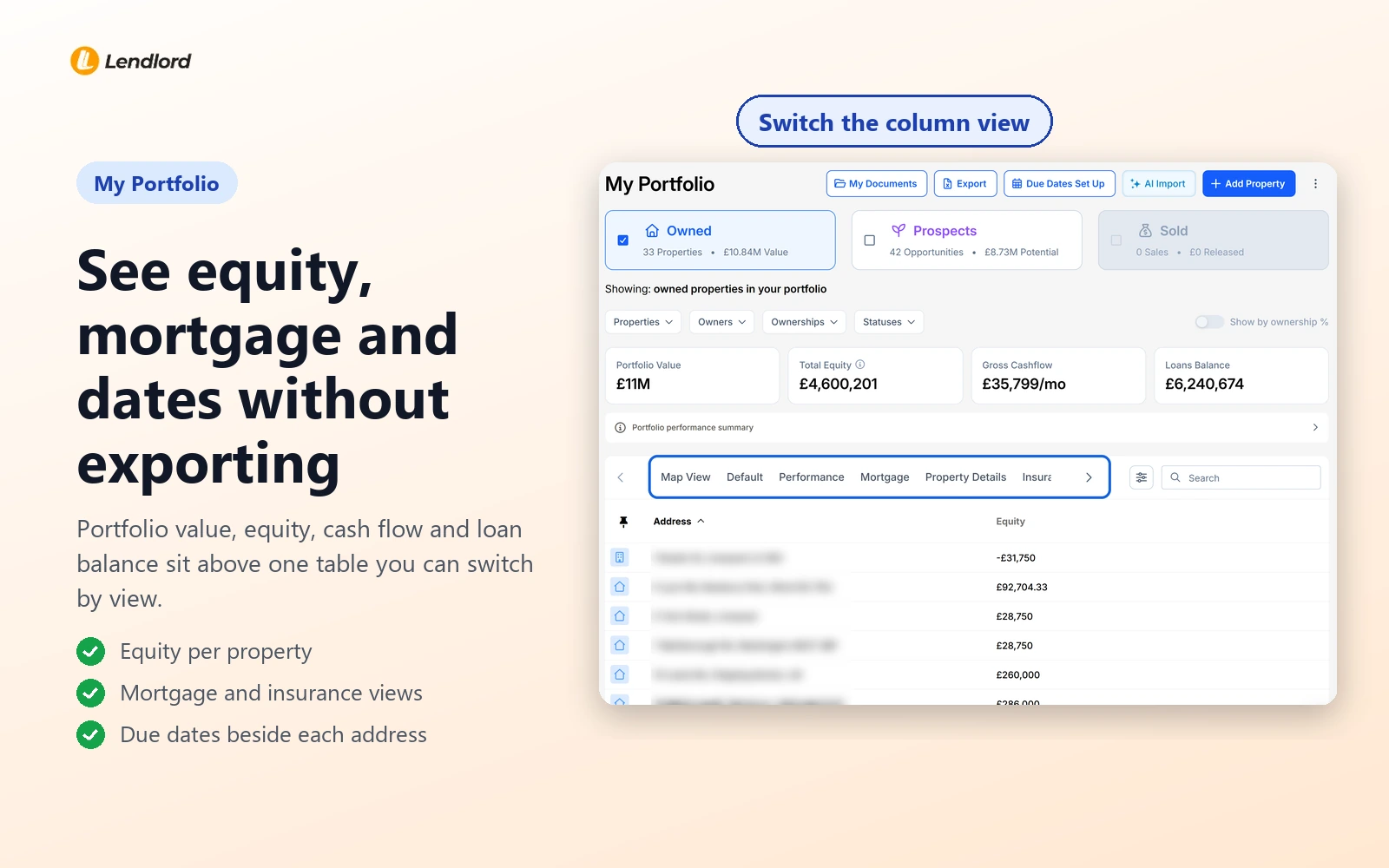
My Portfolio shows the purchase price and the current estimate on the same row.
Open your portfolioWhere gains were largest and smallest
Only towns with at least 100 homes are in this cut. The largest gains since purchase are in Chatham, Luton and Southampton. The smallest are in Peterborough, Blackpool and Bradford.
| Town | Homes | Gain since purchase |
|---|---|---|
| Chatham | 232 | 77.5% |
| Luton | 210 | 77.4% |
| Southampton | 160 | 63.9% |
| Peterborough | 383 | 24.1% |
| Blackpool | 177 | 23.7% |
| Bradford | 108 | 21.6% |
Source: the same snapshot, 30 September 2026. Towns with 100 homes or more. Gain since purchase is the gap between median purchase price and median recorded value.
Chatham's medians are a £146,500 purchase and a £260,000 recorded value. Bradford's are £92,500 and £112,500. A town percentage is not your house. If your purchase year or price is unlike the town median, ignore the row.
A gain on paper is not money in hand
The two medians, not one sale
Take the all-homes medians: purchase price £124,650, recorded value £185,000. Subtract and the gap is £60,350. That is 48.4%.
Costs of purchase, improvement receipts and selling costs all sit outside that gap. Tax sits outside it too. This example does not compute a capital gains tax bill. An accountant does that from your file, not from a median.
The rules for working out the tax on a rental sale are in how CGT is worked out on a rental. Check the current GOV.UK pages linked below before you treat a headline about tax as a reason to sell. Sell on your own gain and your own tax band, not on a rumoured rate change.
What to take to an accountant
Before you decide to sell
Five checks before a sale decision
Do them in this order. The recorded value is only the first input.
- Update the recorded value, or get a valuation, so the estimate is not an old guess.
- Find the purchase costs and the receipts for improvements. Both change what an accountant can deduct.
- Ask an accountant for the computation. Do not treat the £60,350 median gap as your bill.
- Read the GOV.UK page on reporting a UK property sale, including the deadline that applies to your completion date.
- Ask the lender what it costs to redeem the mortgage, including any early repayment charge.
Income tax on the rent, while you still let, is a separate question from the gain. Use income tax while you still let. Talk to an accountant before you exchange. Talk to a broker before you redeem.
Questions before a sale
How far have recorded values moved from purchase price?
On the 30,121 homes the median purchase price is £124,650 and the median recorded value is £185,000. The gain since purchase is 48.4%. The pound gap between those medians is £60,350.
Why do private homes show a larger gain than company homes?
Private homes show 61.5% and company homes 36.8%. A likely reason is that many company purchases are more recent. These figures do not show that a company causes a smaller gain.
Which towns sit at the top and bottom?
Among towns with at least 100 homes, Chatham is 77.5% and Luton is 77.4%. Bradford is 21.6%. Your own purchase can sit nowhere near the town median.
Is the gain the amount I would receive?
No. Recorded value is an estimate. Purchase costs, improvements, selling costs and tax all come off before any money is in hand. An accountant works out the tax on your actual sale figures.
These figures describe homes recorded on Lendlord, not every UK rental and not completed sales. The snapshot is 30 September 2026. The count is 30,121 owned homes from Lendlord accounts approved for disclosure. Purchase price is what the landlord entered. Recorded value is the landlord's estimate, not a valuation and not a sale price.
The gain since purchase compares medians. It is not one home's result. Towns under 100 homes are left out. Nothing here is a capital gains tax computation.
Model the deal you still hold before you model the sale. A 48.4% gap between medians is a reason to open the file, not a reason to list the house. The accountant and the redemption figure decide whether a sale is worth doing.
Start from your purchase price
Update the value on the home you might sell, then take that row to an accountant.
Check one home's row
Expert insight from Aviram Shahar, Co-Founder and CEO of Lendlord · PropTech entrepreneur · Last updated October 2026
Official data sources
- GOV.UK: Capital Gains Tax on property. Linked for the current rules. No tax rate or bill is quoted here.
- GOV.UK: report and pay tax after a UK property sale. Linked for the reporting deadline. No deadline length is quoted here.