Landlord Tax Calculator: What 20% and 40% Actually Cost
Published
5 min read

How much tax do UK landlords pay on rental income?
For 2026/27, rental profit is added to your other taxable income. It is then taxed at the applicable rates: 20% basic, 40% higher, 45% additional. Your Personal Allowance is usually £12,570. That allowance is reduced once adjusted net income exceeds £100,000 and is fully withdrawn at £125,140. Interest on residential lets is not a full deduction.
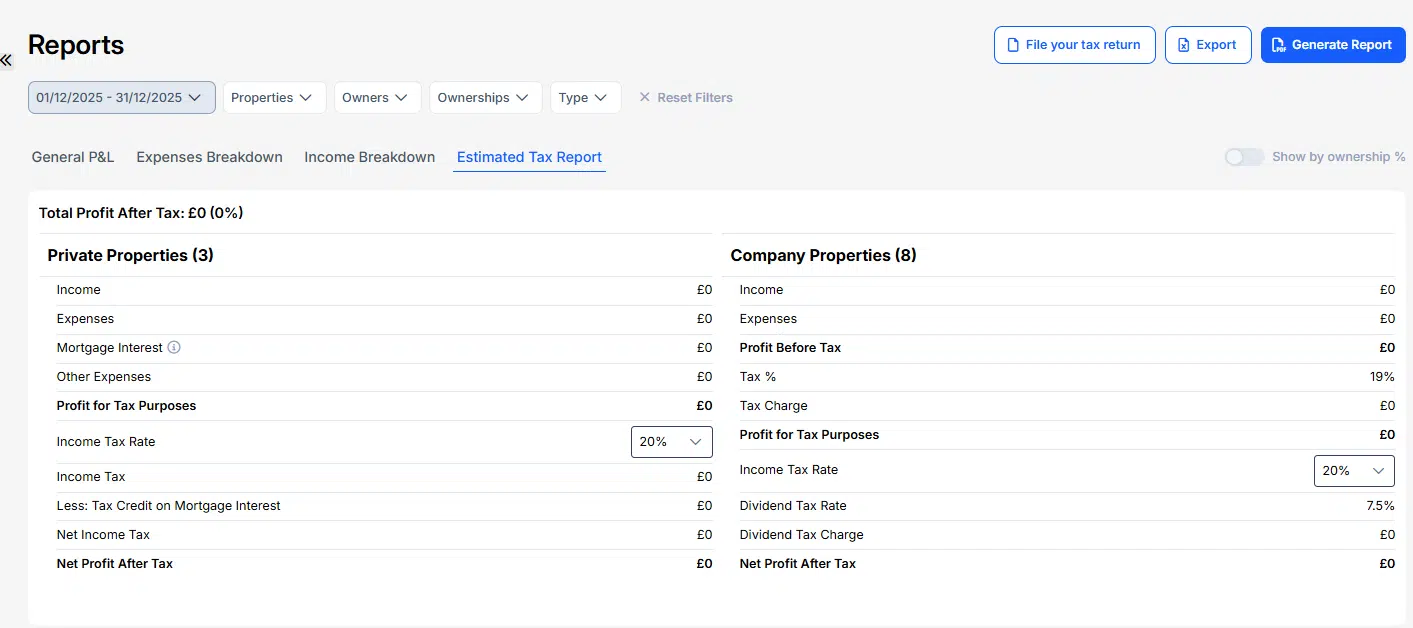
A landlord tax calculator is only useful if it applies the Section 24 credit correctly and stacks property profit on top of your other income. The worked examples below show the maths.
Tax bands, finance-cost limits, and 2027 property rates last checked September 2026 against GOV.UK and Finance Act 2026.
Model the rent first
Stress the deal before you estimate the tax bill

Use the buy-to-let analyser to lock rent, costs, and yield assumptions. Then run the tax steps in this guide on those figures.
Open the buy-to-let analyserThe five inputs every rental calculator needs
Skip any tool that only asks for rent and a tax band. You need the full set.
- Gross rent for the tax year.
- Allowable expenses (repairs, insurance, agent fees, ground rent), excluding residential mortgage interest.
- Finance costs (mortgage interest and related finance charges) for the finance-cost credit.
- Other taxable income (salary, pensions, dividends) so the band is correct.
- Personal allowance still available after that other income.
2026/27 bands that drive the result
Scotland uses different rates. These figures are for the rest of the UK.
| Band | Taxable income | Rate |
|---|---|---|
| Personal Allowance | Up to £12,570 | 0% |
| Basic rate | £12,571 to £50,270 | 20% |
| Higher rate | £50,271 to £125,140 | 40% |
| Additional rate | Over £125,140 | 45% |
The £12,570 Personal Allowance is the standard figure. It is reduced once adjusted net income exceeds £100,000 and is fully withdrawn at £125,140.
From 6 April 2027, separate property rates of 22%, 42% and 47% will apply. They apply outside Scotland under section 7 of the Finance Act 2026. Until then, add rental profit to other income and use the 2026/27 bands above. From 2027/28, HMRC guidance says the residential finance-cost relief moves to the property basic rate of 22%.
Section 24 in one line
For individual residential landlords, interest does not reduce taxable profit pound for pound. You calculate tax on profit before interest, then claim a tax reduction. That credit is often 20% of qualifying finance costs, but statutory limits can restrict it. It is not always 20% of the interest you paid. Unused relief may be carried forward.
If your calculator deducts the full mortgage interest before tax, the calculation is unlikely to be accurate under the current Section 24 rules. That is the old world, not Section 24.Hugh Miller FCCA, TaxAssist Accountants Chingford
Worked example 1: basic-rate landlord, property only
Assumptions
Rent £30,000. Allowable expenses £5,000. Mortgage interest £9,000. No other income. Standard UK bands.
Taxable rental profit = £30,000 - £5,000 = £25,000 (interest left out).
After Personal Allowance £12,570, taxable = £12,430 at 20% = £2,486.
Finance-cost credit = £9,000 x 20% = £1,800.
Tax due on the property about £686 (£2,486 - £1,800).
Worked example 2: higher-rate landlord with a salary
Assumptions
Salary £55,000 (already in the higher-rate band). Rent £18,000. Expenses £3,000. Interest £6,000.
Taxable rental profit = £15,000, taxed at 40% = £6,000.
The credit is still only 20% of finance costs = £6,000 x 20% = £1,200.
Extra tax on the property about £4,800. The credit does not climb to 40%.
Both examples assume the full finance-cost relief is available. They do not apply HMRC's limitation rules that can restrict the credit.
That gap is why higher-rate landlords feel the restriction hardest. A calculator that ignores your salary understates the bill.
What to do with the number
Use the estimate for cash reserves and payments on account. Do not treat it as a filed return. Joint ownership, furnished holiday lets, companies, and losses need an accountant.
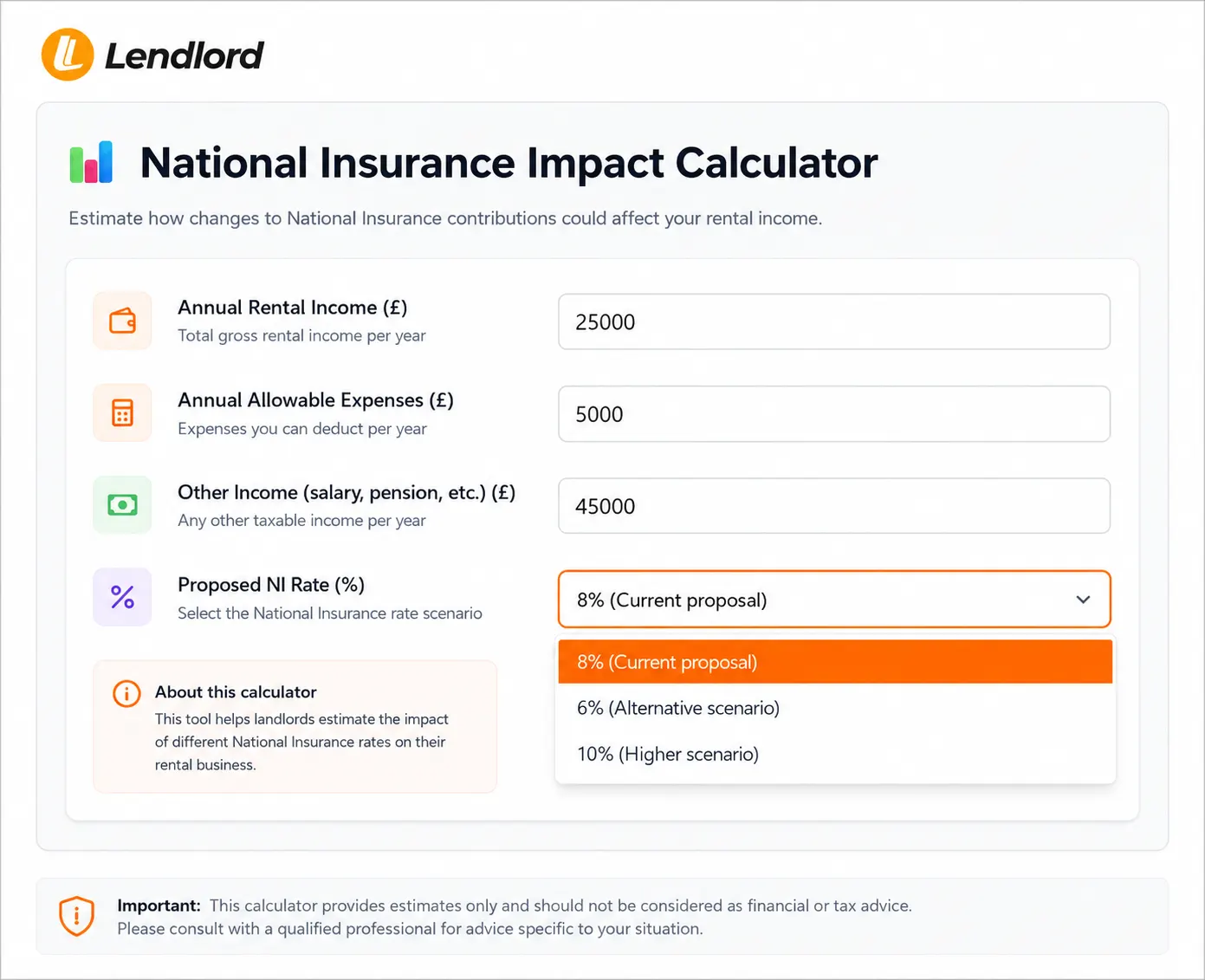
If you are modelling a proposed NI charge on rent, use the National Insurance on rental income calculator as a separate stress test, not as a substitute for income tax maths.
After you file the tax year digitally under Making Tax Digital, keep the same rent and cost figures in one place. The post-Q1 MTD cleanup before 7 November shows how messy books travel into later updates.
Frequently asked questions
How do I calculate tax on rental income as a UK landlord?
Start with rent received and subtract allowable expenses, not interest on residential lets. Add that profit to your other taxable income and tax it at the applicable rates. Apply the finance-cost credit last. That credit is subject to statutory limits, and unused relief may be carried forward.
Does a landlord tax calculator include mortgage interest?
A useful calculator shows interest as a tax credit, not as a full expense deduction. That credit is often 20% of qualifying finance costs, but it is not always 20% of the interest you paid. If a tool subtracts interest pound for pound against residential rental profit, the result is wrong for individuals.
Do I pay National Insurance on rental income?
Property income is not usually liable to Class 2 or Class 4 NI in the same way as trading profits. Separate NI proposals get debated in budgets. Model the tax bill first, then stress any NI scenario with a dedicated tool.
Will property rates change in 2027?
Yes. From 6 April 2027, separate property rates of 22%, 42% and 47% will apply outside Scotland under section 7 of the Finance Act 2026. For 2026/27, add rental profit to other income and use the 20%, 40% and 45% bands. From 2027/28 the relief is expected to use the property basic rate of 22%.
Lock rent and costs in the analyser, then keep the books tidy enough that your next tax estimate matches reality.
Start free and organise your rental figures
Expert insight from Hugh Miller, FCCA and Owner, TaxAssist Accountants Chingford · Guest contributor · Last updated September 2026
Hugh Miller FCCA is owner of TaxAssist Accountants Chingford. He advises small businesses and landlords on tax returns, bookkeeping, and property income tax, and writes as a guest contributor for Lendlord. Book a Meeting
Official data sources
Important
This article provides general guidance only and should not be relied upon as tax advice. Tax outcomes depend on individual circumstances, and professional advice should be sought before making financial decisions.