Why 78% of Bridging Borrowers Use a Company
Published · Updated
3 min read
Your solicitor asks which name goes on the facility before they ask about the property. Change that name after completion and the next loan is a purchase, not a product transfer.
In recent Lendlord bridging deals, about 78% were borrowed in a company. About 22% were in a personal name.
The bridge rate is not lower for company borrowers. The median monthly rate is 1.08% for company deals and 1.07% for private ones. What changes is the size, the LTV, and how the loan is meant to end.
Loan book checked 14 October 2026. Shares are of recent bridging deals, with funds released from 29 August 2021 to 14 August 2026. A small share had no ownership recorded.
The loan that follows the bridge
What the company deals look like
Company files are the volume of this book. Private files are the larger loans. A limited company bridging loan is the usual application here, not a special request.
| Measure | Company | Private |
|---|---|---|
| Median loan | £90,000 | £120,000 |
| Median gross LTV | 70.0% | 62.5% |
| Median monthly rate | 1.08% | 1.07% |
| Refinance exit | 68% | 49% |
| Sale exit | 30% | 46% |
| Second charge | 3% | 15% |
Source: Lendlord bridging loan book. Ownership, loan size, gross LTV, monthly rate, exit method and charge type as recorded at application. Exit and charge rows are the share of that group. Medians use every deal in that group.
Read the rate row before the loan size. Company borrowers do not get a cheaper bridge in these deals. They do get a higher loan-to-value, on a smaller loan, and a refinance exit more often than a sale.
The company median is £90,000 at 70.0% gross LTV. The private median is £120,000 at 62.5%. Personal borrowers are putting more equity in, and borrowing a bigger amount.
Why refinance sits with the company
About 68% of the company deals were set up to refinance. About 30% were set up to sell. Private deals are close to even: about 49% refinance and about 46% sale.
If you plan to keep the property and let it, complete in the name that will hold the term loan. Moving a personal property into a company later is a purchase by that company, not a product transfer.
Auction purchases in this book already lean company. See what the auction bridges show. The price gap appears on the mortgage after the bridge, not on the bridge itself. Private buy-to-let pricing in the Q3 2026 report is 4.76%. Company pricing is 6.44%. That is the cost of the name you exit into. See where company ownership first becomes the majority.
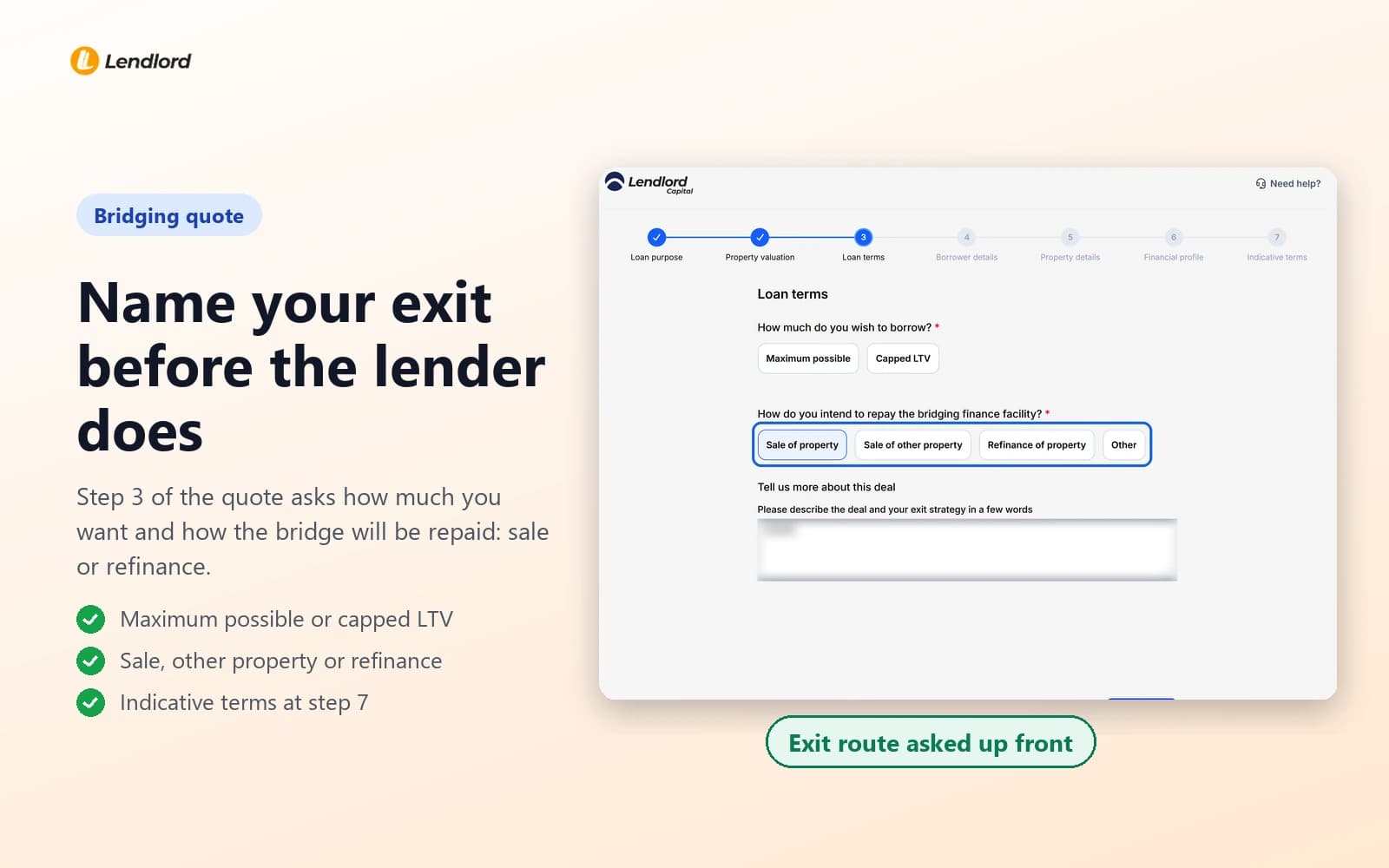
Second charge is mostly a personal file
About 3% of company deals were a second charge. About 15% of private deals were. A personal borrower more often already has a first charge on the home. About 97% of company bridges were a first charge on a purchase.
North West addresses led the company files, at about 16%. London led the private files, at about 22%. Company bridging is not a London-only product.
Name the borrower before you bid
Write the exit before you write the borrower. A sale can sit in a personal name. A let should sit in the company that will own it after refinance.
Get indicative terms in that name while the property is still available. The completion clock does not wait while a new SPV is still being incorporated.
Before you complete
Apply in the name that will hold the let
The bridge rate barely moves with the borrower. The exit lender prices the company that will own the property.
Open a bridging application
Expert insight from Clare Harris, Bridging Loan Specialist · Director of Growth, 12+ years in loans and lending · Last updated October 2026
I check the exit name before I look at the monthly rate. If most company files are heading for a refinance, the borrower on the bridge should be the borrower on that mortgage. A similar bridge rate will not fix a name you have to change on exit.
Official data sources
- Lendlord bridging loan book: ownership, loan size, gross LTV, monthly rate, exit method and charge type recorded at application, shown here as shares
- Lendlord UK BTL Market Report, Q3 2026: private pricing 4.76% and company pricing 6.44%, cited from the portfolio-size ownership article