The 11-Property Tipping Point: When UK BTL Stops Being Personal
Published · Updated
7 min read

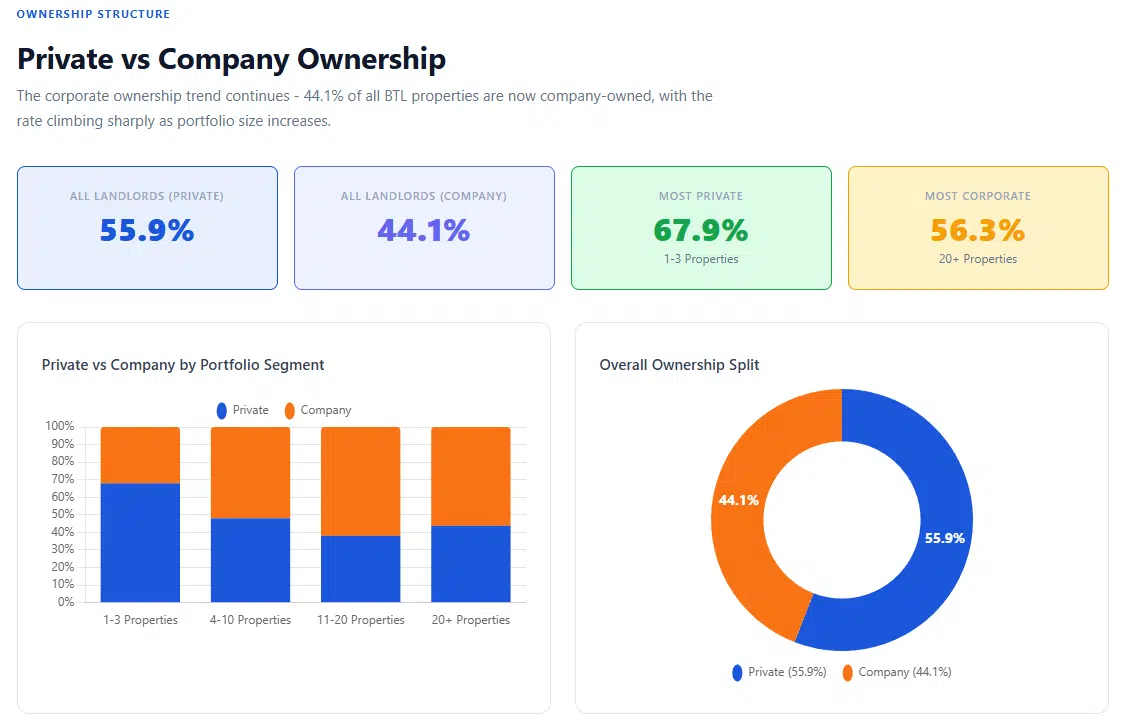
Company ownership of UK buy-to-let crosses 50% for the first time in the 11 to 20 property band: 49% private and 51% company in Lendlord Q3 2026 data. At 1 to 3 properties it is still 67.1% private. At 20 plus it is 57.6% company. That line answers when portfolios stop feeling personal, before you rely on generic tax advice.
When should you incorporate? Most guides jump straight to capital gains and stamp duty. Lendlord's Q3 2026 UK BTL Market Report gives a simpler starting point: look at how landlords your size actually hold property. Below ten units, private names still dominate. From eleven properties upward, limited companies become the majority model for the first time.
This is not a command to incorporate on property eleven. It is a signal that admin, finance, and tax reporting start to behave like portfolio management. Model personal vs Ltd in the BTL Deal Analyser, keep digital records MTD-ready, and use portfolio tools before you move stock into a company structure.
At a glance
- 11 to 20 properties: first band where company ownership exceeds private (51% vs 49%)
- 1 to 3 properties: 67.1% private, 32.9% company
- 20 plus properties: 57.6% company, 42.4% private
- National split: 45.1% company-owned, 54.9% private across all UK BTL
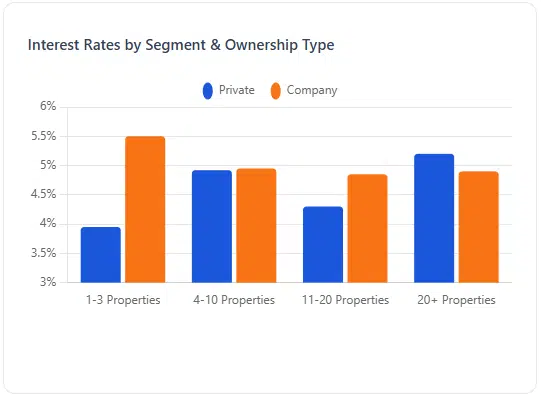
- Finance gap: average private BTL rate 4.76% vs 6.44% for company loans in the same report
- Next step: model before/after structure in the UK BTL calculator and Deal Analyser
Personal vs company finance is not identical
Structure modelling
Run personal vs Ltd before you hit eleven units
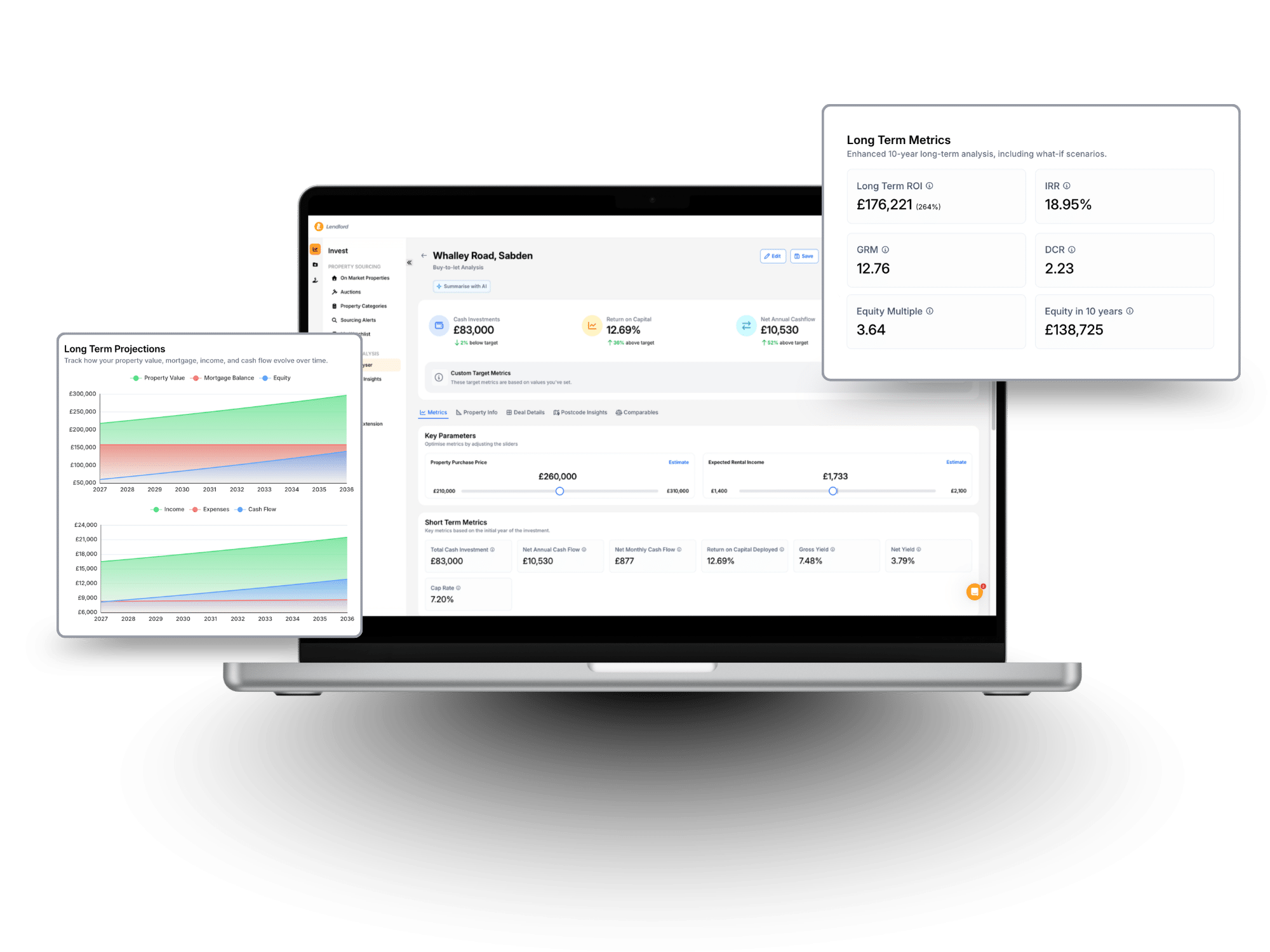
Incorporation is a portfolio decision. Model purchase, finance, and retained cash under both structures while you still have room to plan.
Open the UK BTL calculatorWhat the Q3 2026 ownership data shows
Lendlord's Q3 2026 UK BTL Market Report tracks how landlords hold stock by portfolio size. The national picture is already mixed: 45.1% of UK buy-to-let is company-owned and 54.9% sits in private names. Size matters more than the headline.
Small portfolios remain personal. Landlords with one to three properties are 67.1% private. Company ownership is a minority at 32.9%. Average portfolio value in that band is about £417,000.
The shift arrives in the teens. In the 11 to 20 property band, private share falls to 49% and company share rises to 51%. That is the first segment where Ltd structures are the larger group. By 20 plus properties, company ownership reaches 57.6%, with average portfolio value near £8.96 million.
See the full regional breakdown, mortgage rate splits, and portfolio value bands in our Q3 2026 BTL ownership insights report.
Why eleven properties marks the shift
There is no legal rule at eleven units. The number matters because behaviour changes in clusters. More properties mean more tenancies, renewals, lender relationships, and tax reporting surface area.
Company structures often follow operational pain, not a calendar date. Landlords incorporate when borrowing limits bite, when they want to ring-fence risk, or when they plan to pass a portfolio on. The Q3 data suggests many reach that point in the second decade of ownership.
CEO Aviram Shahar notes on the insights page that company ownership is already the majority model among larger portfolios and in several regions. The 11 to 20 band is where that trend becomes visible at scale.
Company vs personal: what changes in practice
Ownership structure touches finance, tax, and day-to-day admin. The same Q3 report shows average buy-to-let mortgage pricing at 4.76% for private landlords versus 6.44% for company borrowers. A Ltd wrapper is not automatically cheaper to run.
Personal landlords face Section 24 restrictions and personal tax on rental profit. Companies pay corporation tax and can retain profit, but face higher borrowing costs and more formal reporting. The right answer depends on your marginal tax rate, refinance plans, and whether you need income now or later.
From 2026, Making Tax Digital adds another layer. Personal landlords above the income threshold must keep digital records and file quarterly updates. Larger portfolios generate more transactions to reconcile. That workload scales faster than property count.
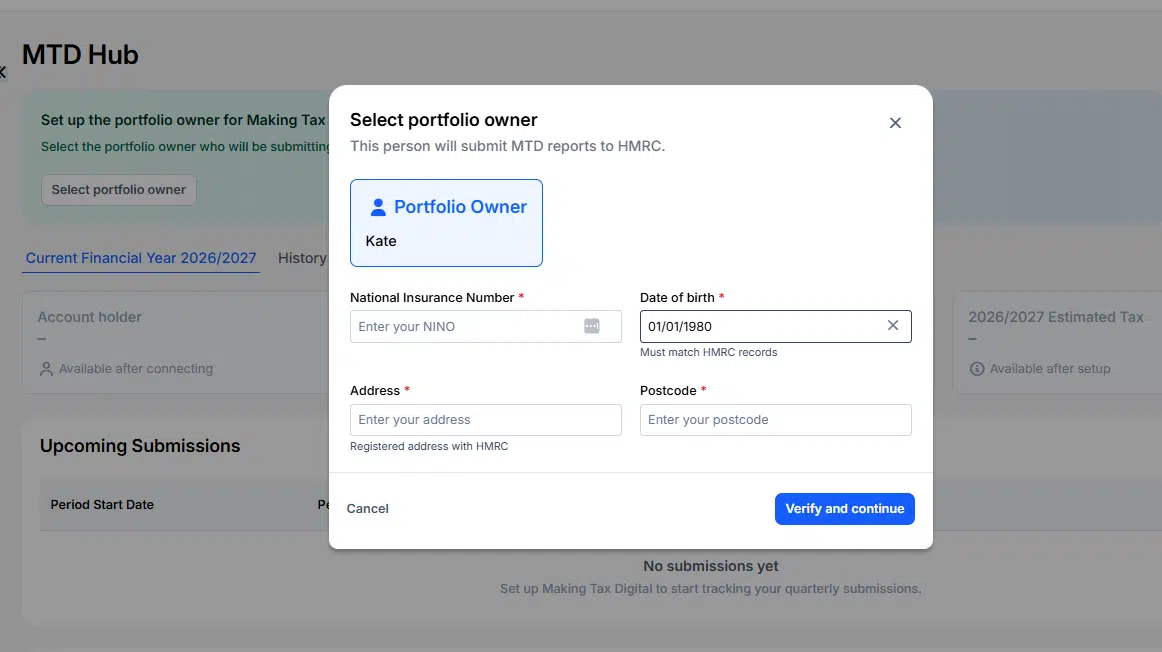
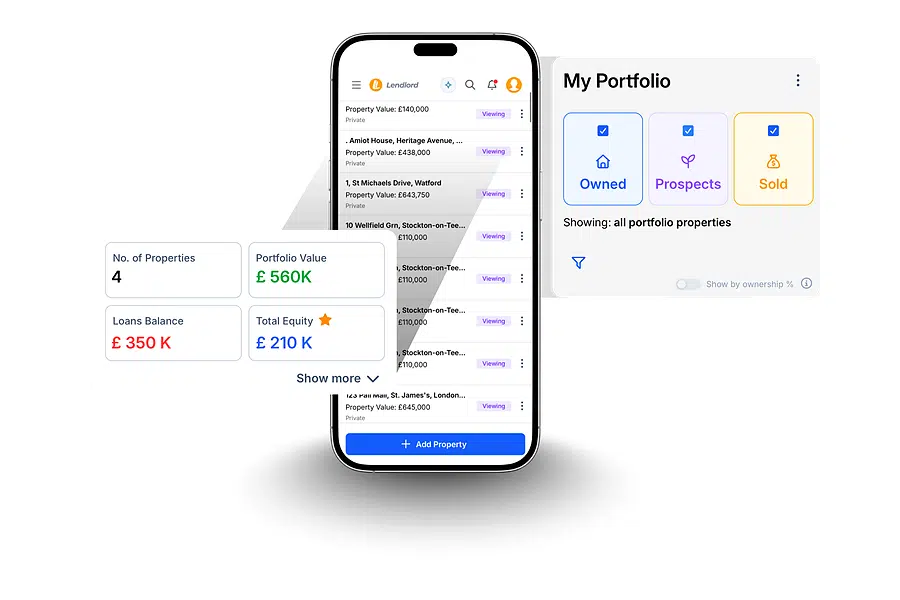
Use portfolio management in Lendlord to centralise properties, tenancies, and cash flow. Pair it with the MTD compliance hub so personal-name stock stays submission-ready while you compare a Ltd route.
Market data
See where your region sits on the company curve
North East, Yorkshire and Humberside, and Scotland already show company-majority BTL ownership. Compare your portfolio size band to the national and regional splits.
Read the full ownership insightsModel before you incorporate
Tax advisers should sign off incorporation. Your job as an investor is to arrive with numbers, not a blank brief. Run the same deal twice: once as personal BTL and once as a company purchase or transfer scenario.
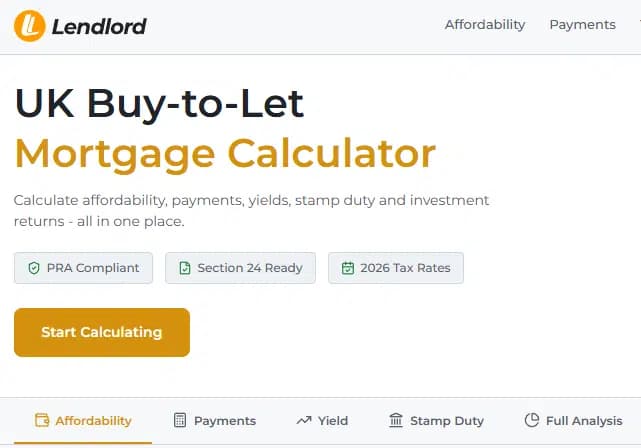
The BTL Deal Analyser handles full deal stacks with refurb and exit. For wrapper comparisons on a typical purchase, use the UK buy-to-let mortgage calculator. It covers affordability, payments, yield, stamp duty, and full investment analysis in one place.
On affordability, switch borrowing between an individual and a limited company to see how the interest coverage ratio changes. Basic-rate taxpayers and companies are tested at 125% cover; higher-rate personal names face 145%.
On full analysis, toggle owned by individual versus company to compare cash needed, cashflow, and the Section 24 tax line. Run both before you ask a broker about property eleven.
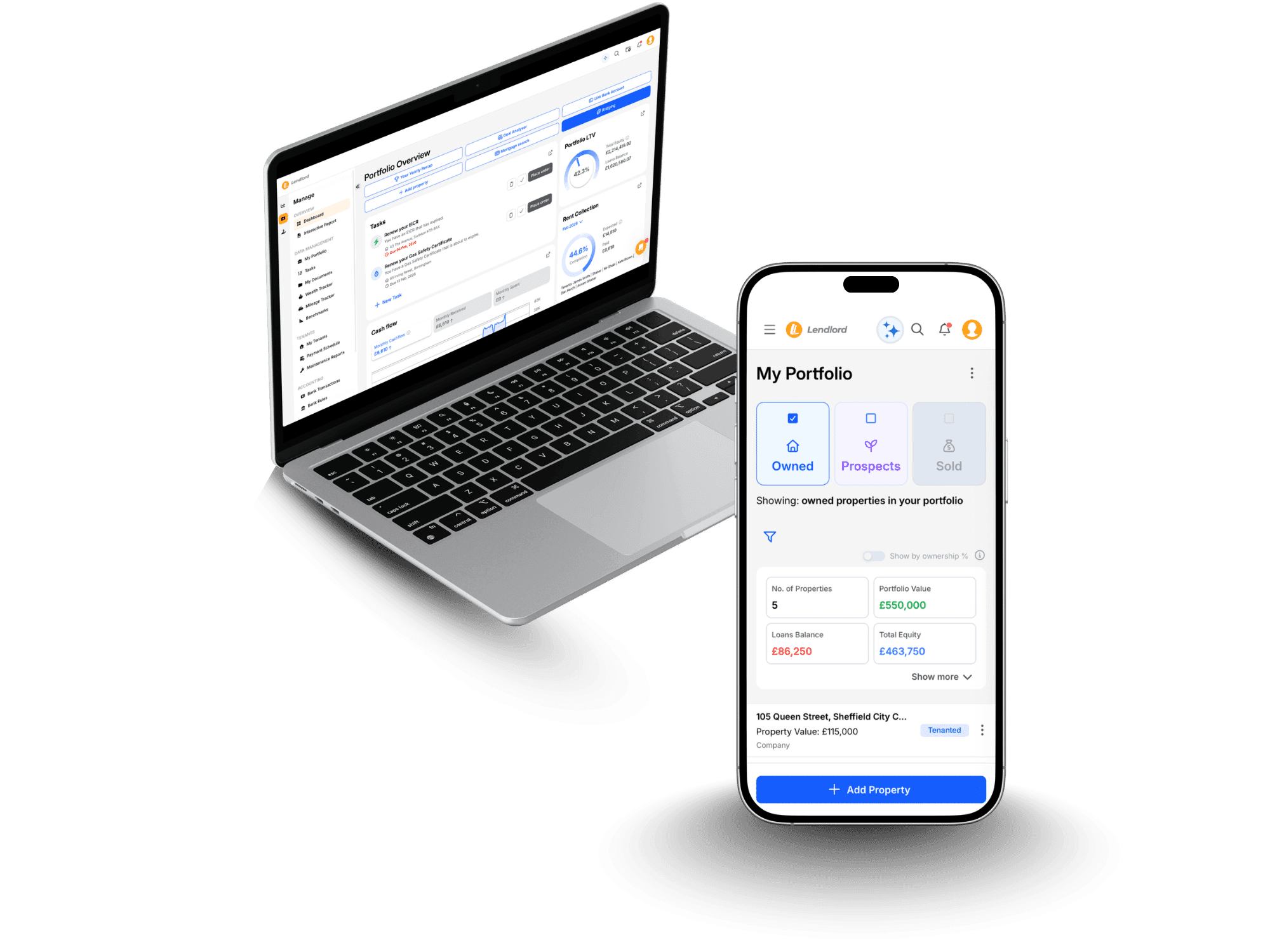
- Map current stock. List each property, lender, equity, and ownership name in one portfolio view.
- Model the next buy both ways. Run personal vs Ltd on the same purchase price and rent.
- Stress mortgage rates. Use 4.76% private and 6.44% company averages from Q3 as a sanity check, then plug your actual quotes.
- Check MTD workload. Count how many income and expense streams you already reconcile each quarter.
- Get tax advice on transfer. Incorporation of existing stock triggers SDLT, CGT, and refinancing questions advisers must resolve.
BTL mortgage strategy when structure changes
Regional picture: company ownership is not only a London story
Company-majority BTL is already visible outside the usual investment hotspots. Lendlord Q3 2026 regional data shows corporate ownership above half in North East, Yorkshire and Humberside, and Scotland.
| Region | Company-owned BTL share (Q3 2026) |
|---|---|
| North East | 53.5% |
| Yorkshire and Humberside | ~53% |
| Scotland | ~52% |
| UK national average | 45.1% |
If you are building in the North East or Yorkshire, Ltd structures are already normal there. Comparative modelling matters: peers may finance through companies while you still hold personally.
Five checks before you move to a Ltd structure
Use the 11-property tipping point as a prompt, not a deadline.
- Finance: Will company mortgage pricing erase the tax benefit on your actual LTV?
- Cash need: Do you live off rental income, or can profit stay in the company?
- Transfer cost: What SDLT and CGT apply if you move existing stock?
- Operations: Can one portfolio hub track entities, tenants, and filings?
- Next five years: Are you buying, selling, or refinancing in a way that favours one wrapper?
Work through those questions with your broker and accountant. Lendlord gives you the before and after numbers to make that conversation productive.
Frequently asked questions
At how many properties do UK landlords typically use a company?
Lendlord Q3 2026 data shows company ownership becomes the majority for the first time in the 11 to 20 property band, at 51% company vs 49% private. At 20 plus properties, 57.6% is company-owned.
Does incorporating always save tax on buy-to-let?
No. Company structures can help with profit retention and planning, but company BTL mortgage rates averaged 6.44% vs 4.76% for private landlords in the same Q3 2026 report. Model your own deals and get tax advice before transferring stock.
Should I incorporate when I buy my eleventh property?
Not automatically. Eleven units is a data marker where Ltd ownership becomes common, not a legal trigger. Compare personal vs company outcomes on your next purchase and any transfer of existing assets before you decide.
How can I model personal vs company BTL before incorporating?
Use the Lendlord BTL Deal Analyser and UK BTL calculator to run the same property under different ownership and finance assumptions. Centralise live portfolio data in Lendlord portfolio management and keep MTD records current while you compare structures.
Compare personal and Ltd outcomes on your next purchase before you cross the eleven-property band.
Model structure in the Deal Analyser
Expert insight from Simmy Kaur, Director of Buy to Let Mortgages · Financial Reporter's 30 Under 30 2025 · Last updated August 2026
Official data sources
Ownership, regional, and mortgage rate statistics cited in this article come from Lendlord's published market research.