Free Council Tax Band for UK Landlords (2026)
Published · Updated · 11 min read
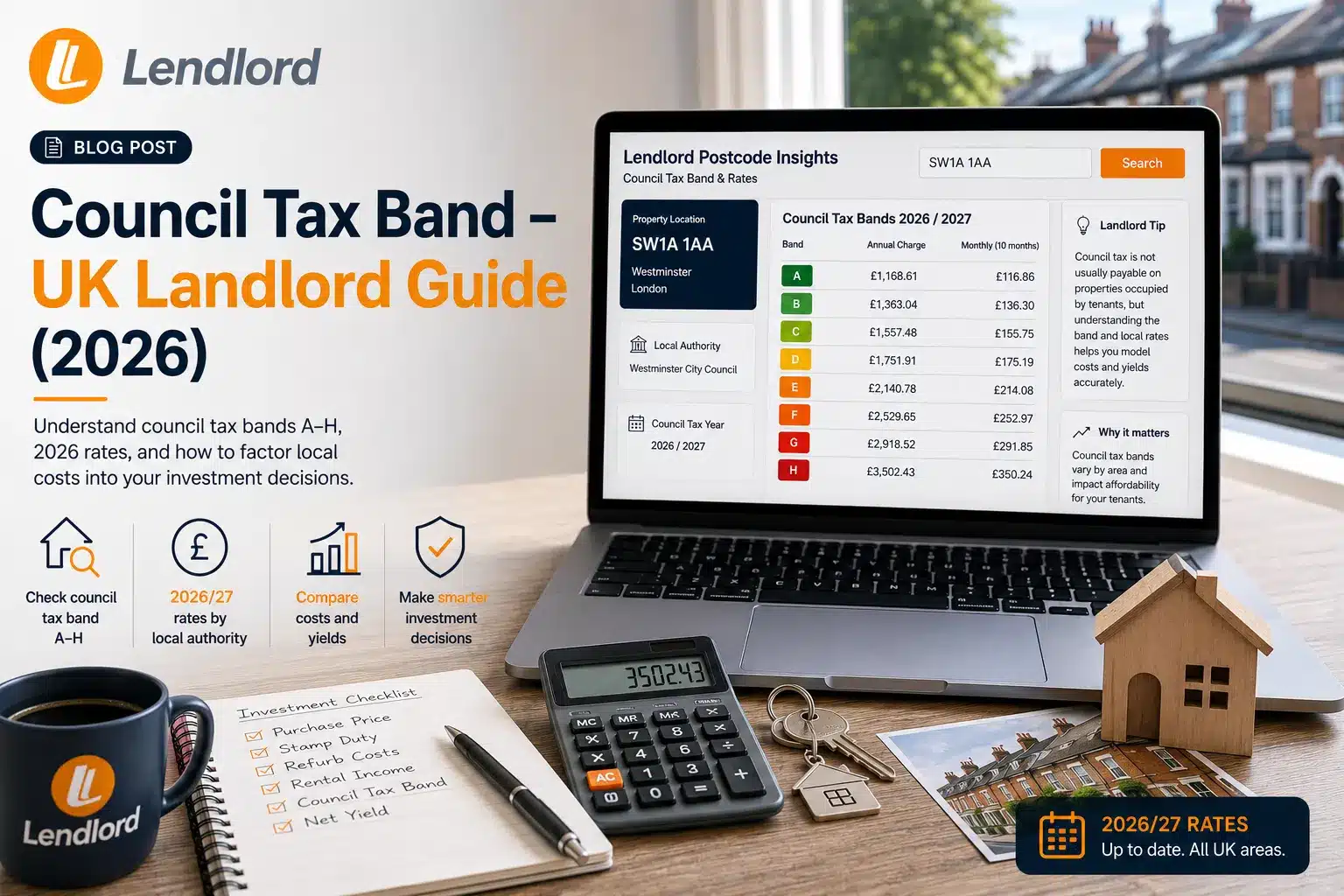
Every buy-to-let deal carries a local running cost that rarely makes the brochure: the council tax band. In fact, the band shapes your void budget, your HMO bills, and how a tenant compares your listing with the flat next door. However, many investors only discover the charge after exchange, when the cash flow model suddenly looks thinner.
Below, we explain how council tax banding works in England, Scotland, and Wales, how to run a council tax band check before you offer, and why the Renters Rights Act 2026 makes accurate local cost data more important than ever. Meanwhile, we show where Lendlord Postcode Insights pulls band and charge data into one landlord toolkit.
Key facts at a glance
- Bands: A to H based on 1991 values (England and Scotland)
- Who pays: usually the tenant in ASTs, the landlord during voids
- Check tool: GOV.UK and VOA banding lists by postcode
- Landlord tip: model council tax in every deal analyser run
Quick watch: tax strategy for landlords
What is council tax band?
First, council tax band is the label your local authority uses to set the annual charge on a domestic property. Specifically, bands run from A (lowest) to H (highest) and reflect the property value as it stood on 1 April 1991 in England and Scotland. Consequently, a Band D home in one town can cost very differently from a Band D home in another, because each council sets its own multiplier.
Importantly, the band stays with the address, not the owner. Therefore, when you buy a rental, you inherit the existing band unless you successfully challenge it or the Valuation Office Agency (VOA) rebands after major works. In addition, Wales uses a different valuation date (2003), so cross-border investors should not assume the bands mirror England.
Band A council tax
Band A sits at the bottom of the scale. In proportional terms, the annual charge is six-ninths of the Band D figure in the same council area. As a result, Band A council tax is often the reference point for social and affordable housing discussions, because the absolute bill is lower.
However, lower band does not always mean lower investor appeal. For example, some Band A streets sit in high-demand commuter pockets where rents still support strong yields. Meanwhile, the tenant pays less council tax, which can help marketing when bills are rising elsewhere.
Free calculator
Model national insurance on rental income alongside local charges
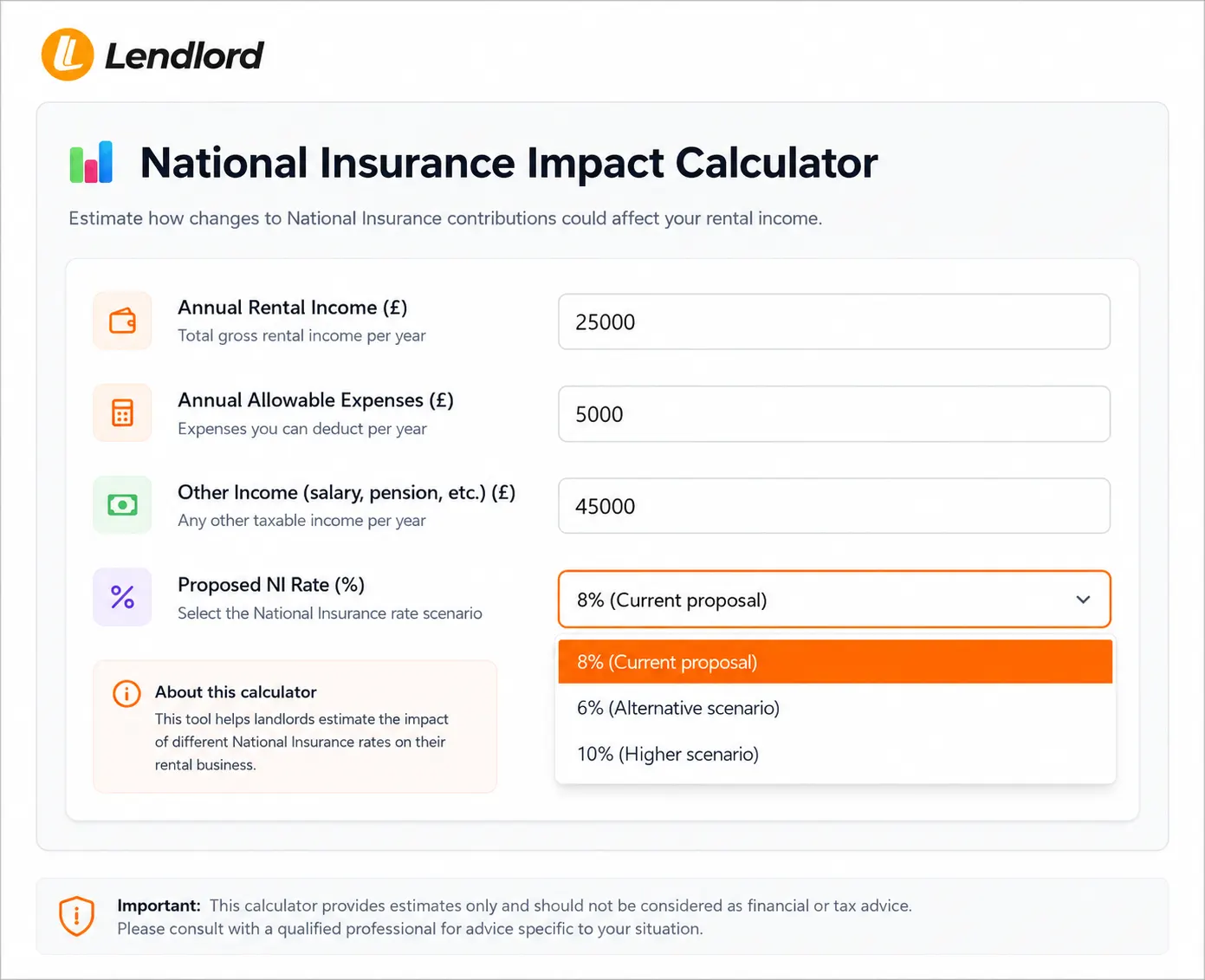
Council tax is only one holding cost. You can also model proposed national insurance on rental income with Lendlord's calculator, then stack the result against band charges and mortgage payments. As a result, you see the full post-tax picture before you increase exposure in a new postcode.
Try the NI calculatorCouncil tax banding
Council tax banding groups similar homes into bands so billing stays manageable. The VOA lists each address, and councils apply their Band D rate with the statutory ratios. Furthermore, banding can feel opaque because the underlying values date from 1991, yet they still drive 2026 bills.
Additionally, new builds receive a band when first occupied, while conversions and splits can trigger a rebanding review. Therefore, if you are splitting a house into flats or running an HMO, confirm how the council treats each unit before you sign the purchase contract.
Council tax band check
A council tax band check takes minutes and should sit beside every title review. First, search the GOV.UK council tax band page by postcode. Next, open the VOA listing if you want the full street table. After that, compare the band on the marketing pack with the official record.
Crucially, mismatches happen. Sometimes agents copy an old brochure, or a recent extension changed the band without the seller updating paperwork. Consequently, a two-minute check protects you from underwriting a deal on the wrong annual cost.
Council tax bands finder
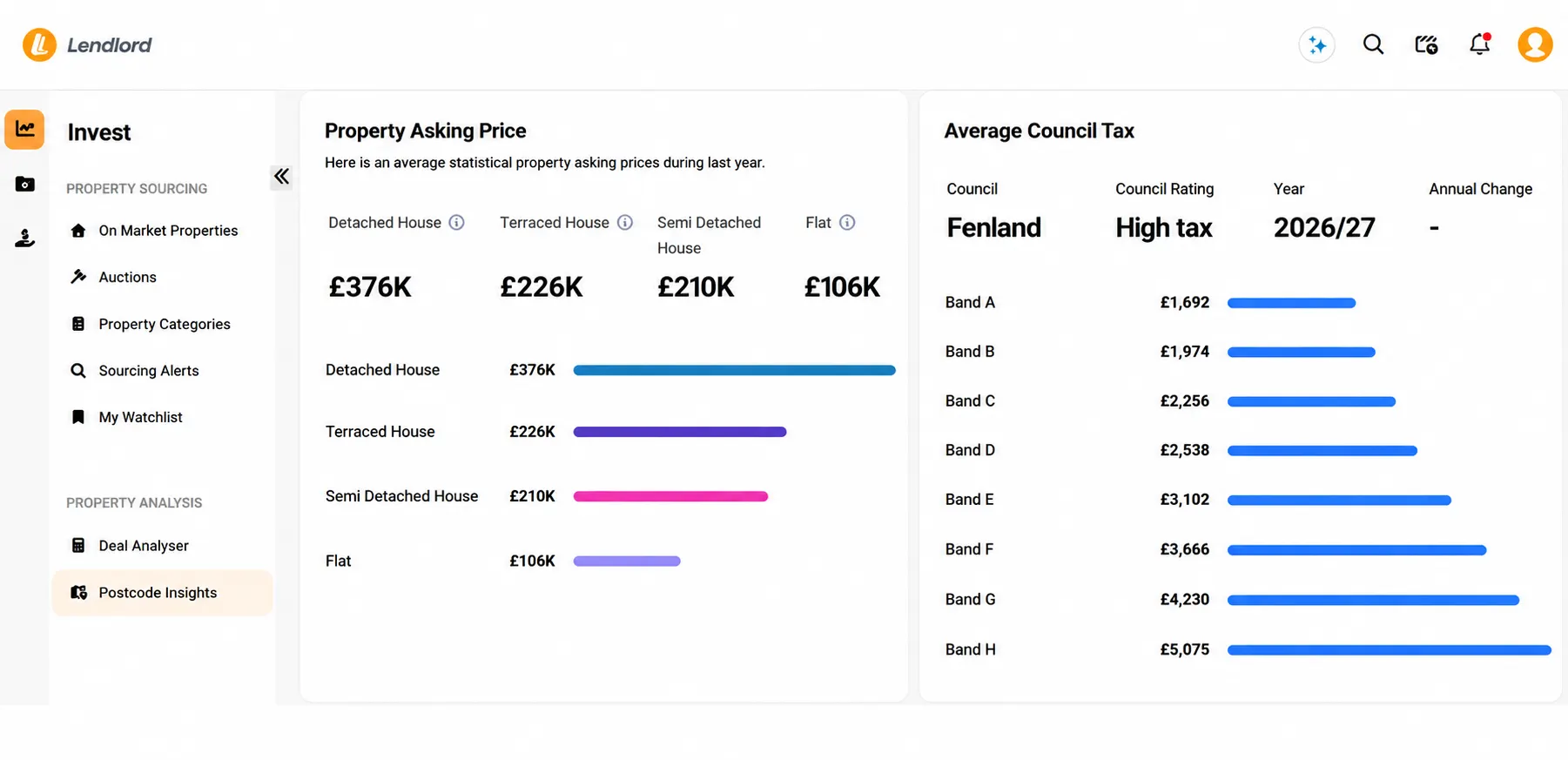
A council tax bands finder helps when you compare two streets in the same town. In practice, neighbouring postcodes can sit in different bands even when asking prices look similar. Therefore, use the finder on both the purchase address and comparable lets you rely on for rent estimates.
Meanwhile, portfolio landlords often batch-check bands when refinancing or repricing rent. Because void periods under the Renters Rights Act 2026 still leave the landlord liable for council tax unless a specific exemption applies, knowing the band upfront shapes your void reserve.
Free calculator
Pair council tax with stamp duty on the same screen
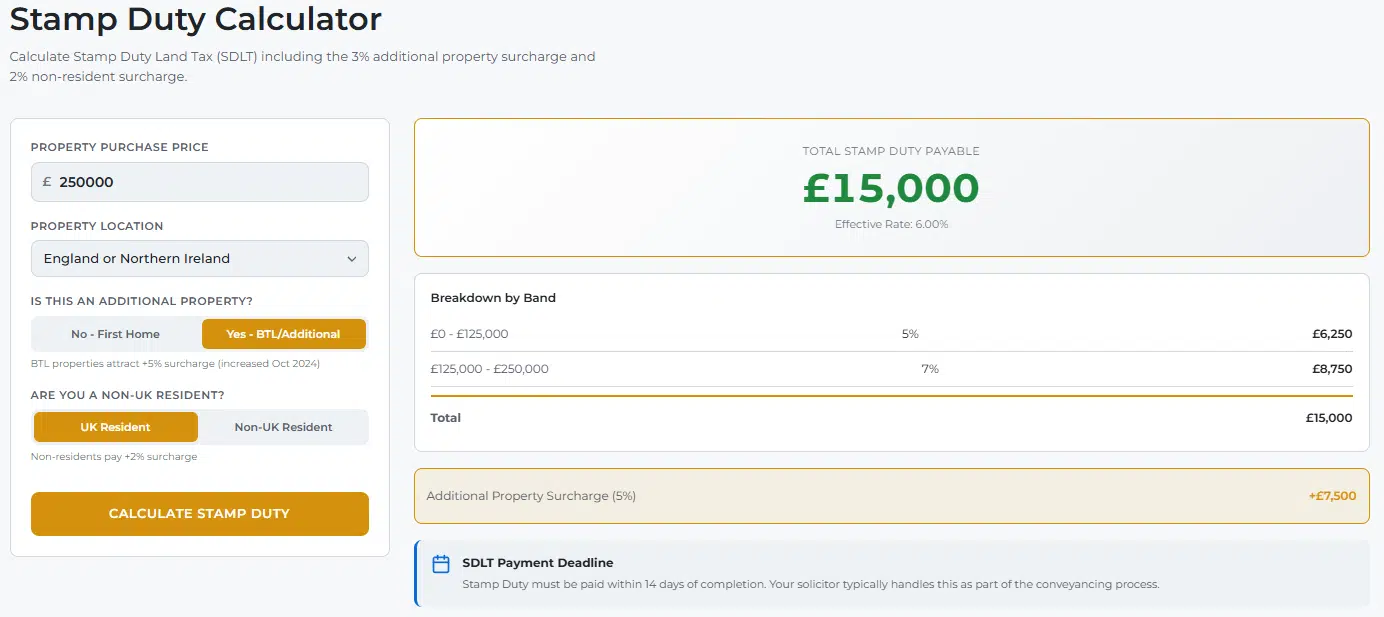
When you model a purchase, the Lendlord BTL calculator includes stamp duty alongside mortgage and yield metrics. In addition, you can cross-check local running costs so acquisition tax and annual council tax sit in one workflow rather than three separate spreadsheets.
Open the BTL calculatorSearch for council tax band
To search for council tax band data officially, start at GOV.UK and enter the postcode. Scotland uses the Scottish Assessors portal, and Wales uses the Welsh Revenue Authority tools. However, the logic is the same: confirm the band, then multiply by the council's published charge.
Furthermore, some investors search for council tax band history when they suspect a successful challenge lowered a neighbour's bill. Although you cannot rely on informal tips, the VOA decision notices explain why a band changed, which helps you judge challenge risk on your target property.
Search council tax band by address
When you search council tax band by address, pick the exact flat or house number. HMOs and subdivided buildings often carry multiple entries, and selecting the wrong unit skews your cost model. Therefore, match the band to the unit you will let, not the parent building alone.
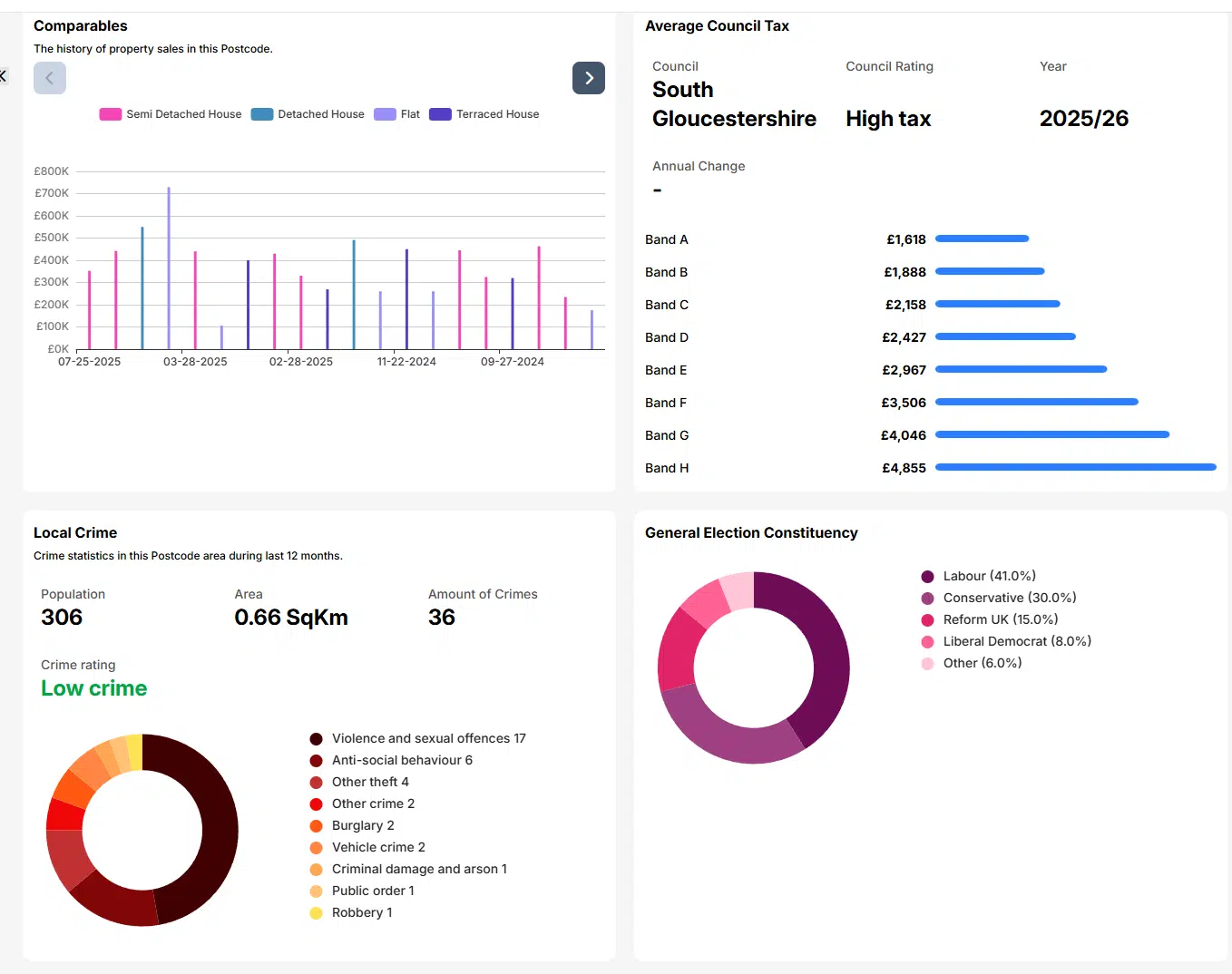
Comparison table bands A-H 2026
The table below shows how bands A to H relate to Band D in England. Specifically, these are statutory proportions. Your actual bill depends on the council's 2026-27 Band D charge, which each authority sets independently.
| Band | Ratio to Band D | Illustrative annual charge* | Typical property profile |
|---|---|---|---|
| A | 6/9 | £1,450 | Lower value flats and small terraces |
| B | 7/9 | £1,690 | Moderate terraces and smaller semis |
| C | 8/9 | £1,930 | Average family homes in many towns |
| D | 9/9 | £2,170 | Reference band for council setting |
| E | 11/9 | £2,650 | Larger semis and edge-of-town homes |
| F | 13/9 | £3,130 | Substantial detached houses |
| G | 15/9 | £3,620 | High value detached stock |
| H | 18/9 | £4,340 | Very high value homes (England only) |
*Illustrative Band D £2,170 applied. Always confirm the live charge on your council website. For purchase tax, see our stamp duty calculator guide alongside these running costs.
Step-by-step how-to check council tax before you buy
- Run the official band search on GOV.UK using the full address.
- Pull the council's 2026-27 charge table and multiply by the band ratio.
- Confirm who pays under your tenancy type and draft contract clauses.
- Add void allowance because empty periods fall to the landlord in most cases.
- Log the band in your portfolio system next to insurance and EPC dates.
Consequently, the band becomes a line item in your net yield, not a surprise in month two. In addition, if you rely on a national insurance on rental income model, update it whenever local charges shift after a council budget.
Watch: property tax Q&A
Landlord scenarios where council tax band matters
Single lets and standard ASTs
On a standard AST, tenants usually pay council tax directly. However, during voids and changeovers you pay unless a statutory empty-home discount applies. Under the Renters Rights Act 2026, periodic tenancies and longer notice periods can extend void gaps, so budget the full band charge for at least one month between tenants.
HMOs and bills-included rents
Meanwhile, HMO landlords often include council tax in the rent. Because the property may sit in a higher band after conversion, your gross rent must cover the whole bill split across rooms. Furthermore, licensing conditions may require clear billing records, so store band confirmations with your HMO licence paperwork.
Company-owned portfolios
Additionally, limited company landlords still face council tax on domestic lets. The company does not replace the band; it only changes how you account for the cost. Therefore, align council tax with your management fee and buy to let mortgage calculator outputs when you compare regional deals.
Document hub
Store band confirmations with every tenancy file
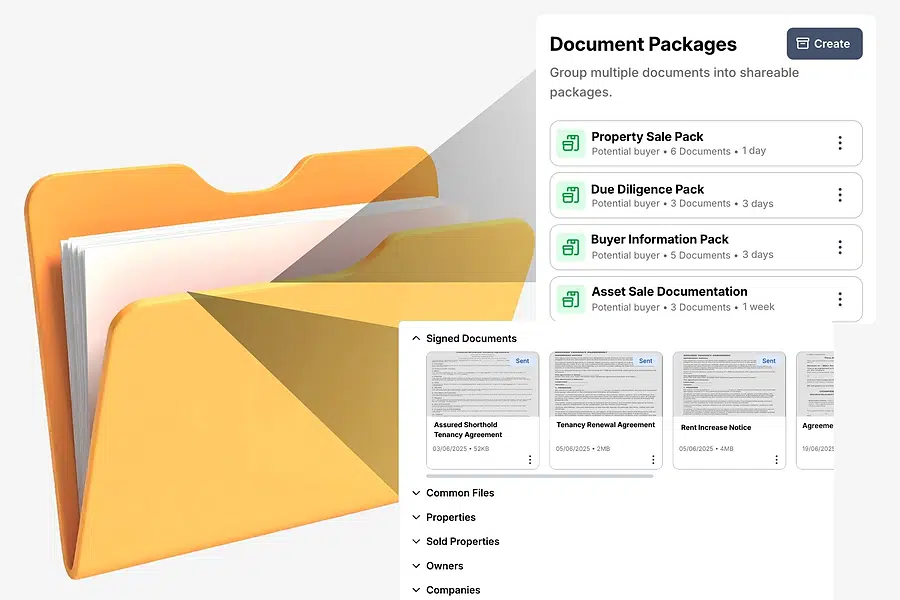
You can save council tax letters, exemption proofs, and HMO licence documents in Lendlord's document hub. As a result, when a tenant disputes liability or a council queries an empty period, you pull the evidence in seconds rather than searching email threads.
Open document managementCommon mistakes when investors ignore council tax band
First, copying the seller's brochure band without an official check. Next, assuming the tenant always pays during changeovers. In addition, forgetting that student voids and renovation voids still trigger bills. Meanwhile, some investors challenge bands without evidence, which wastes fees when the VOA rejects the case.
- Using regional averages instead of the council's live Band D rate
- Ignoring band jumps after extension or subdivision
- Missing empty-home discount deadlines on void units
- Leaving council tax out of HMO gross-to-net models
Fortunately, each mistake is preventable with a band search and a single row in your deal spreadsheet. Ultimately, council tax band charges are predictable once you know the label and the council multiplier.
Short: property tax maths
Free calculator
Model mortgage, yield, and running costs together
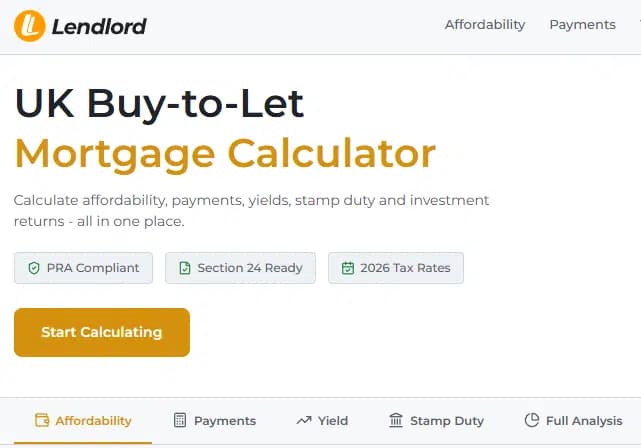
The Lendlord buy-to-let calculator brings affordability, monthly payments, and yield into one view. Consequently, you can stress test rent against finance and local charges before you increase leverage in a new band.
Use the BTL calculator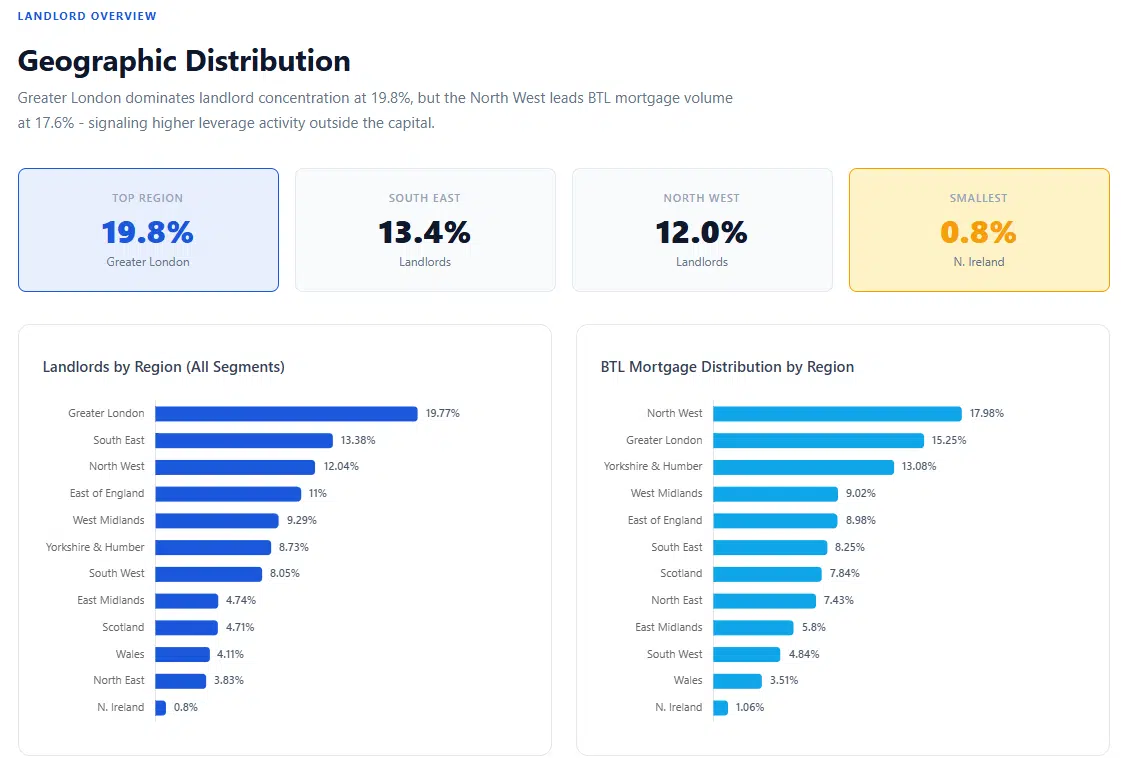
Watch: post-Budget property tax outlook
Council tax exemptions and discounts landlords should know
Empty properties sometimes qualify for discounts, but rules vary by council and change after budget meetings. Generally, unfurnished voids receive a shorter discount window than furnished ones. Therefore, read the 2026 empty homes policy on the billing authority site before you assume a month free between tenants.
Student houses can be exempt when all occupants are full-time students, yet mixed households lose that treatment. Consequently, HMO operators must track tenant status as carefully as gas safety dates. In addition, severe disrepair exemptions exist but are rare and time-limited.
Challenging a council tax band
You can propose a band reduction if comparable homes on the same street sit in a lower band. First, gather evidence from the VOA list. Next, submit a proposal online. However, challenges can take months, and an unsuccessful case can leave you paying backdated higher bands in edge scenarios, so take advice before you proceed on a thin case.
Meanwhile, professional banding services market heavily to landlords. In practice, many investors succeed only when clear comparables support the claim. Therefore, treat band challenges as a project with evidence, not a automatic saving.
Scotland and Wales: quick differences
Scotland sets council tax through local authorities with the same A-H structure, yet multipliers and discounts differ. Wales revalued in 2003 and uses different band thresholds. Consequently, a Welsh Band E is not directly comparable with an English Band E when you model cross-border portfolios.
Furthermore, second homes and empty dwellings face premium charges in parts of Scotland and Wales. As a result, holiday lets and renovation voids need a separate line in your cash flow forecast.
How council tax band fits your 2026 deal workflow
Ultimately, the band belongs in the same checklist as EPC rating, stamp duty, and mortgage stress tests. First, confirm the official band. Next, pull the council charge. Then, decide who pays under the tenancy you plan to use after the Renters Rights Act 2026 reforms bed in.
In short, a free council tax band check is one of the highest-return minutes in property due diligence. Investors who log the charge alongside postcode data keep net yields honest and voids survivable.
Working council tax into your net yield formula
When you calculate net yield, treat council tax as a recurring line whether the tenant or landlord pays it in practice. First, take gross rent. Next, subtract void allowance, maintenance, insurance, and the annual band charge. Then, divide by total invested capital including stamp duty and legals.
Meanwhile, if bills are included in an HMO rent, gross up the headline rent before you subtract the council tax you pay centrally. Consequently, your advertised room rate still reflects the true cost base. In addition, compare the result with regional benchmarks inside Postcode Insights so you know whether the band is typical for that street.
Record keeping under the Renters Rights Act 2026
The Renters Rights Act 2026 increases scrutiny on landlord documentation, including proof of who pays which bill. Therefore, keep the tenancy clause, the council tax bill, and any exemption letter in one file. Furthermore, when a tenant queries liability during a periodic tenancy, you respond with signed evidence rather than informal messages.
Additionally, agents marketing your void should quote the correct band in the listing facts. Because misleading band data can delay lettings and trigger complaints, align portal copy with the VOA register before the property goes live.
Council tax band charges and annual budget cycles
Councils set fresh charges each April when they approve budgets. Therefore, a deal that worked in March may look different in May after precept changes from police, fire, or parish councils. Meanwhile, direct debit dates vary, so align your void reserve with when bills actually land rather than assuming an even monthly spread unless you use instalments.
Official data sources
Council tax bands and charges are set using official UK valuation and billing data. Verify live figures with these sources.
Check council tax band, local charges, and deal costs in one landlord toolkit.
Explore postcode insightsFrequently asked questions
How do I check council tax band for a property?
First, search GOV.UK by postcode and confirm the exact flat or house number. Next, open your council's charge table and apply the band ratio. Consequently, you know the annual bill before you complete.
What is Band A council tax?
Band A is the lowest domestic band and is charged at six-ninths of the Band D rate in the same council area. However, the absolute amount still varies by local authority, so always use live council figures.
Who pays council tax on a rental property?
Generally, tenants pay during an AST if the contract says so. However, landlords pay during void periods and changeovers unless a discount or exemption applies.
Can I challenge my council tax band?
Yes, if comparable homes on the same street sit in a lower band. Submit evidence through the VOA online service, but take advice because unsuccessful challenges can be costly in edge cases.