38% of BTL Mortgages Expire Within 12 Months. Is Yours One?
Published
4 min read

Your fix has an end date printed on the offer. Reach it without a new product in place and the loan reprices to the lender's reversion rate the following month, automatically.
You are not alone in that queue. Lendlord's buy-to-let market research puts around 38% of BTL mortgages inside a twelve-month expiry horizon, so more than a third of the book reprices within a year.
That share is a rolling pipeline rather than a one-off event. Every month another tranche of fixes reaches its end date and either transfers to a new product or drops onto the reversion rate.
What follows is the cost of getting that timing wrong, the six-month sequence that avoids it, and the part company-held portfolios need to price differently.
Expiry share last checked September 2026 against Lendlord's market research. Example rates below are illustrative, not quotes.
While the window is open
See what your loan would reprice at today
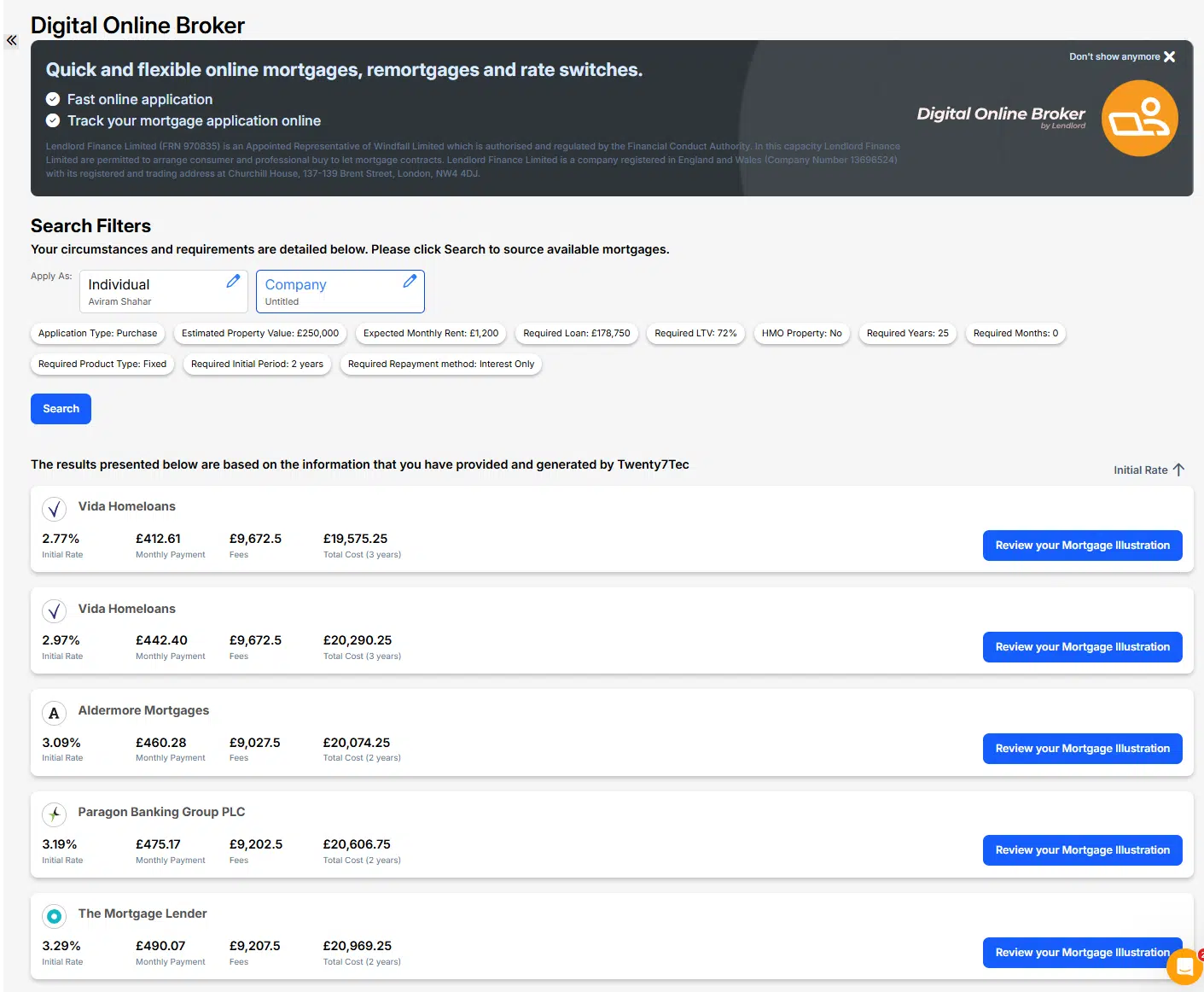
Live mortgage products across the lender panel, filtered on LTV and rent rather than a headline rate you may not qualify for.
See live productsWhy the expiry date matters more than the headline rate
A fix ending is a hard date. Miss it and the loan moves to the reversion rate automatically, usually the following month, with no warning beyond the letter you were sent months earlier.
Reversion rates are not a penalty in the formal sense. They are just priced for a lender that no longer has to compete for you. On a portfolio, that difference compounds across several loans at once.
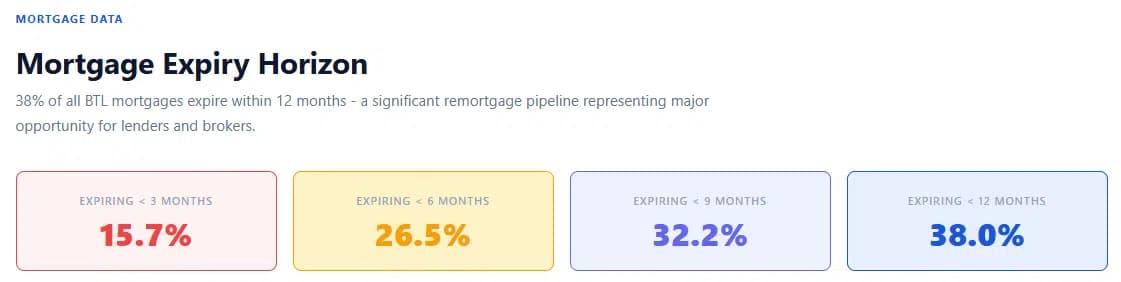
Source: Lendlord buy-to-let market research, expiry horizon across the tracked mortgage book.
What lapsing onto the reversion rate costs
Take a £180,000 interest-only loan coming off a five-year fix taken in 2021. Three positions, same debt.
| Where the loan sits | Rate | Monthly | Per year |
|---|---|---|---|
| Five-year fix taken in 2021, now ending | 2.89% | £434 | £5,202 |
| New five-year fix, indicative | 5.29% | £794 | £9,522 |
| Lender reversion rate | 8.25% | £1,238 | £14,850 |
Illustrative worked example on a single interest-only loan. Rates shown are for comparison, not an offer.
The new fix costs about £360 a month more than the old one. That hurts. Drifting onto the reversion rate costs roughly £444 a month more again, on top of that, for a decision nobody actively made.
Three months on the reversion rate is not a small slip. On this loan it is about £1,332, which is most of a quarter's profit on a single property.
The six-month sequence before your fix ends
Work backwards from the end date. The order matters more than the effort, and most of it is short admin done early rather than a scramble in the final fortnight.
- Six months out: list the exact end date of every loan, not the month you think it is.
- Six months out: reserve a product. Most lenders let you book one this far ahead and swap if pricing improves before completion.
- Five months out: re-run the ICR at the new pay rate, and again at the lender stress rate.
- Three months out: decide between a product transfer with your current lender and a full remortgage.
- Two months out: get the rent schedule, tenancy agreements and accounts ready. Paperwork is what stalls these cases.
- One month out: confirm the completion date lands on or before the expiry date.
Step two is the one landlords skip. A reserved product is an option, not a commitment, and holding one removes the risk that swap pricing moves against you in the last eight weeks.
Where mortgage pricing has moved
Product transfer or full remortgage?
A product transfer stays with your existing lender. It is faster, usually needs no new valuation, and often no fresh affordability assessment. That last point matters if rent has not kept pace with the stress rate.
A remortgage opens the whole panel and can release equity, but it restarts underwriting. Price both. If the transfer is within about 0.2 points of the best panel rate, the speed and the certainty usually win.
Before either, check the rent still clears the lender's cover requirement using the BTL stress test and ICR calculator. If you are choosing between a two-year and a five-year product, the remortgage maths after the Bank of England hold covers that trade-off.
Company-held portfolios price differently
Limited company buy-to-let sits at a higher average rate than personally held stock, around 6.44% against 4.76% in Lendlord's ownership analysis. Budget the reprice on the company number, not the one you read in a consumer best-buy table.
Company cases also take longer. Expect director paperwork, sometimes personal guarantees, and a lender panel that is narrower than the residential-style BTL market. Start the six-month sequence at seven months if the loan sits in a company.
The 38% expiry share comes from Lendlord's market research and describes the tracked mortgage book, not the whole UK market. The reprice table is a worked example on one interest-only loan at illustrative rates. Your own figures depend on LTV, rent cover, ownership structure and lender criteria on the day.
Find out where your loans expire
Add each mortgage with its end date and the portfolio view flags what is reaching expiry, so the six-month window starts on time.
Compare live mortgage products
Expert insight from Simmy Kaur, Director of Buy to Let Mortgages · Financial Reporter's 30 Under 30 2025 · Last updated September 2026
Simmy's rule on the desk is simple: book the product first, then keep shopping. Landlords who wait for a better rate usually end up taking whatever is left with three weeks on the clock. By then the case has to be underwritten, not priced.