Bridging Loan Calculator UK 2026: Rates, Requirements, and How to Price Your Deal
Published · Updated · 6 min read
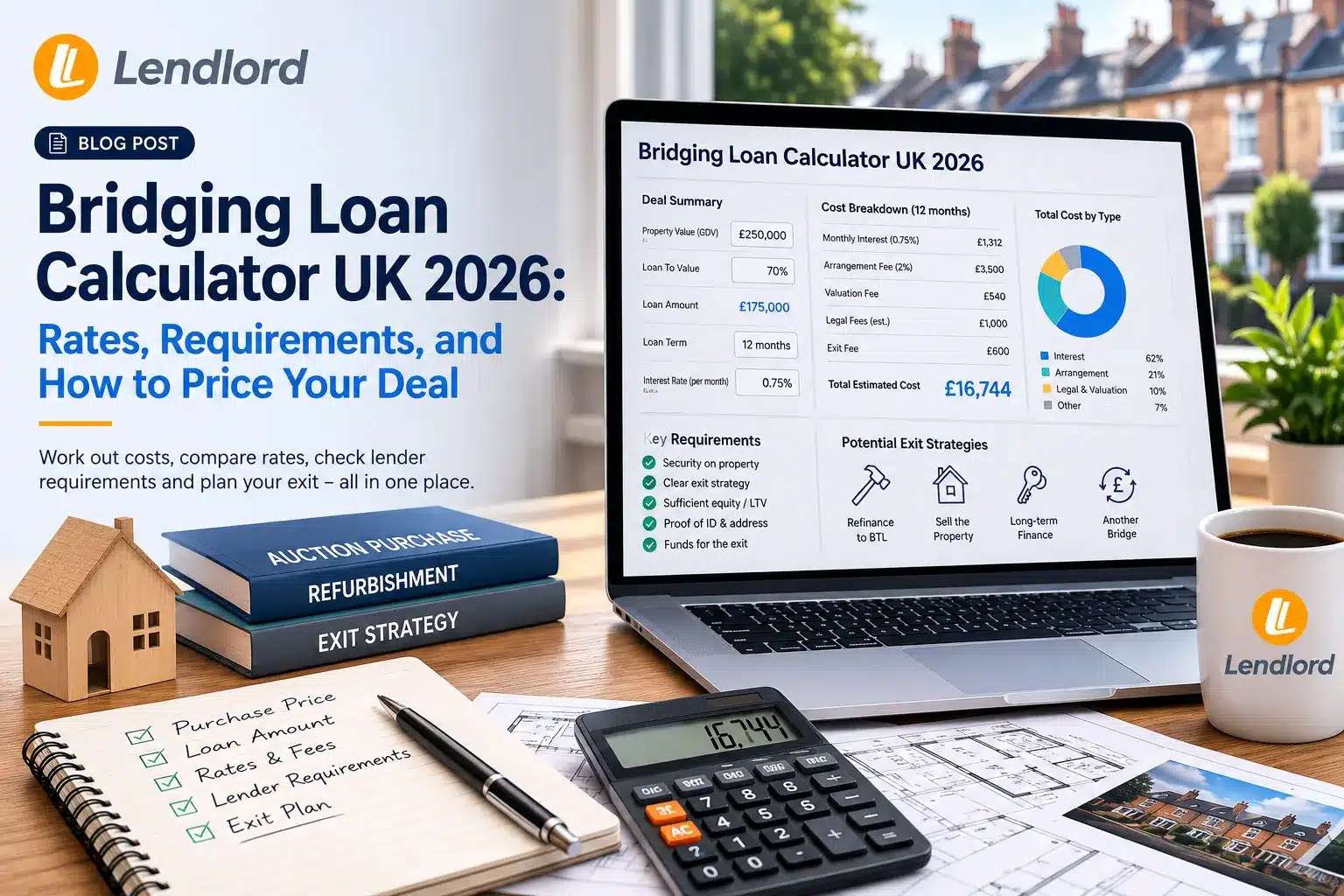
If you are eyeing an auction lot or a below-market refurb, a bridging loan calculator is often the first tool you reach for. In fact, speed is the whole point of bridging, so knowing your cost and exit before you bid matters enormously. However, the numbers only help if you understand the rates, the fees, and the lending requirements behind them.
Below, we explain how bridging finance is priced in the UK, what lenders actually check, and how a calculator turns a rough idea into a decision you can act on. Meanwhile, we keep everything UK-focused so the figures match your market.
Key facts at a glance
- Pricing: monthly interest, arrangement and exit fees
- Speed: completions possible in days, not months
- Security: loan sized against value and your exit
- First step: model cost with a bridging loan calculator
Quick watch: digital bridging finance
How bridging loan rates work in 2026
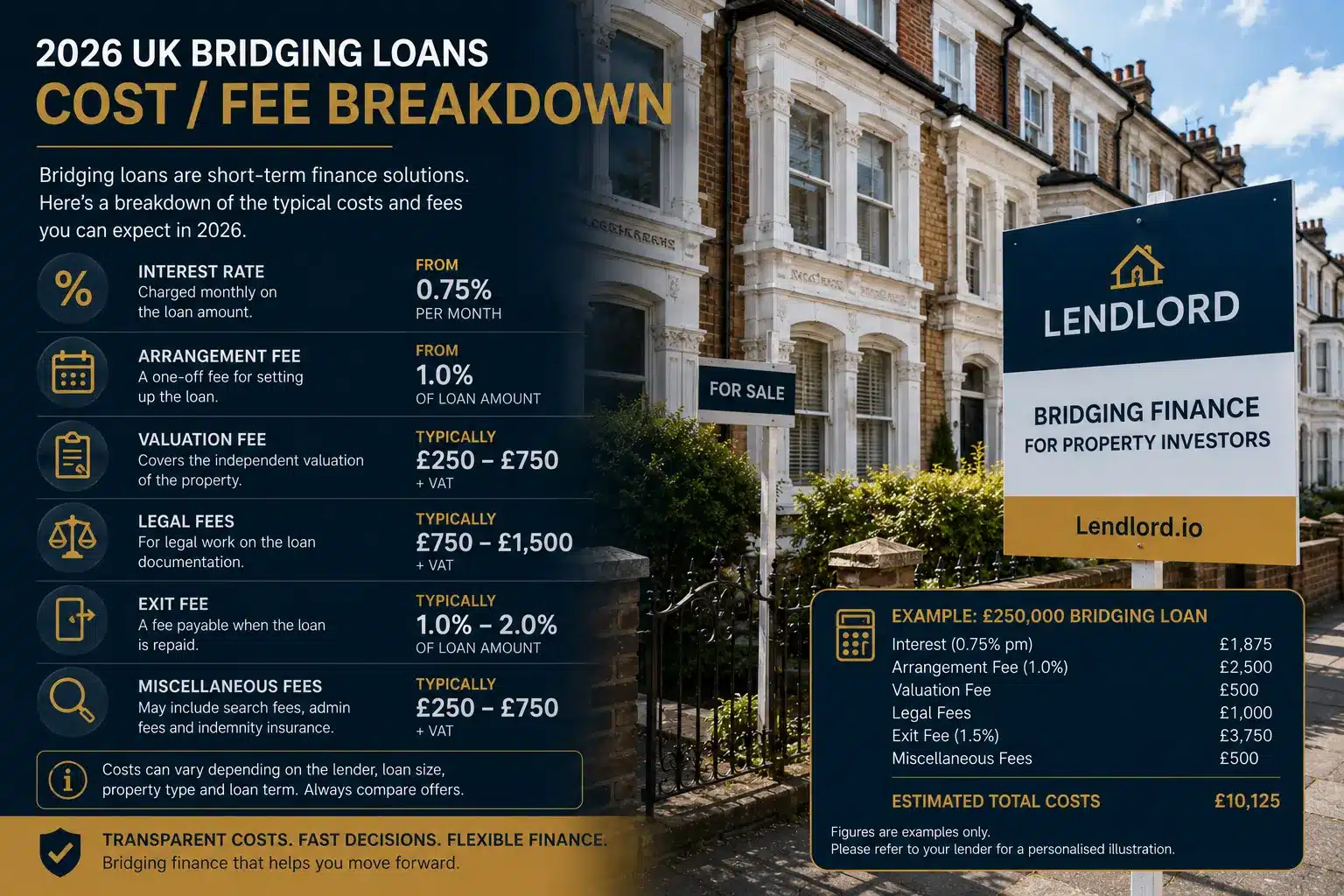
First, bridging is priced monthly rather than annually, because the loan is short term. Therefore, a rate quoted as 0.75% per month is very different from an annual mortgage rate. In addition, you should always add the arrangement fee, valuation, and legal costs to see the true cost of the money.
As a result, two deals at the same headline rate can cost very differently once fees are included. For a deeper breakdown of current pricing, see our guide to bridging loan rates before you compare quotes.
Why a bridging loan calculator saves you money
Next, the calculator. Instead of guessing, you enter the property value, loan amount, term, and rate, then see your total cost and net loan. Consequently, you know whether the deal still profits after finance before you commit a penny.
Moreover, a good calculator flags the loan to value you are asking for, which shapes the rate you are offered. In short, it turns a vague plan into a clear, comparable number.
Free calculator
Model your bridging cost in minutes
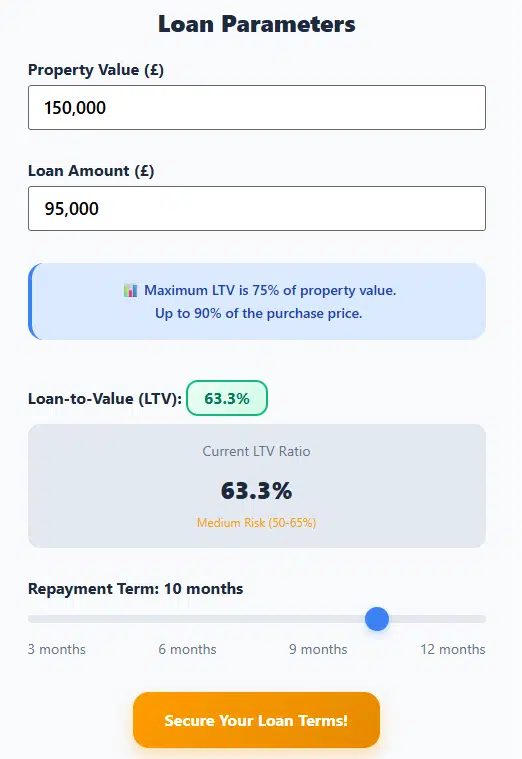
You can price a deal with the dynamic bridging loan calculator, adjusting value, term, and loan to value to see live rates and total cost. As a result, you walk into an auction or negotiation knowing your ceiling, not hoping the numbers work.
Try the bridging loan calculatorBridging loans UK requirements: what lenders check
Importantly, bridging is secured lending, so the deal matters more than a perfect credit file. Still, lenders do have clear requirements. Specifically, they focus on the security, the loan to value, and your exit.
- The property value and condition
- Loan to value, usually up to around 75%
- A credible exit, such as refinance or sale
- Your experience and the deal rationale
- Legal title and any planning considerations
Because the exit is central, weak exit planning is the most common reason a case stalls. Therefore, decide how you will repay before you apply, not after.
Plan your exit
Know your equity and loan to value before you borrow
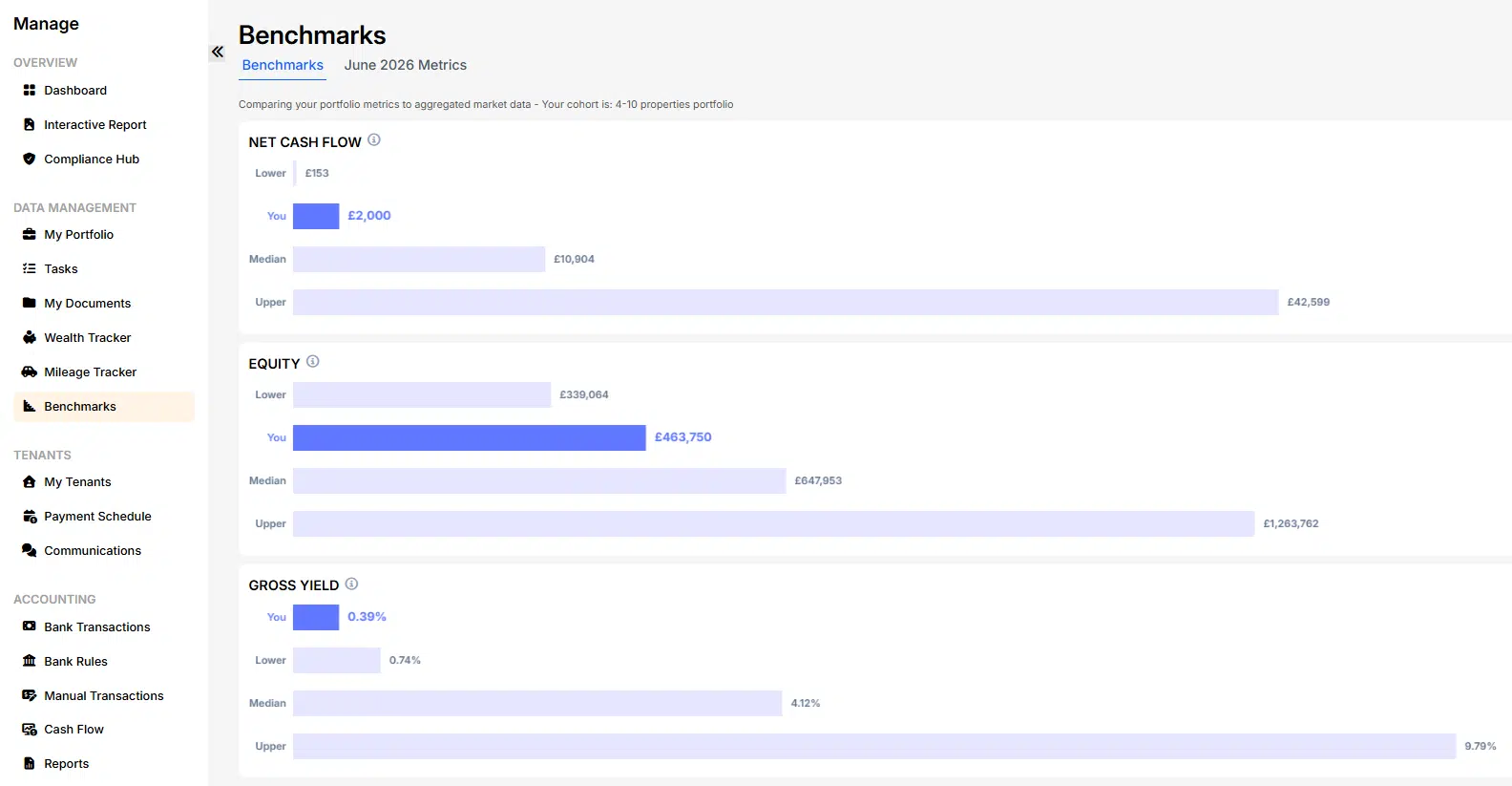
Lendlord's portfolio benchmarks show your equity, net cash flow, and yield against market data, so you can see which properties hold the most equity for a refinance exit. In addition, a clear loan to value picture across the portfolio helps you size the right bridge for the deal in front of you.
See your portfolio equity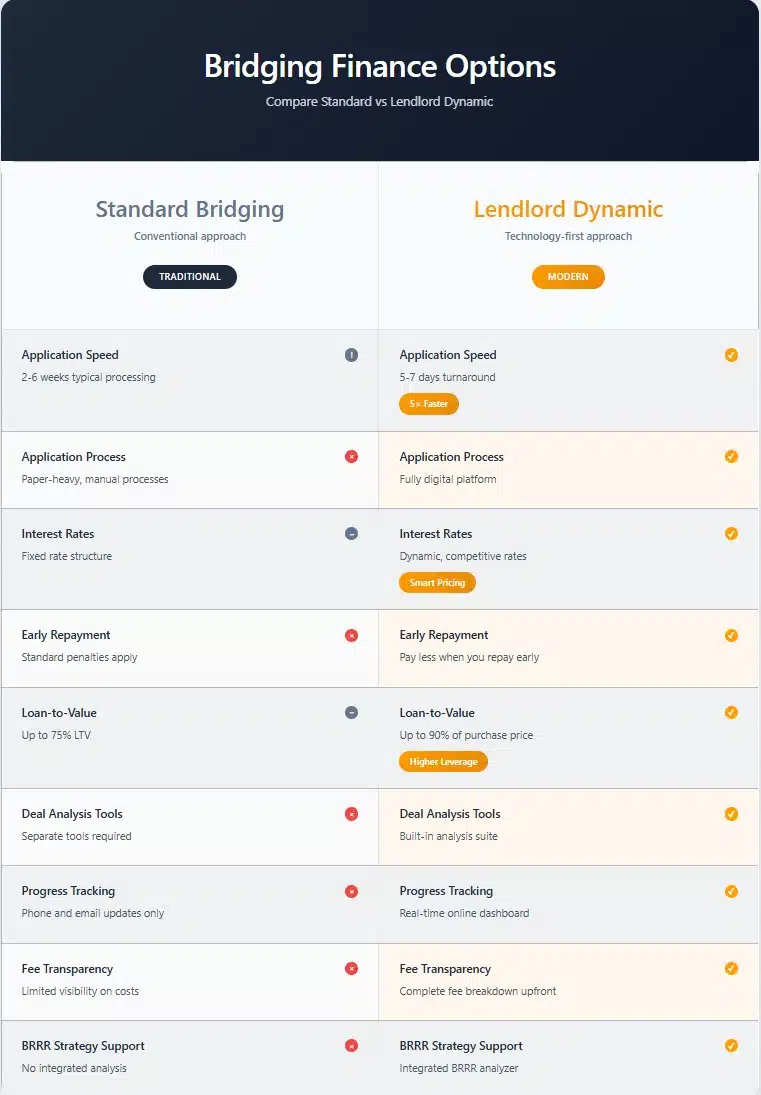
Short term bridging loans for auction and refurb
Meanwhile, short term bridging loans shine where a mortgage cannot move fast enough. For example, auction purchases usually complete within 28 days, which rules out standard finance. Similarly, unmortgageable or refurb-heavy properties often need a bridge first, then a refinance once the works are done. For the full works-to-exit path, follow our step-by-step bridging loan for refurbishment guide.
For the full toolkit, our bridging loan calculator hub pulls the cost, term, and exit together in one view. In practice, that saves you rebuilding a spreadsheet for every deal.
Watch: bridging finance explained
The application process step by step
Then comes the application itself. Encouragingly, a digital process removes much of the old friction. First, you submit the deal and purpose. Next, you receive indicative terms and upload documents. After that, the case moves through underwriting, valuation, and legals before funds release. For what underwriters weigh at each stage, see how a bridging loan application is assessed.
Apply online
See exactly what each stage requires
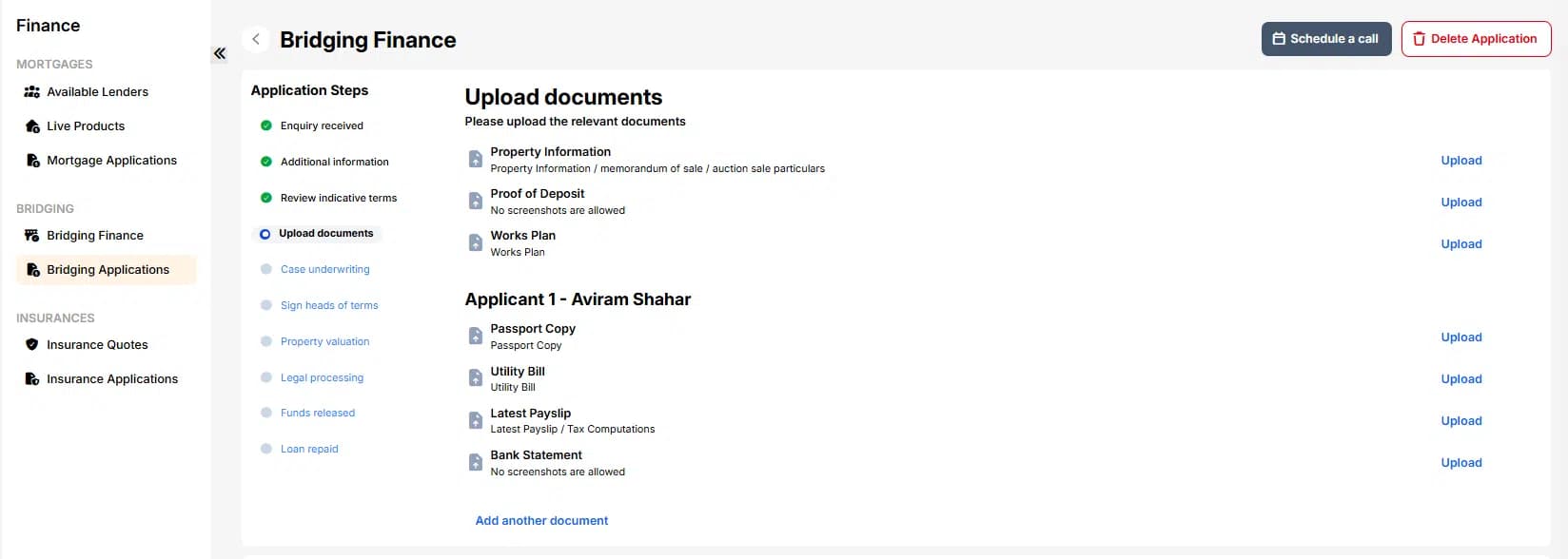
You can start a bridging application online and track every stage, from indicative terms to funds released. As a result, you always know what is outstanding and how close you are to completion, which matters when the clock is ticking on an auction deadline.
Start a bridging applicationShort: a bridging platform investors trust
Common bridging mistakes to avoid
Before you apply, sidestep the errors that cost investors dearly. Generally, they come down to underestimating cost or overestimating the exit.
- Ignoring fees and only comparing monthly rates
- Assuming a refinance will value at your best-case figure
- Underestimating the refurb timeline and holding cost
- Leaving no buffer if the sale or remortgage slips
Fortunately, each risk shrinks when you model the deal properly first. For refurb-led plans especially, our playbook on bridging loans for EPC upgrades shows how to line up the exit before you borrow.
How much can you borrow on a bridge?
Naturally, the loan size follows the security and your exit. Typically, lenders offer up to around 75% of the property value, though the exact figure depends on the asset and your plan. Therefore, a strong deal with clear equity borrows more comfortably than a marginal one.
Gross loan versus net loan
Here is a point that trips up newcomers. Specifically, the gross loan includes the interest and fees, while the net loan is the cash you actually receive. Consequently, if interest is retained upfront, your usable funds are lower than the headline figure. So always check the net loan before you plan your budget.
Regulated versus unregulated bridging
Additionally, it helps to know which type applies. Broadly, bridging on a property you will live in is regulated, while lending on an investment asset is usually unregulated. As a result, buy-to-let and refurb deals normally sit in the unregulated space, which is faster but still demands careful due diligence.
However, unregulated does not mean unimportant. In fact, you should still read the terms closely, understand the fees, and confirm the exit works. Otherwise, speed can turn into an expensive lesson.
How fast can bridging complete?
Meanwhile, speed is the headline benefit. In practice, a well-prepared case can complete in days rather than the weeks a mortgage takes. First, having your documents, valuation, and legals ready removes most delays. Then, a clean title and a clear exit keep the case moving.
Is bridging right for your next deal?
Ultimately, bridging is a tool, not a shortcut. When speed unlocks a discount that outweighs the cost of the money, it earns its place. Otherwise, patience and a standard mortgage may serve you better.
In short, run the numbers, plan the exit, and let the calculator tell you whether the deal truly stacks up.
Official data sources
Bridging pricing tracks wider rates and rules. For context and verification, see these official UK sources.
Price your bridging deal, compare loan to value, and see total cost before you bid or exchange.
Use the bridging loan calculatorFrequently asked questions
How does a bridging loan calculator work?
In short, you enter the property value, loan amount, term, and rate, then the calculator shows your total cost and net loan. Additionally, it flags your loan to value, which shapes the rate a lender will offer.
What are typical bridging loan rates in the UK?
Generally, bridging is priced monthly rather than annually, often from around 0.75% per month. However, you must add arrangement, valuation, and legal fees to see the true cost, so always compare the full figure.
What are the requirements for a bridging loan?
First, lenders focus on the security, the loan to value, and your exit. Next, they consider the property condition and your plan to repay. Crucially, a weak exit is the most common reason a case stalls.
Can I use bridging for an auction purchase?
Yes, and it is a common use. Because auctions usually complete within 28 days, standard mortgages rarely move fast enough. Therefore, short term bridging bridges the gap until you refinance or sell.