HMO Licensing vs Article 4: The Dual Gate Multi-Let Investors Miss
Published · Updated · 8 min read
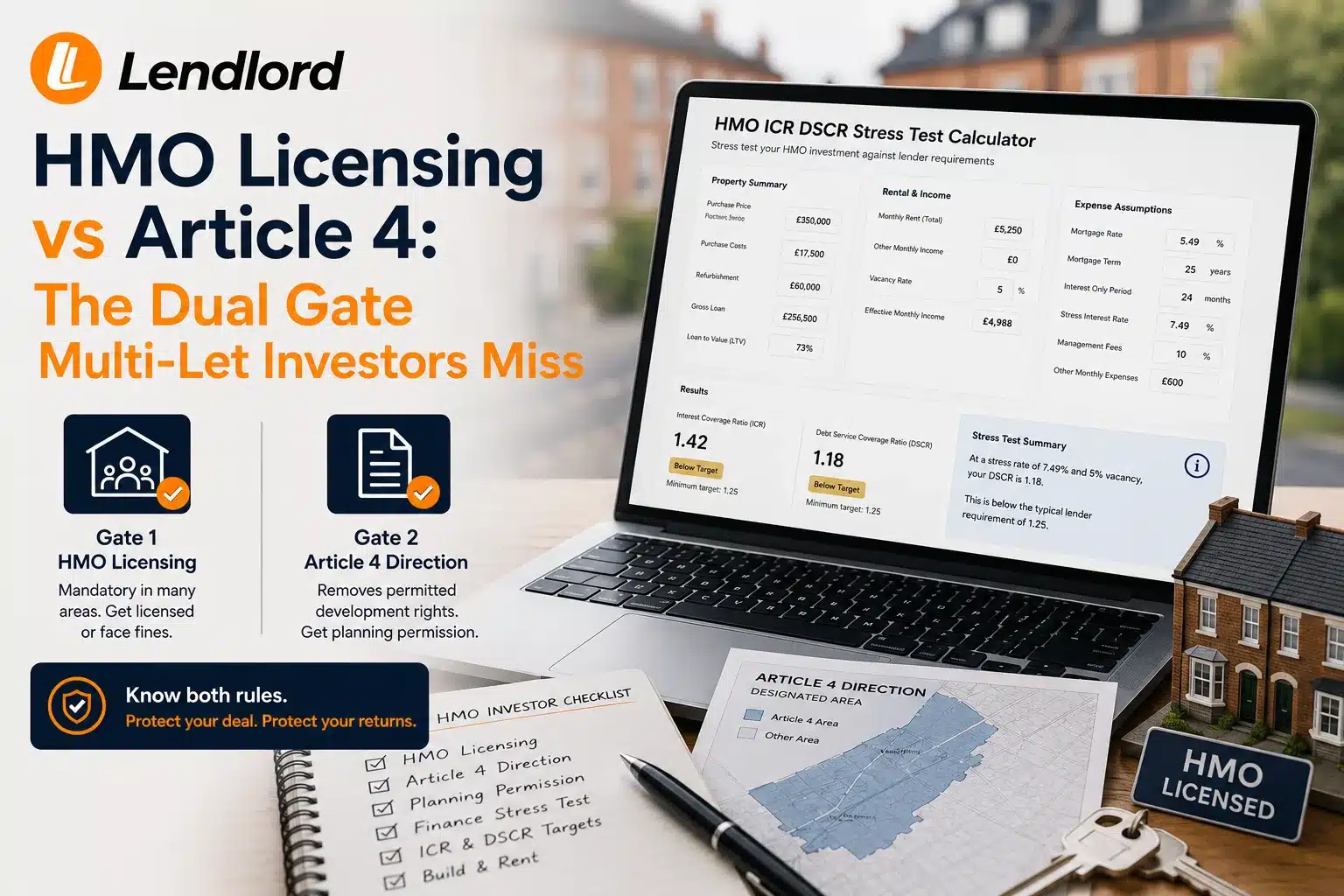
HMO licensing and Article 4 are two different legal gates for multi-let investors in England. Licensing controls how you manage and occupy a house in multiple occupation. Article 4 controls whether you need planning permission to create a small HMO in the first place. Clearing one does not clear the other, and the expensive mistakes happen when investors check only the licence fee or only the yield spreadsheet before exchange.
If you are pricing a shared house, student let or rooming strategy, national headlines about Bank Rate and Making Tax Digital matter less than the two local questions that decide whether the deal is even legal to run. This guide explains HMO licensing, Article 4 directions, how they interact, and the due-diligence checklist multi-let investors should finish before they exchange.
At a glance
Dual-gate checklist- Two gates Licensing is housing law. Article 4 is planning law. You may need both.
- Mandatory HMO Usually five or more people from two or more households sharing facilities, nationwide in England.
- Additional / selective Council schemes can catch smaller HMOs or all private rentals in a mapped zone.
- Article 4 Removes permitted development for C3 to C4 conversions in designated areas.
- Not a ban Article 4 forces a planning application. Existing lawful HMOs are often protected.
- Deal math Model licence fees, fire works, voids and stressed rent cover before you buy.
HMO investment essentials for UK landlords
HMO stress test
Stress the multi-let numbers before you chase a licence

Use the HMO ICR / DSCR stress test calculator to see whether room rents still cover lending tests after you budget licence fees, fire works and void periods.
Open the HMO stress calculatorWhy multi-let investors treat this as a buy-box issue
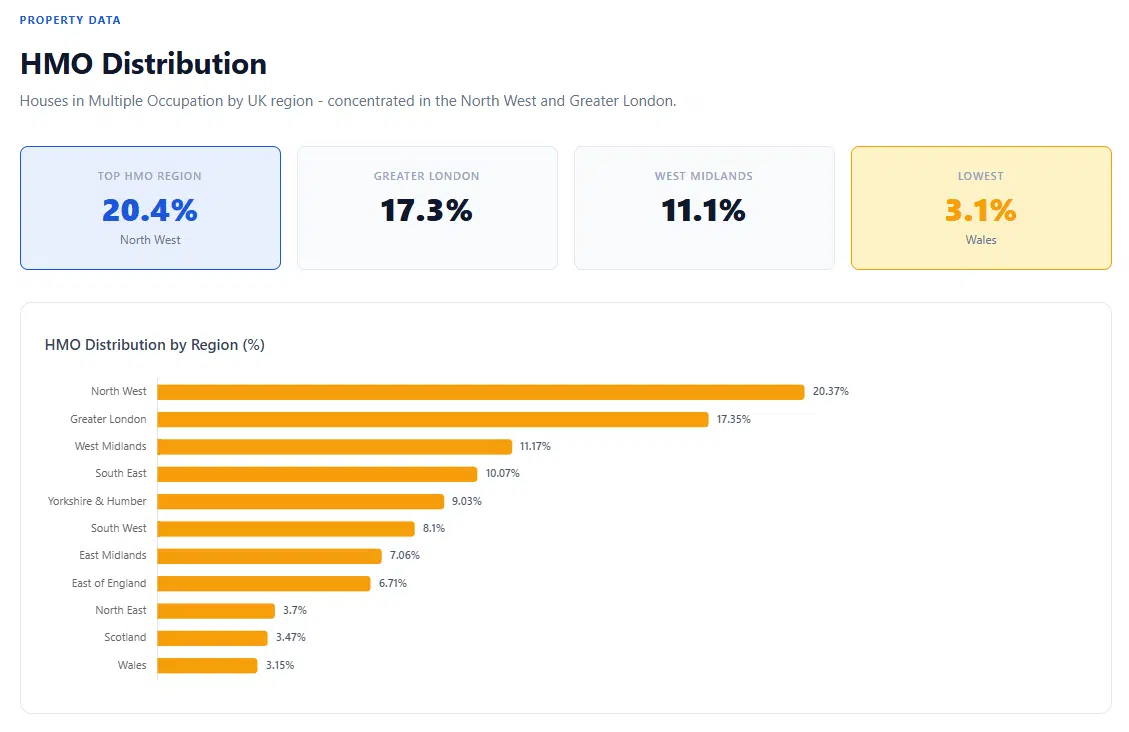
HMO and Article 4 rules are local, but the search intent is commercial. Investors look them up when a five-bed near a university looks cheap, when a seller claims "already an HMO", or when a council letter lands after tenants move in. A wrong answer can erase tens of thousands of pounds in conversion cost, lost rent and enforcement risk. That is why this topic outperforms generic landlord news for multi-let buyers even though the answer changes by ward.
Treat licensing and planning as part of the purchase price, not as paperwork after completion. If either gate fails, the headline yield is fiction.
Gate 1: HMO licensing under the Housing Act
Licensing asks whether the property is suitable to be occupied and managed as an HMO. It does not grant planning use. In England there are three overlapping regimes.
Mandatory HMO licensing
Mandatory licensing applies nationwide to HMOs occupied by five or more people forming two or more households who share basic amenities. Since 2018 that test is not limited to three-storey buildings. A compact house let to five sharers can still need a mandatory licence.
Additional licensing
Councils can designate areas where smaller HMOs - typically three or four sharers - also need a licence. University towns and dense inner suburbs use this heavily. If your four-person house sits inside an additional scheme, "below five people" is not a safe out.
Selective licensing
Selective schemes can require a licence for private rented homes in a designated area whether or not they are HMOs. Since late 2024, large selective schemes have been easier for councils to designate without central sign-off, so more zones are appearing through 2026. Check the exact postcode, not the town name alone.
| Question | HMO licensing | Article 4 / planning |
|---|---|---|
| What it controls | Management, safety, occupancy standards | Whether you can create / change use to a small HMO |
| Main legal track | Housing Act 2004 | Town and Country Planning / GPDO |
| Typical trigger | 5+ sharers (mandatory) or local scheme | C3 to C4 conversion in a designated area |
| Typical cost stack | Licence fee plus compliance works | Planning fee, delay, refusal risk |
| Failure mode | Civil penalty, Rent Repayment Order, unlicensed letting | Enforcement notice, forced return to C3 use |
Licence fees are set locally, often in the hundreds to low thousands for a five-year term, sometimes split between application and grant stages. Budget separately for floor plans, fire detection, escape routes, room-size works and certificates. For fee ranges and worked examples, see Lendlord's HMO licence cost guide and the broader HMO licence for UK landlords checklist.
Compliance files
Keep licence evidence with the property file

Store gas safety, EICR, floor plans and licence documents against each asset so renewals and lender packs do not depend on a buried email thread.
Centralise property documentsGate 2: Article 4 and the C3 to C4 conversion
Outside an Article 4 area, converting a dwelling (use class C3) into a small HMO (use class C4, generally three to six unrelated occupants) is often permitted development. An Article 4 direction removes that right in a mapped area. You then need a full planning application, and permission is not automatic.
Councils usually assess HMO concentration, housing mix, parking, amenity and local plan thresholds. Many refuse new C3 to C4 changes where HMO density already exceeds a set percentage of nearby homes. Large HMOs with seven or more occupants are typically sui generis and need planning permission even where no Article 4 exists.
Article 4 is not retrospective. A property that was already in lawful HMO use before the direction took effect may continue, but you should be able to prove it. A Certificate of Lawfulness is often worth more on exchange than a verbal assurance from the selling agent.
Yields, HMOs and northern hotspots
The dual-gate trap that kills deals after completion
Holding a licence does not prove planning use is lawful. Planning permission does not remove the need for a licence. The classic loss sequence looks like this:
- Buy a C3 family house in an Article 4 ward assuming small HMOs are permitted development.
- Spend on bathrooms, fire doors and room layouts.
- Planning is refused on density grounds, or enforcement requires return to C3 use.
- Or planning is fine, but additional licensing plus upgrade works and voids destroy the cash-flow model.
There is also a positive scarcity angle. An existing lawful, licensed HMO inside a saturated Article 4 area can be more valuable because new supply is harder to create. Pros pay for proof of use. Amateurs pay for hope.
Buy-box checklist before you exchange
Finish this list on the exact address, not the suburb average.
- Confirm current use class and planning history (C3, C4 or sui generis).
- Check the council's Article 4 map and local HMO concentration policy.
- If the seller claims an established HMO, request a Certificate of Lawfulness or hard evidence of lawful use before the direction date.
- Check mandatory, additional and selective licensing for that street.
- Price the full stack: licence fee, fire and layout works, application delay, void weeks and stressed rent cover.
- Confirm your lender will lend on that HMO / multi-let form and occupancy.
- Do not assume "licence applied for" equals "safe to let" while an application is pending - confirm the council's position in writing.
Then rebuild the investment case with realistic rents and costs. Use Lendlord's HMO ICR / DSCR stress test calculator and deal analyser so the licence and planning stack sits inside the same model as purchase price and finance.
Deal analysis
Model the HMO after compliance costs, not before

Run purchase price, works, finance and stressed rent cover in one place so Article 4 delay and licence upgrades are visible before you commit.
Analyse the multi-let dealCommon HMO mistakes UK investors make
When conversion funding and timing matter
If planning is required, the timeline is part of the finance plan. Bridging can bridge a purchase-to-refinance gap while works and applications run, but it does not fix a refused change of use. Only use short-term finance when the dual-gate path is already clear. Explore Lendlord bridging loans once planning risk and licensing costs are modelled, not instead of that work.
Frequently asked questions
Is an HMO licence the same as Article 4 planning permission?
No. An HMO licence is a housing and management approval from the council under the Housing Act 2004. Article 4 is a planning control that can require permission before you convert a C3 dwelling into a C4 small HMO. You may need both, and they are applied for separately.
Do I need a mandatory HMO licence for a five-person shared house?
In England, mandatory licensing usually applies where five or more people from two or more households share facilities, regardless of storeys. Always confirm the property meets the legal definition and check whether additional or selective licensing also applies on that street.
Does Article 4 ban HMOs in that area?
No. Article 4 removes the automatic permitted development right for C3 to C4 conversions. You must apply for planning permission, and the council can refuse where local HMO density already exceeds policy thresholds. Existing lawful HMOs are often protected if use was established before the direction took effect.
What should multi-let investors check before exchanging on an HMO?
Confirm planning use class and Article 4 status, ask for a Certificate of Lawfulness if the seller claims established HMO use, check mandatory, additional and selective licensing for the exact address, then model licence fees, fire works, voids and stressed rent cover. Stress the numbers with Lendlord's HMO ICR / DSCR calculator.
Clear both gates, then chase the yield
Multi-let returns still attract investors because room rents can outperform a single family let. The winners are the ones who treat HMO licensing and Article 4 as buy-box filters, keep proof of lawful use, and stress cash flow after compliance spend. Start with the HMO stress calculator, keep documents with the property file, and only then compare towns on yield maps.
Local rules decide if the multi-let deal is real. Stress it before you exchange.
Run the HMO stress testRelated Lendlord guides

Expert insight from Simmy Kaur, Director of Buy to Let Mortgages · Financial Reporter's 30 Under 30 2025 · Last updated August 2026
Director of Buy to Let Mortgages at Lendlord. Recognized by Financial Reporter's 30 Under 30 2025 for excellence in BTL finance, advising landlords on mortgages, remortgages, portfolio lending, and lender comparisons.
Official data sources
- Housing Act 2004
- GOV.UK: Licensing of houses in multiple occupation in England - guide for landlords and managers
- GOV.UK: Selective licensing in the private rented sector - guide for local authorities
- Town and Country Planning (General Permitted Development) (England) Order 2015
- Planning Portal: Change of use