HMO Investment Yields by Town 2026: A Midlands Guide for Landlords
Published · Updated · 6 min read

When investors chase room-by-room returns, the search quickly narrows to specific towns. In fact, queries like south staffordshire lichfield hmo investment yields and luton brr investment show just how local HMO decisions have become. Right now, the Midlands sits at the centre of that conversation.
Below, we look at HMO yields by town, why the Midlands attracts capital, and how to separate a strong headline yield from a genuine net return. Meanwhile, we keep the numbers UK-focused and practical.
Key facts at a glance
- Appeal: lower entry prices and strong room demand
- Hotspots: Lichfield, Tamworth, Luton, Wellingborough
- Watch: licensing, Article 4, and void weeks
- Rule: judge net yield, not the headline figure
Quick watch: why quality HMOs win
HMO investment yields by town in the Midlands
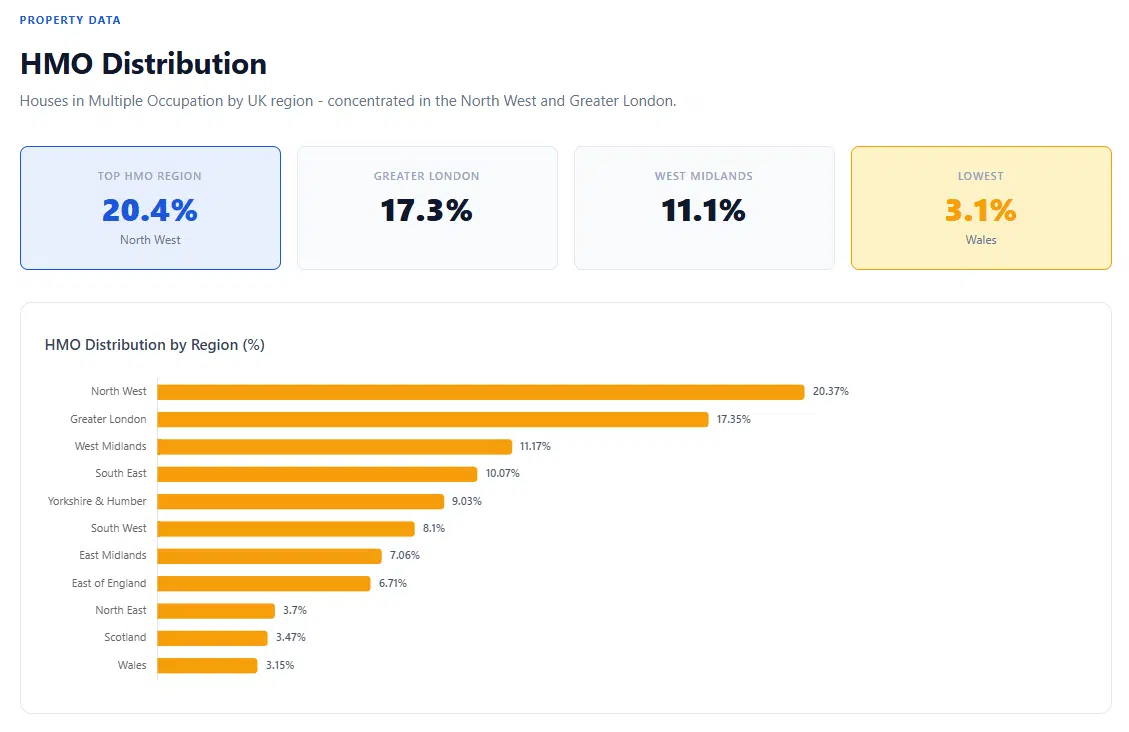
First, the geography. The East and West Midlands offer lower entry prices than the South, which lifts gross yields on room-by-room lets. As a result, towns like Lichfield, Tamworth, Kettering, and Daventry appear repeatedly in investor searches.
However, town-level demand varies. Specifically, a location near strong employment or transport holds occupancy far better than one relying on a single employer. Therefore, treat each town as its own market rather than a Midlands blur.
Why the Midlands attracts HMO capital
Meanwhile, the appeal is straightforward. Lower purchase prices mean a six-bed conversion can show an attractive gross yield on paper. In addition, tenant demand from workers and students supports room rates in the right postcodes.
Still, gross yield flatters. Once you add utilities, cleaning, licensing, and void weeks, the net figure tells a calmer story. Consequently, the winners model the full cost base before they offer.
Town-level data
Check demand before you commit to a town
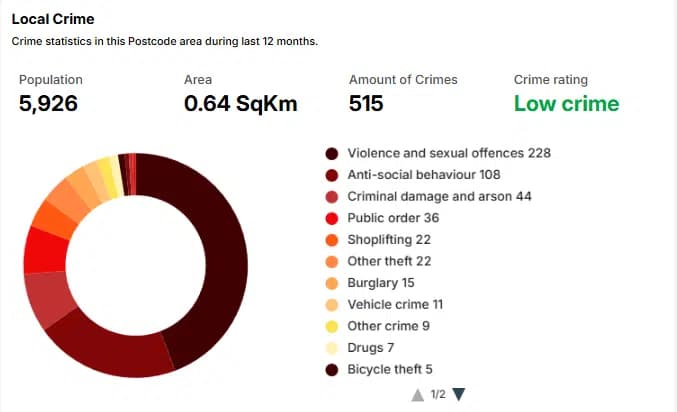
You can pull crime, transport, schools, and sold prices for a specific Midlands postcode before you buy. As a result, you back a town with evidence of real tenant demand rather than a forum tip about the next hotspot.
Explore Postcode Insights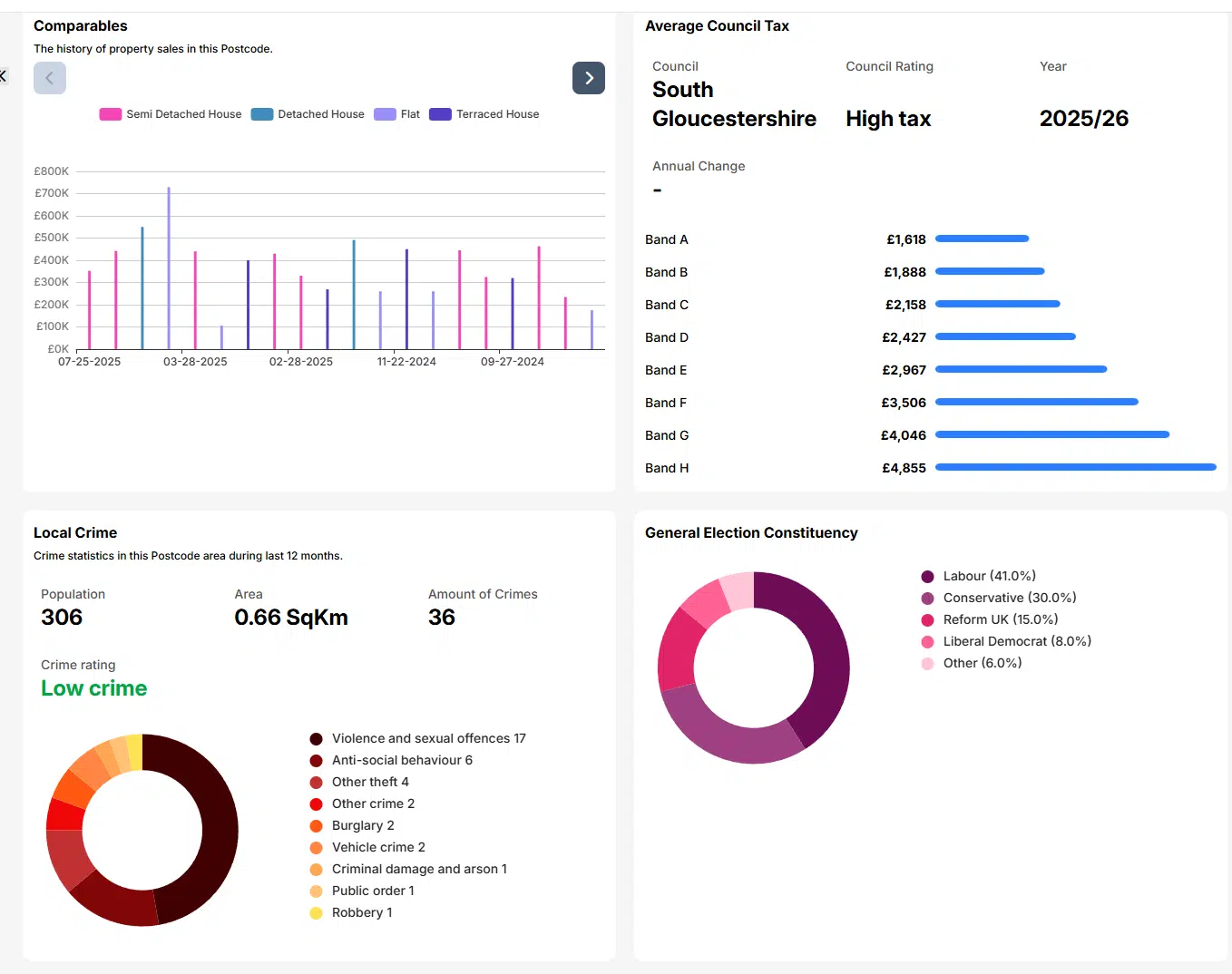
Modelling the yield uplift from an HMO
Next, quantify the advantage. An HMO should out-earn a single let in the same house, but only after the extra costs. So the honest test is the uplift in net yield, not the gross headline.
Free calculator
Quantify the HMO income advantage
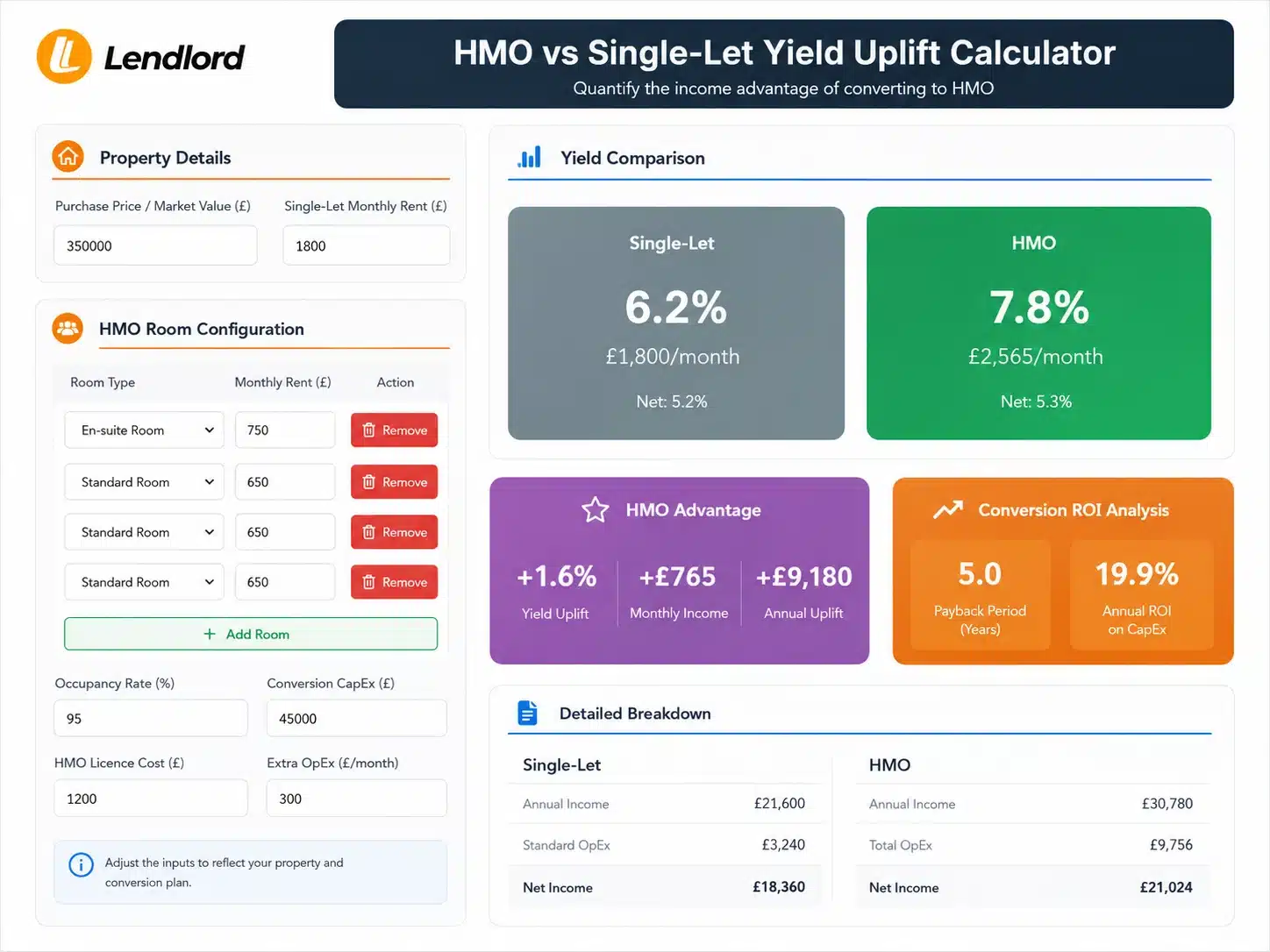
You can use the HMO vs single-let yield uplift calculator to see the real income gain from converting, town by town. In addition, it helps you decide whether the extra management load is worth it for a given property.
Try the HMO yield uplift calculatorLicensing, Article 4, and the requirements you cannot skip
Importantly, HMOs carry a compliance layer that single lets do not. Mandatory licensing covers larger HMOs, while many councils run additional schemes. In addition, Article 4 directions can remove permitted development rights, which stops you converting without planning.
Therefore, always check the council rules for the exact address first. Our guide on the HMO licence for UK landlords lists the certificates, room sizes, and standards councils inspect before they grant a licence.
Watch: deal analysis and yield stress testing
Funding an HMO conversion
Meanwhile, many HMO deals follow buy, refurb, rent, refinance. Because a standard mortgage rarely funds heavy works, investors often bridge the purchase and refurb, then refinance onto an HMO mortgage once rooms are let.
Fund the refurb
Bridge the conversion, then refinance

You can apply for bridging to fund an HMO purchase and conversion, then refinance at the new value. As a result, you recycle capital into the next town rather than tying it up in one project for years.
Start a bridging applicationShort: HMO rules and rising costs
Student versus professional HMO demand
Meanwhile, tenant type shapes your risk. Student HMOs follow the academic calendar, so they can sit empty over summer. By contrast, professional house shares near employment hubs demand year-round occupancy. Therefore, match the property location to the tenant you want.
For example, a six-bed near a university needs different void modelling from a four-bed near a hospital. Consequently, the same gross yield can hide very different net outcomes once seasonal voids are included.
Running costs that erode a gross yield
Importantly, HMOs carry heavier running costs than single lets. Typically, you cover utilities, broadband, cleaning, and more intensive management. In addition, licence fees spread over five years still count against your return each year.
As a result, a headline gross yield can shrink considerably once these lines are added. So build a full cost list before you offer, then divide by occupied room weeks rather than calendar months for an honest figure.
Fire safety and conversion works
Furthermore, HMO fire standards exceed those for a standard buy-to-let. Specifically, you may need interlinked alarms, fire doors, and clear escape routes. Because councils refuse licences until standards are met, budget these works into the refurb before you bid.
Otherwise, an unexpected specification can extend the void and dent your first-year return. In practice, a survey that flags these costs early protects your numbers.
Is an HMO right for your portfolio?
Ultimately, the strategy must fit your capacity, not just the yield on a brochure. If you already self-manage single lets comfortably, an HMO adds real operational intensity. However, with a specialist agent and solid local demand, it can scale returns nicely.
Either way, regulation will tighten rather than loosen. Consequently, investors who build compliant, well-documented HMOs will keep operating while shortcuts leave the market.
Insurance and licence conditions
Furthermore, do not overlook insurance. Standard landlord cover may not extend to a licensed HMO, so upgrade to specialist cover and confirm the insurer accepts your licence status. In addition, keep licence renewal dates in the same calendar as gas safety and electrical checks.
Because councils can revoke licences for management failures, read the conditions as carefully as the purchase contract. Consequently, a well-run compliance routine protects both your income and your finance.
Turning town research into a purchase
- Shortlist two or three towns with real employment and transport demand.
- Confirm licensing and Article 4 with each council before you offer.
- Model net yield with realistic voids and running costs.
- Compare against a single let in the same house.
- Fund the conversion with a clear refinance exit.
For the wider picture, our data driven guide to UK HMOs benchmarks regional trends, and the HMO stress test calculator checks whether the rent covers the loan under pressure.
In short, HMO yields by town reward homework. The investors winning in the Midlands know their streets, their councils, and their real net numbers before they bid.
Official data sources
HMO rules and market data are governed by official UK sources. Always confirm local requirements with the council.
Quantify the HMO income advantage town by town, then stress-test the numbers before you buy.
Use the HMO yield uplift calculatorFrequently asked questions
Which Midlands towns offer the best HMO yields in 2026?
Generally, lower-priced towns such as Lichfield, Tamworth, Kettering, and Daventry appear often in investor searches. However, town-level demand varies, so occupancy near employment and transport matters more than the region label.
Do all HMOs need a licence?
In most cases, larger HMOs need mandatory licensing, and many councils run additional schemes too. Therefore, always check the rules for the exact address before you offer, because operating unlicensed risks serious penalties.
How do I work out the real HMO yield?
Specifically, judge net yield rather than the gross headline. First, add utilities, cleaning, licensing, and void weeks. Then compare the result against a single let in the same property.
What is Article 4 and why does it matter?
However, Article 4 directions remove permitted development rights for HMO conversions in many areas. Consequently, you may need planning permission, so check the local plan before assuming you can convert.