Postcode Data Exposes the Truth: Did the Blairs Sell Too Soon?
Published · Updated · 7 min read

In March 2025, Cherie and Euan Blair divested their Manchester property portfolio, comprising 31 buy-to-let properties valued at £3.3 million, to a consortium of professional footballers including Kieffer Moore (Wrexham striker), Christian Ribeiro (retired Wales international), and Jack Stacey (Norwich City). This move, perceived by many as a strategic retreat ahead of anticipated tax reforms, raises a pivotal question: Did the Blairs act prematurely, potentially forfeiting future gains in a market that continues to outperform London in post-tax returns?
The answer lies in the numbers-and those numbers tell a compelling story about Urmston (M41) that challenges conventional wisdom about landlord taxation in 2025. Using comprehensive postcode data and market analysis, we can determine whether this high-profile exit was shrewd timing or a missed opportunity.
The Tax Storm: Why the Blairs Sold
The Blairs' decision came amid mounting fiscal pressure on UK landlords. Chancellor Rachel Reeves is reportedly considering extending National Insurance to rental income as part of efforts to address a projected £40-51 billion shortfall in public finances. The proposed changes would apply an 8% National Insurance rate on rental income up to £50,270, dropping to 2% above that threshold.
Tax Impact Analysis: National Insurance on Rental Income
This follows years of accumulated tax burdens. In 2016, Cherie Blair represented landlords challenging tax changes that prevented buy-to-let costs from being written off as business expenses. When that challenge failed, she warned that landlords "face challenging times ahead." The September 2025 exodus saw a record number of landlords set up buy-to-let companies to avoid tax raids on those holding property individually. Landlords can assess the potential impact of these changes using a national insurance on rental income calculator to understand how the proposed reforms will affect their bottom line.
Calculate Your Tax Impact
Wondering how the proposed National Insurance changes will affect your rental income? Use our comprehensive calculator to assess the financial impact on your property portfolio.
Calculate Tax Impact NowPost-Sale Reality Check: Urmston in Numbers
Let's examine what the Blairs' buyers actually acquired, using comprehensive postcode data for Urmston (M41). The fundamentals reveal a mature, stable market-not the declining area one might expect given a high-profile exit.
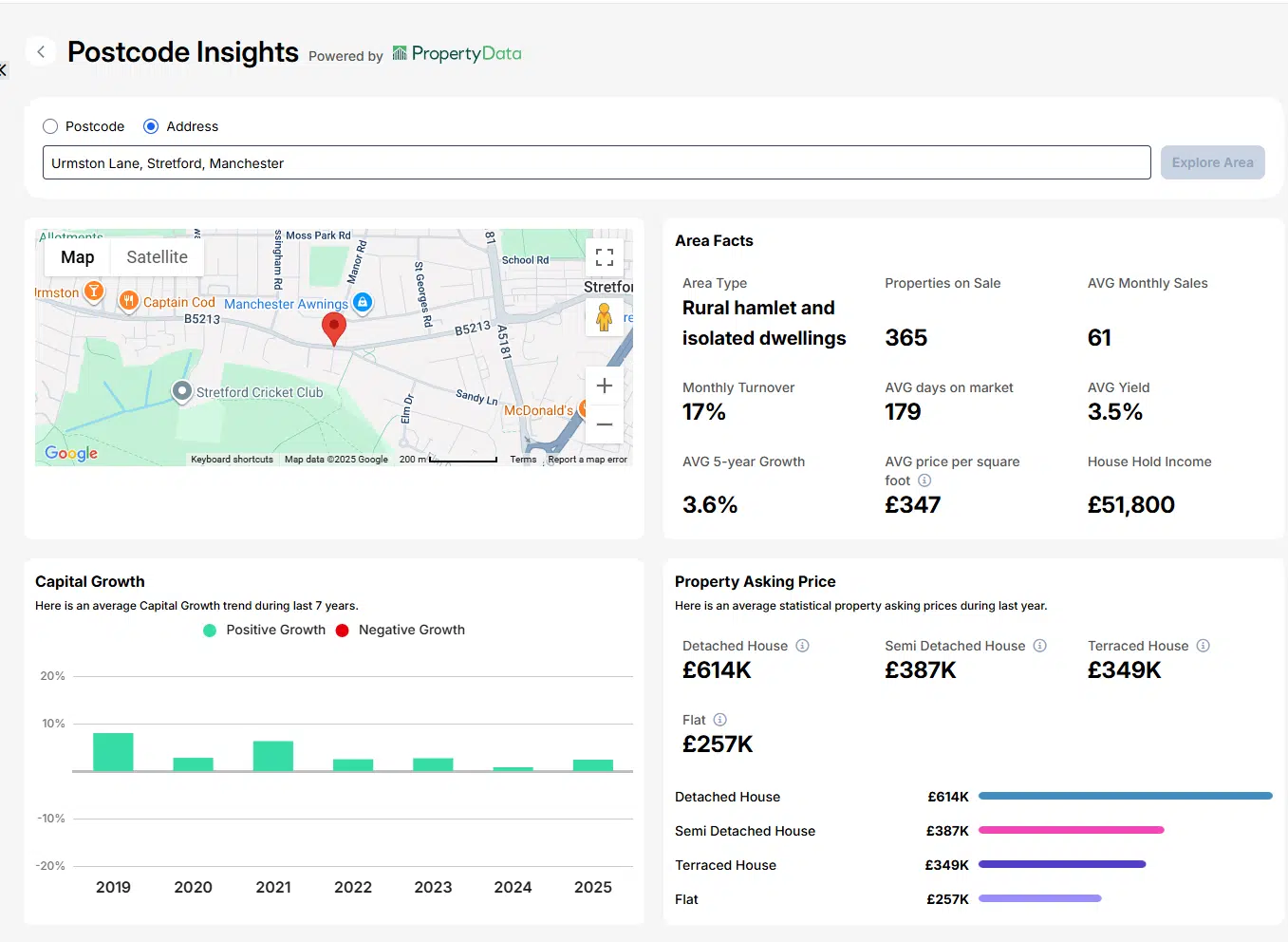
Urmston M41 Market Fundamentals (2025 Data)
These fundamentals reveal a mature, stable market with consistent demand. The 179-day average time on market indicates a healthy, not distressed, property environment. With 365 properties currently for sale and 61 average monthly sales, the market demonstrates strong liquidity and buyer interest.
Yield vs Tax: The 3.5% Reality That Beats London
The headline 3.5% gross yield in Urmston might seem modest compared to London's 4-6% range. However, here's where the comparison becomes revealing when you factor in the complete cost structure. For comprehensive analysis of rental yields across UK regions, investors can access detailed market data and yield calculations.
| Metric | Urmston (M41) | London Average | Advantage |
|---|---|---|---|
| Average Property Price | £257,000 | £500,000+ | Urmston: 48% lower entry cost |
| Price per Square Foot | £347 | £1,000+ | Urmston: 65% lower cost per sq ft |
| Gross Rental Yield | 3.5% | 4-6% | London: Higher gross yield |
| Council Tax (Band D) | £2,289 | £1,982 | London: 13% lower council tax |
| 5-Year Capital Growth | 3.6% | 2.5% | Urmston: 44% higher growth |
| Household Income | £51,800 | £60,000+ | London: Higher income support |
Key Insight: Capital Efficiency Advantage
While London delivers better absolute returns, Urmston offers superior capital efficiency. With half the capital deployed, Manchester investors can build diversified portfolios-and Manchester is predicted by JLL to see sales price growth of 19.3% until 2028, ahead of the national average of 17.6%.
Net Yield Comparison: The Post-Tax Truth
Let's calculate real returns for a £250K flat in Urmston versus a £500K flat in London, both generating similar gross yields:
Post-Tax Return Analysis
Urmston Scenario
London Scenario (Zone 3/4)
Discover Your Property's True Value
Get comprehensive property insights and market data for any UK postcode. Make informed investment decisions with our advanced property analysis tools.
Search Property InformationDemographics & Demand: The Stability Factor
The Urmston postcode data reveals demographic strengths that underpin rental resilience. These micro-factors sustain occupancy rates and reduce void periods-critical for weathering tax increases.

Demographic Strengths Supporting Rental Demand
Education Appeal
Urmston boasts "Good" primary school ratings across four local schools, with 228-403 pupils per school indicating stable family populations. This educational infrastructure attracts families seeking quality education for their children, creating consistent rental demand.
Work-From-Home Revolution
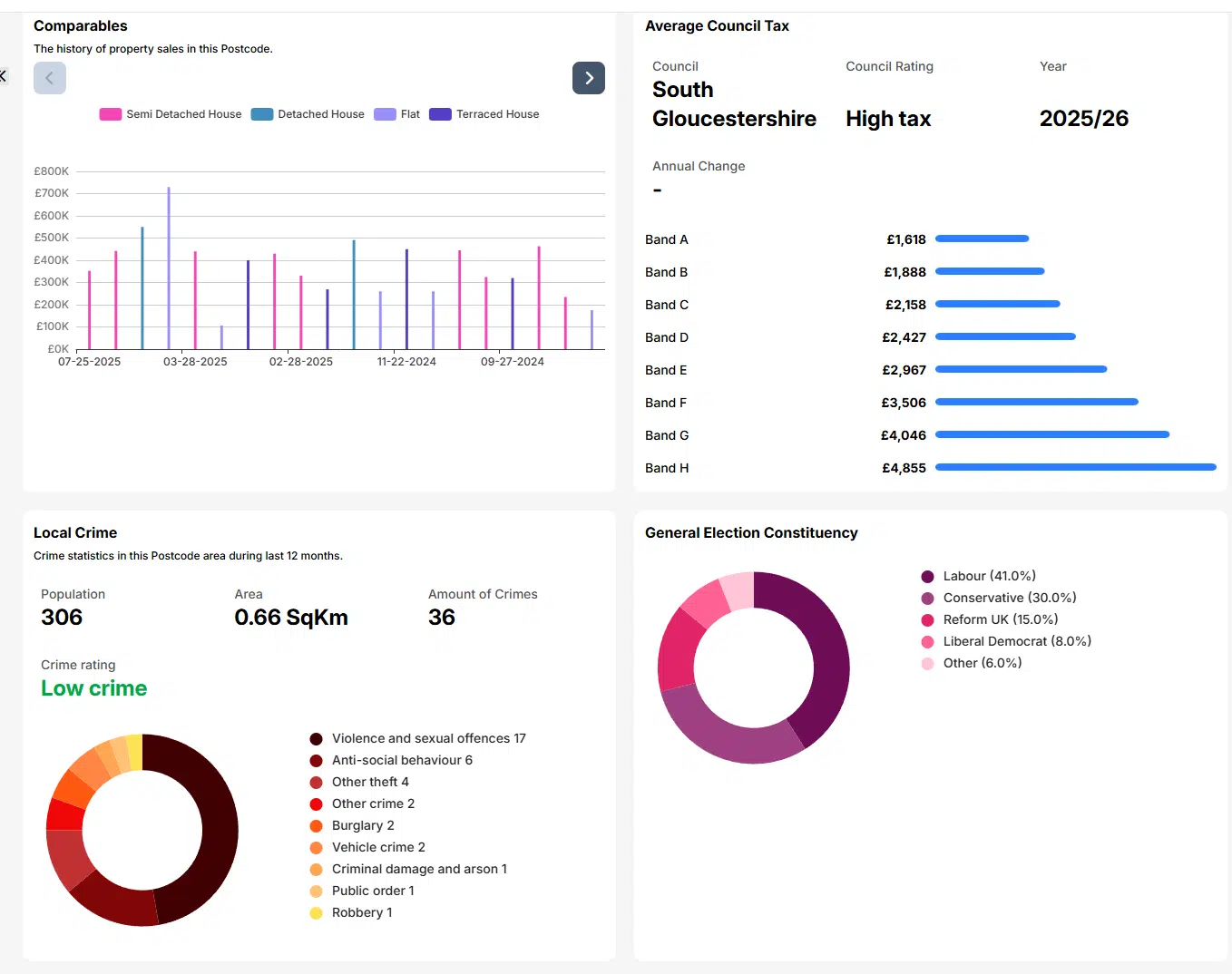
The 54.7% work-from-home rate-among the highest in Greater Manchester-reduces commute dependency, insulating demand from transport disruptions. This trend drives demand for larger flats with dedicated office space, supporting higher rental values.
Age Demographics
The population peak at the 50-64 age bracket represents both empty-nesters seeking rental income and downsizing buyers. This creates a stable, creditworthy tenant profile with lower default risk.
Political Stability
With 41% Labour constituency support, the area reflects working/middle-class stability rather than volatility, ensuring consistent civic engagement and infrastructure investment.
The London Contrast: Higher Gross, Lower Net
Average rental yields in central London range from around 3% to 6% depending on the borough, with Westminster ranging between 2.5% and 4.5%, and Kensington and Chelsea between 2.8% and 4.3%. However, the London paradox reveals significant challenges.
London Investment Barriers
The London Paradox presents higher gross rents (£2,000+ for 1-beds) but property prices of £500K-£1M+. Investment levels are lower in London, with average yields at a more modest 5%, and landlords buying with a mortgage face far higher barriers, needing an average deposit of £187,000 compared with just £29,000 in the North East.
The Tax Multiplier Effect
When National Insurance on rental income becomes law, the differential widens further. A London landlord earning £30K rental income faces a £2,400 NI bill, while a Manchester landlord earning £15K across two properties pays £1,200 NI bill. However, the Manchester investor owns two properties for diversification, lower vacancy risk, and double the exposure to capital appreciation.
Unlock Property Investment Success
Join thousands of successful property investors using Lendlord's advanced postcode insights. Get instant access to market data, yield calculations, and investment opportunities across the UK.
Start Your Investment JourneyThe Blairs' Timing: Shrewd or Premature?
The Blair family demonstrated prescience on several fronts, but may have missed significant opportunities. Let's analyze what they got right and what they may have overlooked.
Blair Portfolio Performance Analysis
What They Got Right
Chancellor Reeves reportedly considering National Insurance on rental income could raise over £2 billion for the Government. Selling before the budget announcement (November 26, 2025) avoided market uncertainty. The ten-year hold period captured decent capital appreciation, with £1.8M total profits representing 17.5% compound annual return on estimated £1.95M total investment.
What They May Have Missed
JLL forecasts cumulative rental growth of 21.7% for Manchester between 2024 and 2028. Selling in a 179-day average market suggests buyers had negotiating power. Professional investors like the footballer group see value the Blairs abandoned. Rental values are projected to see an average 4% boost every year until 2028 in Manchester.
Key Takeaways for Landlords
1. Post-Tax Yield Matters More Than Gross Yield
Even with National Insurance at 8%, northern yields outperform southern returns on a risk-adjusted, capital-efficient basis.
2. Entry Price Determines Leverage Potential
£257K Urmston flats enable portfolio building that £500K London properties preclude.
3. Council Tax Is a Hidden Drag
While often overlooked, council tax in higher-value southern regions erodes net returns significantly.
4. Demographics Trump Headlines
Urmston's work-from-home rate, school quality, and age profile create structural rental demand that survives tax changes.
5. Professional Investors See What Amateurs Miss
The fact that footballers advised by property specialists are buying suggests fundamentals remain strong.
The Budget Day Question
As Rachel Reeves prepares to deliver the Autumn Budget on November 26, 2025, landlords face a decision: Exit now and crystallize gains before potential tax raids, or double down in high-yield regional markets where even aggressive taxation leaves positive returns?
The Blairs chose the former. But the data suggests the latter may prove wiser-provided you choose locations like Urmston where gross yields exceed 3.5%, council tax remains under £2,000 for Band D, demographics support stable demand, and entry prices enable portfolio diversification.
Make Informed Property Decisions
Don't let market uncertainty cloud your judgment. Access comprehensive postcode data and investment analysis tools to make data-driven property decisions.
Get Market Insights NowConclusion: Where the Blairs Saw Exit, Others See Opportunity
Before you follow the Blairs' exit, stress-test your portfolio for the new NI era. Factor in all costs-council tax, maintenance, proposed National Insurance-and model whether selling or holding delivers superior 5-year returns. For comprehensive property analysis and market insights, investors can utilize the search property information service to make data-driven investment decisions.
Where the Blairs saw a well-timed exit, others may see opportunity. The rental math in Urmston-and similar Greater Manchester suburbs-suggests that even in a higher-tax environment, the fundamentals still work.
The question isn't whether to be a landlord in 2025. It's where to be a landlord-and increasingly, the answer points north.
Final Insight
The Blair sale represents a fascinating case study in property investment timing. While tax considerations are crucial, they should be balanced against market potential and growth prospects. Urmston's property market, with its favorable dynamics, suggests that the Blairs' exit may have been premature, potentially missing out on continued appreciation and income opportunities.
Data sources: PropertyData postcode insights (M41), UK Government council tax statistics 2025-26, JLL UK Residential Forecast, Zoopla Rental Market Report September 2025, The Sunday Times, Lendlord analysis.
Ready to Invest Smarter?
Join Lendlord today and access the same data insights that professional property investors use to make profitable decisions. Start your free trial and discover your next investment opportunity.
Start Free Trial