Post-budget 2025 Strategies for Landlords and Property Investors
Published · Updated · 13 min read

The UK Autumn Budget 2025, announced by Chancellor Rachel Reeves on November 26, 2025, represents a watershed moment for property investors and landlords across the nation. This comprehensive fiscal package introduces important changes that will reshape investment strategies, tax planning approaches, and portfolio management techniques for years to come. Understanding these transformations is not merely advisable but essential for maintaining profitability and ensuring long-term success in the property market.
According to the Office for Budget Responsibility's Economic and Fiscal Outlook for November 2025, the UK economy faces a period of measured growth with GDP projected to average 1.5% annually between 2025 and 2030. Meanwhile, inflation is expected to decrease from 3.5% in 2025 to 2% by 2027, creating a complex environment where property investors must balance opportunity against increasing tax obligations. The tax-to-GDP ratio is forecast to reach a record high of 38% by 2029-30, signaling a fundamental shift in how property investments will be taxed and managed.

Join Our Exclusive Webinar: Investment Strategies Post-Budget
Learn from industry expert Steve Doran and the Lendlord team as they dive deep into transformational strategies for navigating the UK Autumn Budget 2025. Discover practical insights, tax optimization techniques, and proven investment approaches.
Register for Free Webinar →Free registration • Expert insights • Q&A sessionUK Economic Forecast 2025-2030
Source: Office for Budget Responsibility, Economic and Fiscal Outlook November 2025
Understanding the Budget's Impact on Property Investment
The Overview of Tax Legislation and Rates document, published alongside the budget, provides critical insights into how tax changes will affect property investors. These changes span multiple areas including capital gains tax (specifically Employee Ownership Trust relief reduction), stamp duty reserve tax (SDRT) relief for new listings, income tax on rental income, and national insurance contributions. Each modification requires careful analysis and strategic adaptation to maintain investment viability.
One of the most important developments for landlords involves the increase in income tax rates on rental income by 2 percentage points across all tax bands, effective from April 2027. This measure, detailed in the Budget 2025 Tax Related Documents, fundamentally alters the tax landscape for property investors. The new rates will be 22% for basic rate taxpayers (up from 20%), 42% for higher rate taxpayers (up from 40%), and 47% for additional rate taxpayers (up from 45%). Landlords must factor these increased tax rates into their financial projections, which directly impacts net rental yields and overall portfolio returns. For a higher rate taxpayer generating £50,000 in annual rental income, this represents an additional £1,000 in tax obligations annually.
Key Statistic: The tax-to-GDP ratio is projected to reach 38% by 2029-30, representing the highest level in modern UK history. This increase reflects broader fiscal policy changes that will affect all property investors regardless of portfolio size.
Source: Office for Budget Responsibility, Economic and Fiscal Outlook November 2025
For investors seeking to calculate their precise tax obligations, utilizing comprehensive tax calculators becomes essential. These tools help property investors understand the full financial impact of the increased income tax rates on rental income and plan accordingly. The Policy Costings document reveals that these changes are expected to generate substantial revenue for the Treasury while simultaneously addressing disparities in the tax system between earned income and passive rental income.
Tax-to-GDP Ratio Projection (2025-2030)
Source: Office for Budget Responsibility, Economic and Fiscal Outlook November 2025
Strategic Responses to Budget Changes
The House of Commons Library briefing on the Autumn Budget 2025 provides independent analysis that helps investors understand the broader implications of these fiscal measures. The briefing emphasizes that successful property investors will need to adopt transformational strategies that go beyond simple tax mitigation. Instead, they must develop comprehensive approaches that integrate tax efficiency, portfolio optimization, and strategic planning.
Transitioning between different investment strategies becomes crucial in this new environment. Investors must evaluate whether their current approach remains viable under the current tax structure, particularly considering the increased income tax rates on rental income effective from April 2027. This evaluation process requires careful consideration of multiple factors including property type, location, holding period, and financing structure. The Supporting Documents for Budget 2025 provide detailed household impact analyses that help investors understand how these changes affect different segments of the property market.
"The Autumn Budget 2025 represents a fundamental shift in how property investments will be taxed and managed. Investors who adapt quickly and strategically will maintain their competitive advantage, while those who fail to adjust may find their portfolios notably impacted."
Source: House of Commons Library, Autumn Budget 2025 Summary
The BRRR Strategy: Buy, Rehab, Rent, Refinance
The BRRR strategy, which stands for Buy, Rehab, Rent, Refinance, has gained considerable traction among property investors seeking to maximize returns while minimizing capital requirements. This approach becomes particularly relevant in the post-budget environment, where tax efficiency and strategic refinancing can create substantial advantages.
Under the current tax regime, the BRRR strategy offers unique benefits. By purchasing properties below market value, completing strategic renovations, establishing rental income streams, and then refinancing to extract capital, investors can build portfolios more efficiently. While capital gains tax and stamp duty land tax rates remain unchanged for property transactions in this budget, the increased income tax rates on rental income (effective from April 2027) make careful tax planning and structuring of these transactions more critical than ever.
When implementing a BRRR strategy, investors must carefully consider the tax implications at each stage. The purchase phase involves stamp duty land tax calculations (which remain unchanged in this budget), while the rental phase triggers income tax obligations at the increased rates effective from April 2027. The refinance stage requires careful planning to optimize capital extraction while maintaining tax efficiency. For example, purchasing a property for £200,000, investing £30,000 in renovations, and refinancing at £250,000 requires careful tax planning to maximize returns. Utilizing a comprehensive BRRR calculator helps investors model these scenarios accurately and make informed decisions.
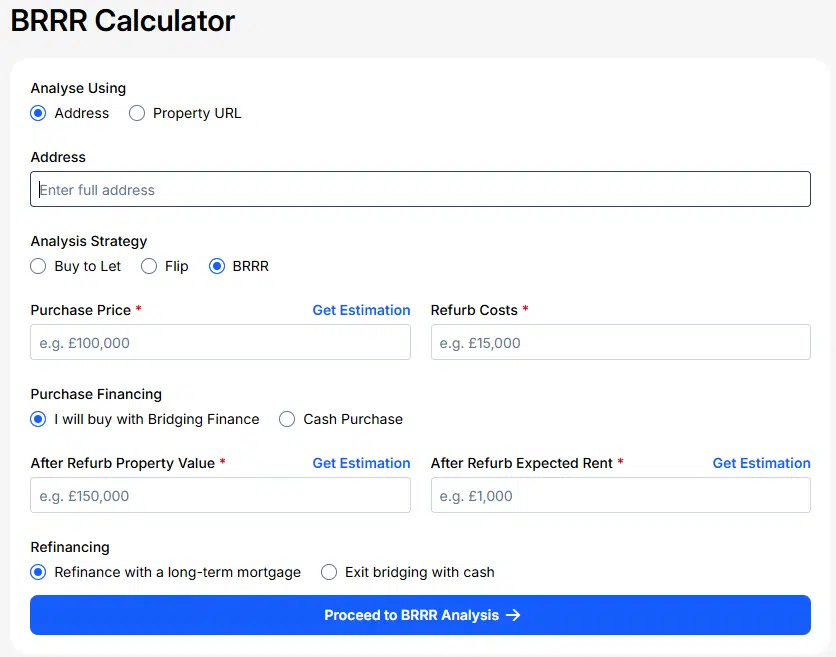
Calculate Your BRRR Returns
Use Lendlord's BRRR Calculator to analyze your Buy, Rehab, Rent, Refinance strategy, estimate returns, and make informed investment decisions in seconds.
Try Free Calculator →Property Flipping Strategy in the New Tax Environment
Property flipping, the practice of purchasing properties, renovating them, and selling them quickly for profit, requires careful analysis under the Autumn Budget 2025. It's important to note that the capital gains tax changes in this budget (specifically the reduction in Employee Ownership Trust relief from 100% to 50%) do not directly affect property flipping transactions, as they only apply to business transfers to Employee Ownership Trusts. However, investors must still carefully calculate whether their projected profits justify the tax burden, including capital gains tax on property sales, which remains unchanged for property investors. The Policy Costings document reveals that tax measures are expected to generate additional revenue while potentially affecting transaction patterns.
The timing of property flips remains important. Investors need to factor tax obligations into their profit calculations from the outset, considering all applicable taxes including capital gains tax (unchanged for property sales), stamp duty land tax (which remains unchanged in this budget), and income tax on rental income where applicable.
Successful flippers in the post-budget environment will focus on properties with substantial value-add potential. The margin between purchase price and sale price must be sufficient to cover not only renovation costs and holding expenses but also all applicable tax obligations. Utilizing a comprehensive Flip Calculator enables investors to model these scenarios accurately and identify deals that remain viable under the current tax structure.
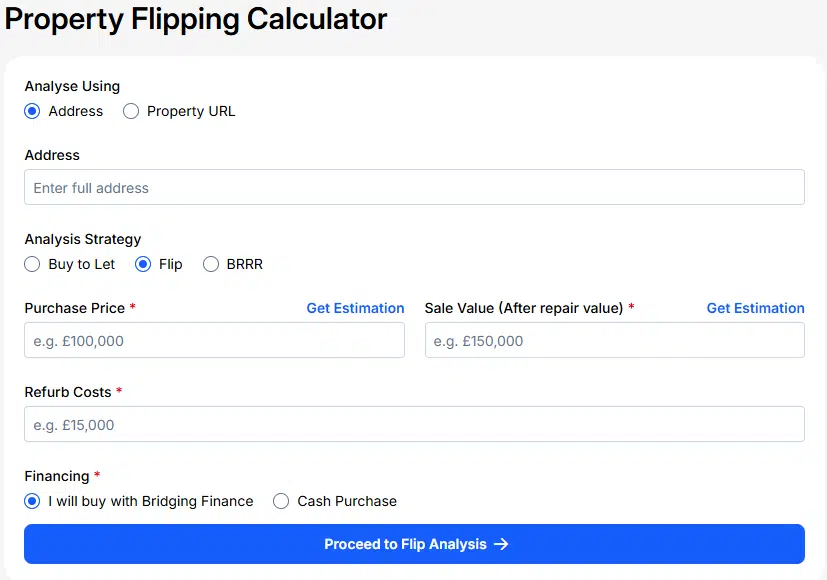
Calculate Your Property Flip Returns
Use Lendlord's Property Flipping Calculator to analyze your deal, estimate profits, and make informed investment decisions in seconds.
Try Free Calculator →Buy to Let Strategy and Postcode Analysis
The traditional buy to let strategy remains viable in the post-budget environment, though it requires more sophisticated analysis and strategic planning. The Supporting Documents for Budget 2025 provide detailed household impact analyses that help investors understand how tax changes affect rental yields and overall returns. Investors must now factor in the increased income tax rates on rental income (2 percentage points higher across all bands from April 2027) when calculating their net returns.
Postcode analysis becomes increasingly important when evaluating buy to let opportunities. Different areas offer varying rental yields, capital growth potential, and tenant demographics. The economic forecasts from the Office for Budget Responsibility indicate that regional variations in property performance will become more pronounced as the economy adjusts to new fiscal policies.
When analyzing a buy to let property, investors should utilize comprehensive tools that integrate postcode data, rental yield calculations, and tax impact assessments. For example, analyzing a property located at 30 Saint Mary Axe - Swiss Re, London EC3A 8BF requires understanding the local market dynamics, rental demand, and tax implications specific to that postcode area.
Using a sophisticated buy to let calculator enables investors to model various scenarios and understand the full financial implications of their investment decisions. These tools incorporate postcode-specific data, current market rents, property values, and tax calculations to provide accurate projections.

Source: Lendlord Buy to Let Deal Analyser
The postcode EC3A 8BF, located in the heart of London's financial district, represents a prime example of how location impacts investment viability. Properties in this area typically command premium rents, often exceeding £2,500 per month for one-bedroom apartments, due to proximity to major employers and excellent transport links. However, investors must balance these advantages against higher purchase prices, frequently exceeding £500,000 for similar properties, and the new tax obligations introduced in the Autumn Budget 2025.
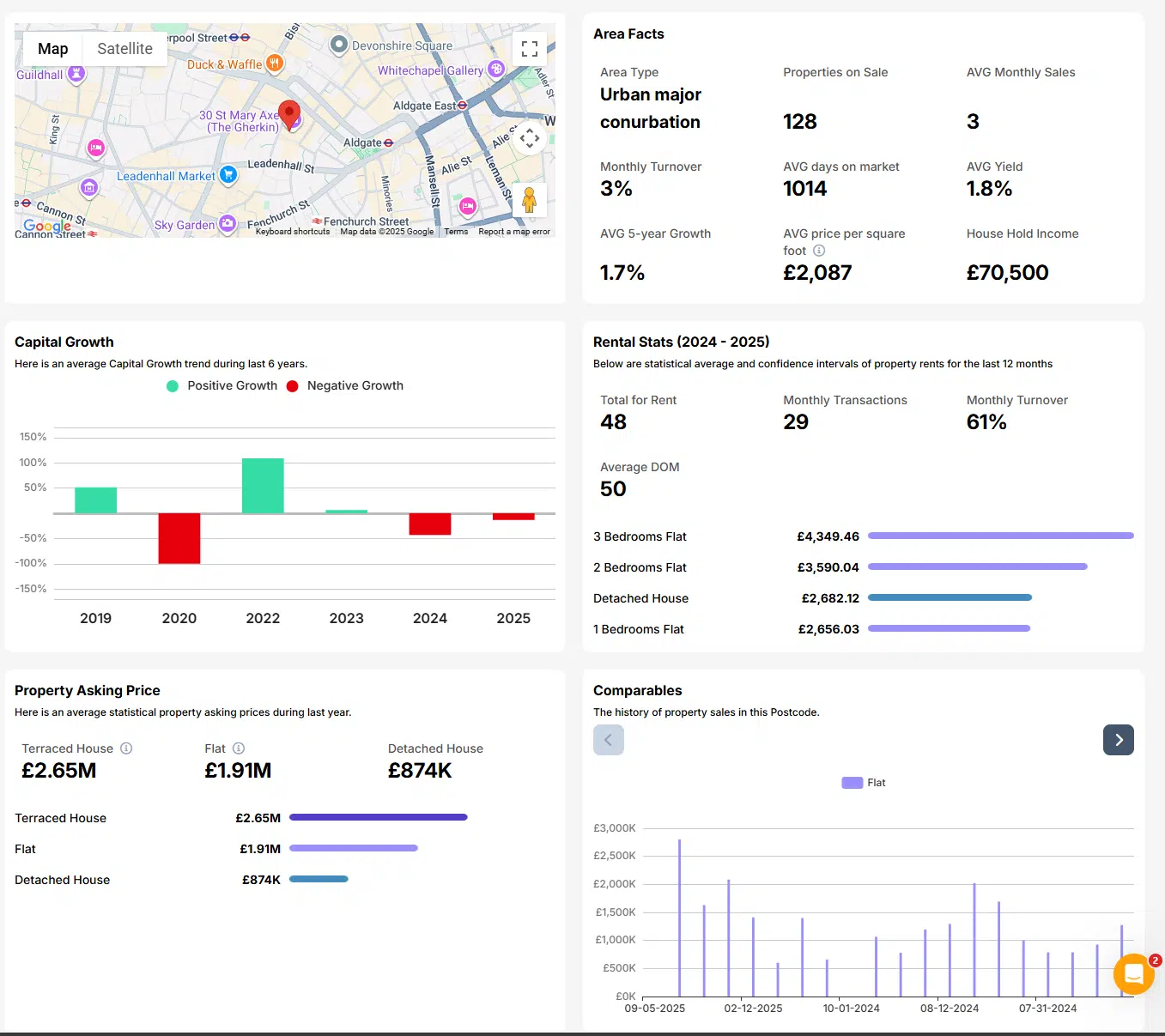
Source: Lendlord Postcode Analysis - EC3A 8BF
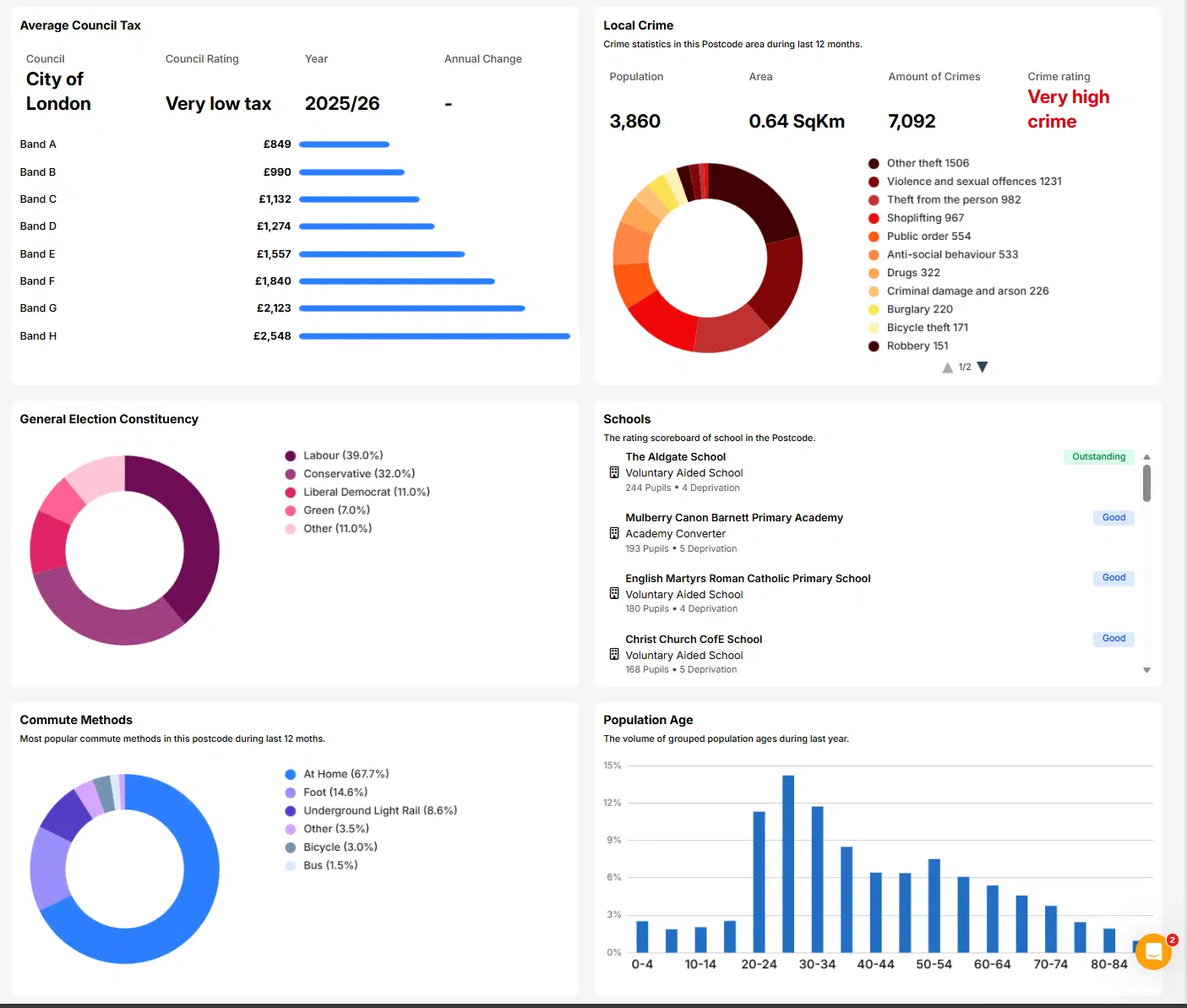
Source: Lendlord Postcode Analysis - EC3A 8BF (Detailed)
The detailed postcode analysis reveals critical information about rental demand, average property values, and market trends specific to the EC3A 8BF area. This granular data enables investors to make informed decisions about whether a particular property aligns with their investment strategy and financial objectives. The Budget 2025 Policy Costings document indicates that location-specific factors will become even more important as tax changes create greater differentiation between high-performing and underperforming areas.
Rental Yield Comparison by Property Type
Source: Budget 2025 Supporting Documents, Household Impact Analysis
Tax Planning and Portfolio Optimization
Effective tax planning becomes essential for property investors navigating the post-budget landscape. The Overview of Tax Legislation and Rates document provides comprehensive information about all tax changes and their implementation timelines. Investors must develop strategies that optimize their tax position while maintaining compliance with new regulations.
Capital Gains Tax Changes: Employee Ownership Trust Relief Reduction
The most significant capital gains tax change in the 2025 Budget is a reduction in CGT relief for Employee Ownership Trusts. This measure represents the only capital gains tax change announced in the latest budget.
Employee Ownership Trust Relief Reduction:
- Previous: 100% relief on qualifying disposals to Employee Ownership Trusts
- New: 50% relief (reduced from 100%)
- Effective date: 26 November 2025
- Revenue impact: £3.7 billion by 2030/31
- Percentage of total revenue package: Approximately 14% of the total additional revenue forecast
Source: House of Lords Library, Budget 2025 Summary of Key Announcements
This change specifically affects business owners who transfer their businesses to Employee Ownership Trusts. While this may not directly impact traditional property investors, it's important to understand this change as part of the broader tax landscape. The reduction from 100% to 50% relief means that business owners disposing of their businesses to Employee Ownership Trusts will now face capital gains tax on 50% of their gains, rather than receiving full relief.
Stamp Duty Reserve Tax (SDRT) Holiday for New Listings
The only stamp duty change announced in the 2025 Budget is the Stamp Duty Reserve Tax (SDRT) Holiday for New Listings. This measure is designed to encourage new listings on UK stock markets and boost liquidity in the secondary market.
UK Listing Relief - SDRT Holiday:
- New measure: Exemption from the 0.5% Stamp Duty Reserve Tax (SDRT) charge on agreements to transfer securities
- Purpose: To encourage the trading of shares in the secondary market and provide an incentive for UK and foreign companies to list in the UK
- Duration: Three-year period from the listing of the company's shares
- Effective date: 27 November 2025
- Scope: Newly listed companies on UK regulated markets
- Exchequer impact: £25 million revenue loss in 2025-26, rising to £50 million annually. Total cost over forecast period: £255 million
Sources: Budget 2025: Overview of Tax Legislation and Rates, Budget 2025 Policy Costings, HM Treasury
This measure specifically applies to Stamp Duty Reserve Tax (SDRT) on securities transactions, not Stamp Duty Land Tax (SDLT) on property transactions. The SDRT holiday is designed to make the UK a more attractive destination for company listings by reducing transaction costs for investors trading shares of newly listed companies. While this change does not directly affect property investors, it reflects the government's broader strategy to enhance the UK's competitiveness as a financial center.
It's important to note that there are no changes to Stamp Duty Land Tax (SDLT) rates or surcharges in the 2025 Budget. Property investors will continue to face the existing SDLT structure, including the 3% surcharge on additional dwellings for buy-to-let and second home purchases.
Portfolio structure plays a crucial role in tax efficiency. Some investors may benefit from incorporating their property holdings, while others might find that individual ownership remains more advantageous. The Policy Costings document reveals the fiscal impact of various tax measures, helping investors understand the revenue implications of different structuring approaches.
| Tax Measure | Implementation Date | Impact on Property Investors |
|---|---|---|
| Income Tax Rate Increases on Rental Income | April 2027 | Increases tax rates by 2 percentage points: Basic rate 20%→22%, Higher rate 40%→42%, Additional rate 45%→47% |
| Employee Ownership Trust Relief Reduction (CGT) | 26 November 2025 | CGT relief reduced from 100% to 50% on qualifying disposals to Employee Ownership Trusts. Revenue impact: £3.7 billion by 2030/31 |
| Stamp Duty Reserve Tax (SDRT) Holiday for New Listings | 27 November 2025 | Three-year exemption from 0.5% SDRT charge on agreements to transfer securities for newly listed companies. Exchequer impact: £255 million over forecast period |
| ISA and Pension Reforms | April 2027 | Provides alternative tax-efficient investment vehicles |
Source: Budget 2025 Overview of Tax Legislation and Rates (OOTLAR), GOV.UK
Implementation Timeline and Strategic Planning
The Budget 2025 documents outline a phased implementation timeline that provides investors with opportunities to adapt their strategies. Understanding these timelines enables proactive planning and strategic decision-making. Some measures take effect immediately on budget day, November 26-27, 2025 (including the Employee Ownership Trust CGT relief reduction and SDRT holiday for new listings), while others are phased in over subsequent years.
The most significant tax change for property investors - the increase in income tax rates on rental income - is scheduled for April 2027, giving investors approximately 17 months to restructure their portfolios and optimize their tax positions. This transition period represents a critical window for strategic planning. Investors should use this time to review their current holdings, assess the impact of new tax measures, and develop comprehensive strategies for moving forward.
ISA reforms and pension changes scheduled for April 2027 offer additional opportunities for tax-efficient investment structuring. The House of Commons Library briefing provides detailed analysis of these reforms, helping investors understand how they might integrate these vehicles into their overall property investment strategy.
Strategic Insight: The phased implementation timeline provides investors with multiple opportunities to optimize their portfolios. Early action during the transition period can result in substantial tax savings and improved investment returns.
Source: Budget 2025 Policy Costings, HM Treasury
Economic Context and Market Outlook
The Office for Budget Responsibility's Economic and Fiscal Outlook for November 2025 provides essential context for understanding how broader economic trends will affect property investments. GDP growth averaging 1.5% annually between 2025 and 2030 suggests moderate economic expansion that should support property values over the medium term.
Inflation projections showing a decline from 3.5% in 2025 to 2% by 2027 indicate a stabilizing economic environment. This trend benefits property investors by reducing uncertainty and enabling more accurate financial projections. However, the forecasted decline in borrowing from 5.1% of GDP in 2024-25 to 1.9% by 2030-31 suggests tighter fiscal conditions that may impact property market liquidity.
Productivity growth revised down to 1.0% in the medium term presents challenges for the broader economy but may create opportunities for property investors in areas experiencing above-average productivity gains. Regional analysis becomes increasingly important as economic performance varies across different parts of the UK.
Expert Insights and Strategic Recommendations
Professional property investment advisors recommend attending educational sessions such as the Post-Budget Investment Strategies Webinar to gain deeper insights into how budget changes affect different investment strategies. These sessions provide practical guidance on adapting to new tax structures and optimizing portfolio performance.
The comprehensive nature of the Autumn Budget 2025 requires investors to take a holistic approach to portfolio management. Simply focusing on individual tax measures is insufficient. Instead, successful investors will integrate tax planning, property selection, financing strategies, and market timing into a cohesive investment approach.
Diversification across property types, locations, and investment strategies becomes increasingly important as tax changes create different impacts across various segments of the property market. The Supporting Documents for Budget 2025 provide detailed household impact analyses that help investors understand how different property types and locations will be affected.
"The Autumn Budget 2025 creates both challenges and opportunities for property investors. Those who adapt strategically and leverage comprehensive analysis tools will not only maintain their profitability but potentially enhance their competitive position in the market."
Source: House of Commons Library Briefing, Autumn Budget 2025
Conclusion: Navigating the Transformational Landscape
The UK Autumn Budget 2025 represents a transformational moment for property investors and landlords. The comprehensive changes introduced by Chancellor Rachel Reeves require careful analysis, strategic planning, and proactive adaptation. Investors who understand these changes and adjust their strategies accordingly will maintain their competitive advantage in an evolving market.
Success in the post-budget environment depends on several key factors. First, investors must develop a thorough understanding of all tax changes and their implementation timelines. Second, they must utilize sophisticated analysis tools that incorporate postcode data, rental yield calculations, and tax impact assessments. Third, they must remain adaptable and willing to adjust their strategies as market conditions evolve.
The phased implementation timeline provides opportunities for strategic planning and portfolio optimization. Investors who act proactively during the transition period can position themselves advantageously for the years ahead. The economic forecasts from the Office for Budget Responsibility suggest that while challenges exist, opportunities remain for well-informed and strategically positioned property investors.
Ultimately, the transformational strategies outlined in this article provide a framework for navigating the post-budget landscape. By combining comprehensive analysis, strategic planning, and proactive adaptation, property investors can not only survive but thrive in the new fiscal environment. The key lies in understanding the changes, leveraging available tools and resources, and maintaining flexibility in approach.
Final Recommendation: Property investors should prioritize comprehensive analysis, strategic planning, and continuous adaptation. The Autumn Budget 2025 creates a new investment landscape that rewards informed decision-making and strategic thinking.
Source: Budget 2025 Complete Document, HM Treasury, GOV.UK