Autumn Budget 2025: Your Guide to the Landlord Tax Update
Published · Updated · 15 min read

By Eli Ed · Updated for the Autumn Budget 2025 announcement
The Property Tax Updates That Will Impact UK Landlord Economics
On 26 November 2025, Chancellor Rachel Reeves delivered the Autumn Budget 2025 and confirmed expected property tax updates that affect landlords and high-value property owners. This guide clearly distinguishes between new announcements from the 26 November 2025 Budget and existing tax rules that were in place before this Budget. As anticipated, property wealth will contribute more to public finances, whether through higher taxes on rental income, annual surcharges on expensive homes, or frozen thresholds that gradually move more landlords into higher tax bands.
This guide breaks down each new tax announcement with official government sources (marked as "Official Government Source (.gov.uk)") and additional sources (marked as "Source (non-government)"), along with real numbers and practical impact analysis. You will also see how to respond with data driven portfolio analysis using tools like a buy to let calculator and buy to let deal analysis so you can protect your returns rather than react too late.
NEW: Property Income Tax
+2% from April 2027
Rental income taxed at 22%, 42%, 47% rates.
NEW: Annual Surcharge
£2,500-£7,500/year
Homes over £2m face annual charge from 2028.
Threshold Freeze
Until 2030-2031
More landlords dragged into higher tax bands.
Key insight: These three measures alone are projected to raise over £1 billion annually by 2029-30, making property investment significantly more expensive for landlords at every stage of the investment lifecycle.
NEW ANNOUNCEMENT - Autumn Budget 2025 (26 November 2025) 1. The Property Income Tax Increase - Your Rental Profits Will Be Taxed More From 2027
Before Autumn Budget 2025: Property income was taxed at the standard Income Tax rates: 20% (basic rate), 40% (higher rate), and 45% (additional rate). According to the HM Treasury technical note, property income was grouped together with employment and trading income as 'non-savings, non-dividend' income and taxed first, before savings and dividend income.
New Announcement (26 November 2025): The key tax update for landlords in Autumn Budget 2025 is a 2 percentage point increase in tax rates on property income, effective from 6 April 2027. According to the official HM Treasury technical note "Change to tax rates for property, savings and dividend income" (published 26 November 2025 on GOV.UK), the changes to property and savings income will take effect from 6 April 2027. This creates separate tax rates for property income, and property income will now be taxed after employment and trading income but before savings and dividend income. The new rates are:
Property basic rate: 20% → 22% (a 10% relative increase in tax rate)
Property higher rate: 40% → 42% (a 5% relative increase in tax rate)
Property additional rate: 45% → 47% (a 4.4% relative increase in tax rate)
Official Government Source (.gov.uk):HM Treasury - Change to tax rates for property, savings and dividend income (Technical Note, 26 November 2025)
According to the HM Treasury technical note, the government's rationale is that property income, like dividend and savings income, is not subject to National Insurance contributions, so it should be taxed at a higher rate to help narrow the gap between tax paid on work and tax paid on income from assets. The technical note also confirms that the property allowance and Rent a Room Scheme remain unchanged, and that carried forward property losses must still be offset against property income.
For a landlord with £30,000 of annual net rental profit in the higher rate band, this change means an extra £600 in tax each year (£30,000 × 2% = £600). Over a 10 year holding period, that is £6,000 of additional tax that could have been reinvested or used to build cash reserves. The impact compounds when you consider that this comes on top of frozen income tax thresholds, which will push more landlords into higher bands as their rental income grows with inflation.
| Tax band | Before Budget 2025 | New rate (from 6 April 2027) | Extra tax on £30k profit |
|---|---|---|---|
| Basic rate | 20% | 22% | £600 |
| Higher rate | 40% | 42% | £600 |
| Additional rate | 45% | 47% | £600 |
Key insight: The 2 percentage point increase applies uniformly across all tax bands, meaning every landlord will pay an extra £20 in tax for every £1,000 of net rental profit, regardless of their income level.
NEW ANNOUNCEMENT - Autumn Budget 2025 (26 November 2025) 2. The Annual Surcharge on High-Value Homes - A New "Mansion Tax" From 2028
Before Autumn Budget 2025: There was no annual surcharge on high-value residential properties. Only standard council tax applied.
New Announcement (26 November 2025): Autumn Budget 2025 introduces a completely new annual surcharge on residential properties valued over £2 million, effective from April 2028. As reported by Reuters, this annual charge will be collected alongside council tax and structured as follows:
Source (non-government):Reuters - UK announces new tax on expensive homes from 2028 (26 November 2025)
Properties valued between £2 million and £2.5 million: £2,500 per year
Properties valued between £2.5 million and £5 million: £5,000 per year
Properties valued over £5 million: £7,500 per year
This measure is projected to raise approximately £400 million by the fiscal year 2029-30. While the government frames this as a tax on expensive homes, it will also affect landlords who own high-value rental properties, whether as their main residence or as investment assets. The surcharge is in addition to normal council tax, meaning owners of properties in these bands face a significant annual recurring cost that reduces net rental yields.
For a landlord who owns a £3 million buy-to-let property generating £90,000 in annual rental income, the new £5,000 surcharge represents a 5.6% reduction in gross rental income before any other costs or taxes. When combined with the higher property income tax rates, the cumulative impact on high-value property investments becomes substantial.
| Property value | Annual surcharge | Effective date |
|---|---|---|
| £2m - £2.5m | £2,500 | April 2028 |
| £2.5m - £5m | £5,000 | April 2028 |
| Over £5m | £7,500 | April 2028 |
Key insight: This is a recurring annual charge, not a one-time tax. Over a 10 year holding period, a £5 million property owner will pay £75,000 in surcharges alone, which must be factored into long-term investment calculations.
3. SDLT Surcharge - No Changes in Autumn Budget 2025
Autumn Budget 2025 Status: The Autumn Budget 2025 delivered on 26 November 2025 did not announce any changes to Stamp Duty Land Tax (SDLT) rates or the SDLT surcharge on additional dwellings. As confirmed by Glanvilles Solicitors, the existing SDLT thresholds and rates remain unchanged, providing stability for homebuyers and property investors.
Source (non-government):Glanvilles Solicitors - Autumn Budget Update 2025 confirms: "Chancellor Rachel Reeves did not announce any changes to the Stamp Duty Land Tax (SDLT) rates for residential property purchases. The existing SDLT thresholds and rates remain unchanged."
Current SDLT Surcharge Rules: The SDLT surcharge on additional dwellings (second homes and buy-to-let properties) remains at 3% on top of the standard SDLT rates. For a standard £300,000 buy-to-let purchase in England, landlords currently pay £9,000 in surcharge on top of the standard SDLT. While this surcharge was not increased in Autumn Budget 2025, landlords should still factor it into their acquisition costs when using tools like a buy to let calculator to analyze deals.
Key insight: While SDLT rates remain unchanged in this Budget, the combination of higher property income tax rates (from April 2027) and the new annual surcharge on high-value homes (from April 2028) still increases the overall tax burden on property investment.
4. Capital Gains Tax - Important Context for Property Sales
Before Autumn Budget 2025: For residential property disposals, Capital Gains Tax rates were 18% for basic rate taxpayers and 28% for higher and additional rate taxpayers. For other chargeable gains (non-residential property), rates were 10% for basic rate taxpayers and 20% for higher and additional rate taxpayers.
Note: While the Autumn Budget 2025 includes various tax changes, the specific details about Capital Gains Tax rate changes for residential property sales were not explicitly detailed in the main property income tax technical note. The rates mentioned in this section reflect the existing CGT structure for residential property, which landlords should be aware of when planning property disposals. For landlords selling rental properties, the higher CGT rates (18%/28%) already apply to residential property gains, making exit planning crucial.
Note: CGT rates for residential property (18%/28%) remain unchanged in Autumn Budget 2025. Landlords should continue to factor these rates into exit planning.
For landlords selling residential rental properties, the 28% CGT rate (for higher/additional rate taxpayers) represents a significant tax burden when crystallising gains, especially on long held assets in appreciating areas. A £100,000 taxable gain on a residential property sale costs £28,000 in CGT at the current 28% rate. This makes real time exit analysis using tools such as a buy to let calculator or BRRR calculator far more valuable.
CGT on a £100,000 residential property gain for a higher rate taxpayerCurrent rate (unchanged) - 28% - £28,000Key insight: CGT is shifting from a background cost to a front line portfolio lever, so landlords who time and structure their exits carefully will widen the performance gap over those who do not.
5. Income Tax Threshold Freeze - The Stealth Tax That Drags Landlords Into Higher Bands
Before Autumn Budget 2025: Income tax thresholds were previously subject to annual increases, typically in line with inflation, which helped prevent "fiscal drag" (where inflation pushes people into higher tax bands without real income increases).
New Announcement (26 November 2025): While not a new tax per se, the Autumn Budget 2025 confirms that income tax thresholds will remain frozen until 2030-2031. This is a stealth tax mechanism that becomes more powerful each year as inflation pushes nominal incomes higher while thresholds stay static. For landlords, this means that rental income growth over the next five to six years will increasingly fall into higher tax bands, even if real purchasing power has not increased.
Combined with the 2 percentage point increase in property income tax rates from 2027, this means that not only will more rental income be taxed at higher rates due to threshold creep, but the rates themselves will be higher. A landlord who is currently a basic rate taxpayer with £45,000 of rental profit may find themselves moved into the higher rate band by 2030, at which point they will pay 42% instead of the current 20% on the excess - a 110% increase in the effective tax rate on that portion of income.
This threshold freeze also affects inheritance tax, with IHT thresholds frozen until 2030. Combined with the reform that brings inherited pension pots into IHT from April 2027, estate planning for property-owning families becomes significantly more complex and expensive.
6. Non-dom Abolition and Inheritance Tweaks - Long Term Wealth Planning Under Pressure
Before Autumn Budget 2025: The UK's non-domiciled (non-dom) regime allowed individuals who were not domiciled in the UK to potentially avoid UK tax on overseas income and gains. Inheritance tax thresholds were subject to periodic increases, and pension pots could generally be passed to beneficiaries free of inheritance tax.
New Announcement (26 November 2025): Another headline measure confirmed on GOV.UK is the abolition of the traditional non-dom regime and its replacement with a residence based approach from April 2025, as set out in the Treasury release Chancellor delivers lower taxes, more investment and better public services. New arrivals will move onto standard UK tax rules after four years, closing long standing routes to shelter overseas rental income and property gains from UK tax. At the same time, inheritance tax thresholds are frozen and inherited pension pots become subject to IHT from April 2027, which further tightens the net around intergenerational property wealth.
Official Government Source (.gov.uk):HM Treasury - Chancellor delivers lower taxes, more investment and better public services (26 November 2025)
For high net worth landlords this is layered on top of reforms to agricultural and business property relief. The first £1 million of combined business and agricultural assets still attracts 100% relief but above that level the relief drops to 50%, and HM Treasury openly notes that around 2,000 of the wealthiest estates each year will be affected. Put together, these rules make it harder to rely on non-dom status, pensions or trading wrappers to move large rental portfolios with minimal inheritance friction.
| Relief type | Asset band | Relief rate |
|---|---|---|
| Business and agricultural property | Up to £1,000,000 | 100% |
| Business and agricultural property | Above £1,000,000 | 50% |
Key insight: Autumn Budget 2025 confirms property wealth as a key revenue source over the life cycle of a landlord, from acquisition and holding through to disposal and inheritance. The combination of frozen thresholds, higher property income tax rates, and changes to inheritance tax rules increases the overall tax burden on property investors.
7. Expert Perspective - Watch Lewis Dawson Explain The Tax Changes
To complement the official documents it helps to hear how active portfolio builders are interpreting Autumn Budget 2025 in real time. In this in depth conversation, Lewis Dawson from Platinum Property Academy unpacks how higher property income tax rates, new annual charges on high-value homes, and potential National Insurance reforms change the maths behind scaling, refinancing and recycling equity.
Key insight: strategy now matters as much as raw leverage, and the winners will be landlords who can combine tax awareness with granular property level data.
8. From Planning To Precision - Using Deal Analysis To Stay Ahead Of The Curve
In a world of higher entry costs and steeper exit taxes the margin for error on each deal narrows. That is why more landlords are shifting from back of an envelope maths to structured buy to let deal analysis, combining real interest rates, realistic void assumptions and updated tax settings. When you can see your true net yield, cashflow and equity growth under different tax scenarios on one screen, decisions about whether to buy, sell or refinance become clearer.
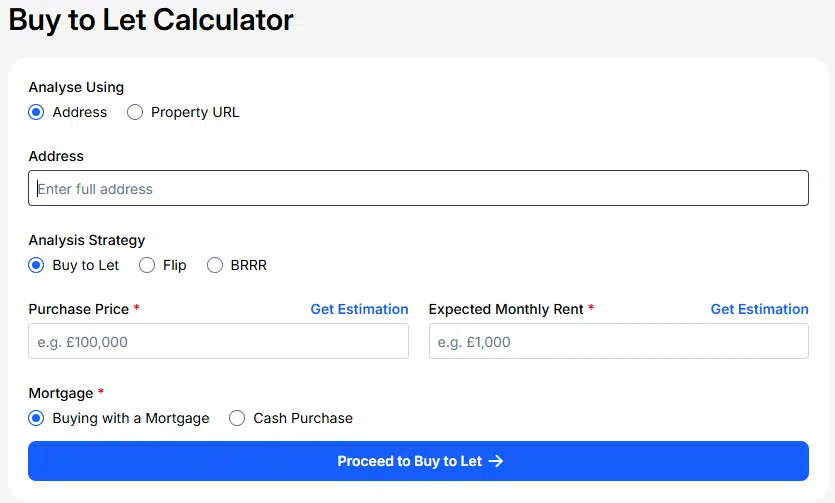
Lendlord users often start with a quick buy to let calculator to sanity check the core numbers before layering in refinance options via a BRRR calculator or specialty tools like a Flip Calculator. The point is not to predict the future perfectly but to stress test each investment against higher taxes, higher rates and tighter regulation while there is still time to walk away or renegotiate.
| Strategy | Net yield after tax | 5 year equity uplift | Liquidity on exit |
|---|---|---|---|
| Hold with interest only mortgage | 4.2% | Moderate | Medium |
| BRRR with refinance in year 3 | 5.6% | High | Medium |
| Flip within 18 months | N/A (capital gain focused) | High but CGT sensitive | High |
Key insight: post Budget, the best strategy is rarely obvious at a glance and small tweaks in timing or structure can have outsized tax effects on your five year results.
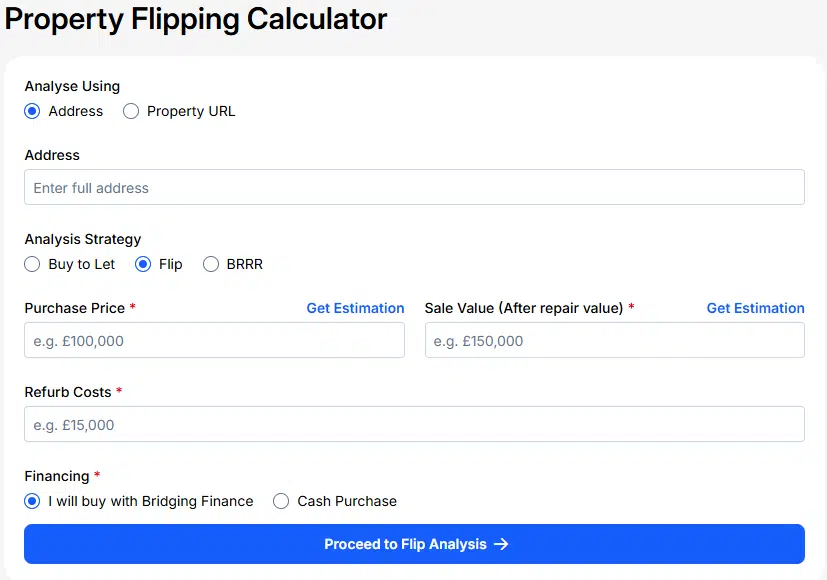
Calculate Your Property Flip Returns
Use Lendlord's Flip Calculator to analyze your deal, estimate profits and make informed investment decisions in seconds.
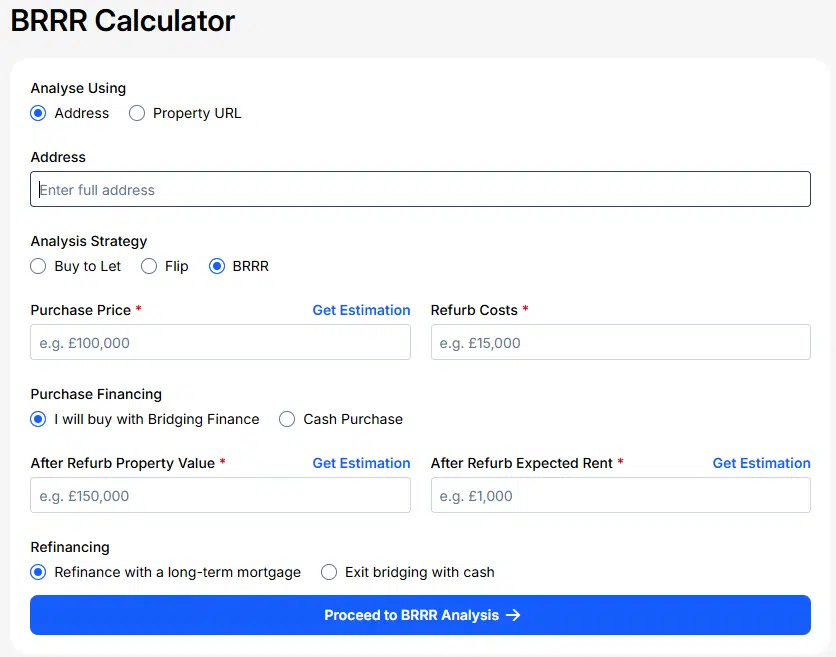
Calculate Your BRRR Returns
Use Lendlord's BRRR calculator to analyze your Buy, Rehab, Rent, Refinance strategy, estimate returns and make informed investment decisions in seconds.
Try Free Calculator → Free to use • Instant results9. How To Plan Ahead - A Practical Checklist For The Next 12 Months
Autumn Budget 2025 confirms expected tax changes that make careful planning essential for buy to let investors. Landlords who thrive from here will map each property and each strategy against the new property income tax rates (from April 2027), new annual charges on high-value homes (from April 2028), and the tightening inheritance and residency rules, while staying alert to potential developments around National Insurance on rental income. They will run every purchase, refinance, flip and BRRR through transparent calculators, keep an eye on cashflow buffers and be ready to pivot regions or asset types as tax and regulation evolve.
To stay ahead, the best approach is to quantify your position with accurate data. Start by measuring your real post tax yield and stress testing your portfolio using tools like a buy to let calculator, a national insurance on rental income calculator and scenario planning for both base case and worst case tax settings. In an environment where the rules keep tightening, the landlords who know their numbers first will always have more options than those who wait for the next Budget headline.
Frequently Asked Questions
Autumn Budget 2025 Property Tax Changes
1When does the property income tax increase take effect?
The 2 percentage point increase in property income tax rates takes effect from 6 April 2027. This means rental income received in the 2027-28 tax year and beyond will be taxed at the new rates: 22% for basic rate taxpayers, 42% for higher rate, and 47% for additional rate.
2Does the property income tax increase apply to all rental income?
Yes, the increase applies to all property income that is subject to income tax, including rent from residential buy-to-let properties, commercial property rentals, and income from furnished holiday lettings. The increase is uniform across all tax bands.
3How much will the annual surcharge on high-value homes cost me?
The annual surcharge depends on your property's value: £2,500 per year for properties between £2 million and £2.5 million, £5,000 per year for properties between £2.5 million and £5 million, and £7,500 per year for properties over £5 million. This is in addition to your normal council tax bill and takes effect from April 2028.
4Will the annual surcharge apply to rental properties or just owner-occupied homes?
The annual surcharge applies to all residential properties valued over £2 million, regardless of whether they are owner-occupied, rented out, or left empty. If you own a buy-to-let property in this value range, you will be liable for the surcharge.
5How is property value determined for the annual surcharge?
The government will use the same valuation methodology as for council tax purposes. Properties will be valued at their current market value, and the surcharge will be based on the band the property falls into. Valuations may be updated periodically, similar to council tax revaluations.
6How does the income tax threshold freeze affect landlords?
With thresholds frozen until 2030-2031, inflation will push more of your rental income into higher tax bands over time. Even if your real purchasing power hasn't increased, nominal income growth means you'll pay tax at higher rates. Combined with the 2% property income tax increase, this means both threshold effects and higher rates will impact landlord profits.
7Did the Autumn Budget 2025 change SDLT rates?
No, the Autumn Budget 2025 did not announce any changes to Stamp Duty Land Tax (SDLT) rates or the SDLT surcharge on additional dwellings. The existing SDLT thresholds and rates remain unchanged. The current 3% surcharge on additional dwellings (second homes and buy-to-let properties) continues to apply. First-time buyers and people moving home (selling their previous property) are not subject to this surcharge.
8Will I be affected if I own properties through a company?
The property income tax increase applies to rental income received by individuals. If you own properties through a company, the company pays corporation tax on rental profits (currently 25% for profits over £250,000), and you pay income tax when you extract profits as dividends. The dividend tax rates are also increasing by 2 percentage points, so the overall impact depends on your extraction strategy.
9What happens to inherited pension pots under the new rules?
From April 2027, unspent pension pots will be subject to inheritance tax. Previously, pensions could be passed to beneficiaries free of IHT, making them a popular estate planning tool. This change closes that route and means property-owning families need to reconsider how they structure wealth transfer to the next generation.
10Is National Insurance on rental income confirmed in this Budget?
No, National Insurance on rental income is not included in the Autumn Budget 2025. However, it has been widely discussed in the property press and could be introduced in a future Budget. Some analyses suggest an 8% rate on net rental profits, which would add significant additional tax burden for landlords. It's worth monitoring and planning for this possibility.
11How much will these changes cost me in total?
The total cost depends on your portfolio size, property values, and rental income. A landlord with £50,000 annual rental profit in the higher rate band will pay an extra £1,000 per year from 2027 due to the property income tax increase. If they own a £3 million property, they'll pay an additional £5,000 per year from 2028 in surcharges. Combined with threshold freeze effects, the cumulative impact can be substantial over a 10-year holding period.
12Can I offset these tax increases against my mortgage interest?
Mortgage interest relief remains limited to a tax credit on interest payments for individual landlords. Currently, this relief is calculated at the basic rate (20%), but from 6 April 2027 it will be calculated at the property basic rate (22%) for the 2027-28 tax year. According to the HM Treasury technical note, "relief for residential finance costs will be calculated at the property basic rate (22%)". The new property income tax rates apply to your net rental profit after deducting allowable expenses, including the limited mortgage interest relief. The higher tax rates mean you'll pay more tax on the same profit, and the relief itself will also increase slightly from 20% to 22% from 2027.
13Will these changes affect my Capital Gains Tax when I sell?
The Capital Gains Tax rates for residential property sales remain unchanged in Autumn Budget 2025: 18% for basic rate taxpayers and 28% for higher and additional rate taxpayers. However, when you dispose of a rental property, you'll still pay CGT at these rates. Combined with the higher property income tax during ownership (from April 2027) and the annual surcharge on high-value properties (from April 2028), the total tax burden across the investment lifecycle has increased significantly.
14Should I restructure my portfolio before these changes take effect?
This depends on your individual circumstances, but many landlords are reviewing their structures now. Options include moving properties into a company structure (though this has its own tax implications), selling lower-yielding properties before the tax increases, or restructuring debt to maximize relief. It's essential to model different scenarios using tools like a buy to let calculator to understand the numbers before making major decisions.
15Are there any exemptions or reliefs I should know about?
The property income tax increase applies uniformly with no specific exemptions for small landlords. The annual surcharge on high-value homes applies to all residential properties over £2 million. However, first-time buyers remain exempt from the SDLT surcharge, and there are still various reliefs available for property businesses, furnished holiday lettings (though these are being reformed), and certain types of commercial property. Professional tax advice is recommended to identify all available reliefs for your specific situation.