AST vs Assured Tenancy: Why the Difference Disappears on May 1st 2026
Published · Updated · 13 min read
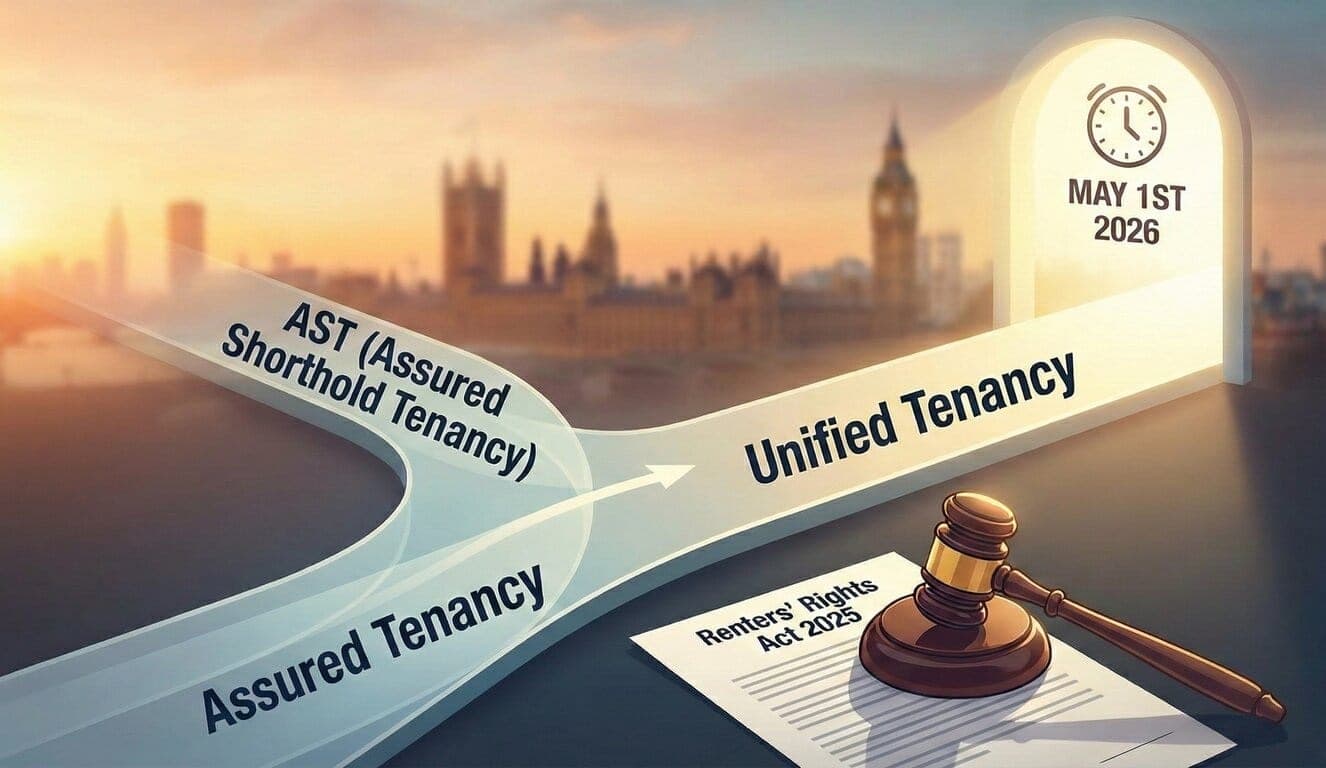
The Renters' Rights Act 2025 eliminates the two-tier tenancy system. Here is what every UK landlord must know before the deadline.
By Eli EdDecember 202512 min read35Years of AST Dominance Ending1 May2026 "Big Bang" Date4.6MHouseholds Affected£7,000Penalty for Fixed TermsFor over three decades, the Private Rented Sector in England has operated on a "two-tier" legal foundation. Landlords have historically distinguished between the Assured Shorthold Tenancy and the highly secure Assured Tenancy. The AST became the industry standard for Buy-to-Let investments. Its appeal was simple: the Section 21 "no-fault" eviction provided a guaranteed exit strategy.
However, following the Royal Assent of the Renters' Rights Act 2025 on 27 October 2025, this distinction is set to be erased. The government has confirmed a "Big Bang" implementation strategy scheduled for 1 May 2026. On that date, every tenancy in England will transform into a single, unified model.
This article explains why the choice between an AST and an AT is ending. It also details what the new single system means for your property portfolio. You will find the critical deadlines, the new possession grounds, and the strategic implications for landlords who must adapt.
Secure Your Tenancy Agreement with a Digital Audit Trail
Under the new Act, relying on a paper trail is risky. To use specific eviction grounds, you must prove the tenant received prior written notice before the tenancy agreement began. Our digital signature tool timestamps the exact moment your tenancy agreement is signed, giving you the undeniable evidence needed to enforce your rights in court.
Sign My Tenancy Agreement Online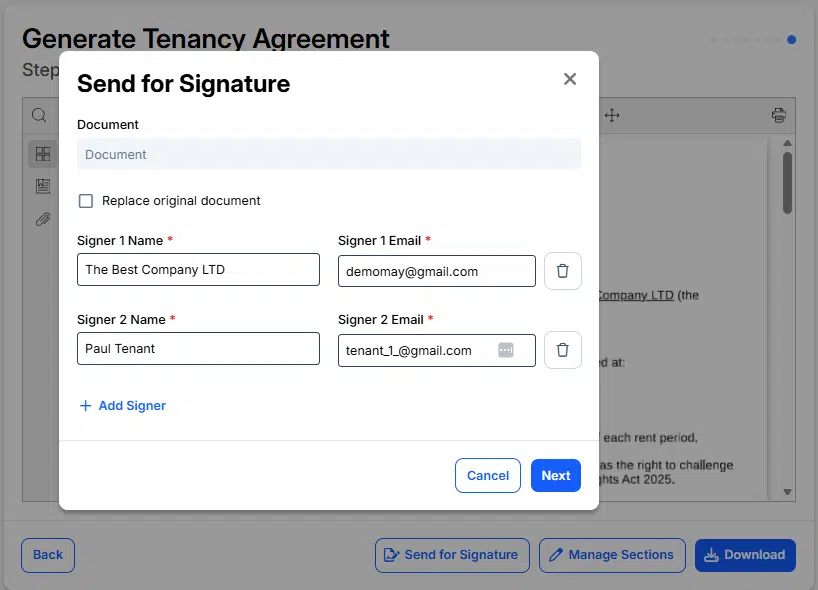
Use Lendlord's digital signature tool to execute your tenancy agreement remotely, creating the timestamped proof required to enforce Section 8 grounds under the Renters' Rights Act 2025.
Implementation Timeline: The Road to May 2026
Key dates every landlord must mark in their calendar
27 Oct 2025Royal Assent granted27 Dec 2025LA powers activated30 Apr 2026Section 21 deadline1 May 2026"Big Bang" DayCritical DeadlineLandlords must serve any Section 21 notice by 4:30pm on 30 April 2026. Court proceedings must then be initiated by 31 July 2026, or the notice becomes invalid. [Source: legislation.gov.uk]
Source: Renters' Rights Act 2025, Transitional Provisions
The Old Regime: Two Very Different Contracts
Until May 2026, the legal gap between these two agreements remains vast. Understanding this distinction is essential for managing the transition period effectively. The Housing Act 1988 created both tenancy types, but the Housing Act 1996 fundamentally changed their relationship.
Before 28 February 1997, the Assured Tenancy was the default. Landlords had to actively "opt out" by serving a Section 20 notice to create an AST. The 1996 Act reversed this burden entirely. Since that date, every private tenancy automatically became an AST unless the landlord explicitly opted into the secure AT model.
This legislative tweak transformed the market. The AST became ubiquitous. Assured Tenancies became a rarity, primarily used by Housing Associations. Private landlords embraced the flexibility and liquidity that Section 21 provided.
Pre-Reform Tenancy Comparison
Understanding the fundamental differences before they disappear
Assured Tenancy (AT)
Assured Shorthold (AST)
The AST's defining advantage was the Section 21 "no-fault" notice. This single mechanism allowed landlords to recover their property without proving any wrongdoing. It made Buy-to-Let investment attractive because it guaranteed liquidity.
Source: Housing Act 1988, Schedule 2; Housing Act 1996
"The Assured Shorthold concept was designed to provide a 'short hold' on the property. That concept is now obsolete. After May 2026, landlords will manage Assured Periodic Tenancies which combine the high security of the old Assured Tenancy with the tenant flexibility of a rolling contract."
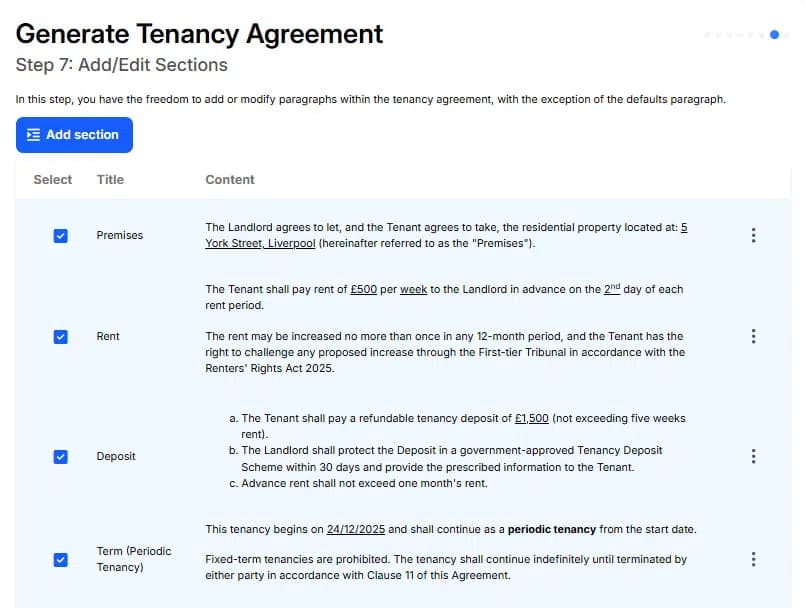
Customize tenancy agreements
The AST is Dead. Is Your Contract Ready for May 1st?
The transition to the new tenancy regime requires updated documentation. Your existing AST templates will become non-compliant. Prepare now with agreements that meet the new legal standard.
Create a Solicitor-Backed AgreementThe "Big Bang": What Happens on 1 May 2026
The Renters' Rights Act does not grandfather existing tenancies. This is a crucial distinction from previous housing reforms. On commencement day, every existing AST and fixed-term Assured Tenancy will automatically convert to the new Assured Periodic Tenancy.
Consider this scenario. A tenant is two months into a 12-month fixed-term AST signed in March 2026. On 1 May, the fixed term legally "falls away." The tenant immediately gains the right to serve two months' notice to quit. The landlord loses the guaranteed rental income they expected until March 2027.
This universal application creates a single market overnight. There will be no confusion about which tenants have new rights and which do not. Everyone moves to the same system simultaneously. The government chose this approach specifically to avoid a fragmented two-tier market that could persist for years.
The Four Pillars of Change
Major reforms taking effect on 1 May 2026
Section 21 AbolitionCompleteFixed Terms BannedCompleteAuto ConversionAll TenanciesRent Clauses VoidSection 13 OnlyFinancial Penalty WarningAny landlord attempting to "purport to let" a property for a fixed term after the implementation date commits a civil offense. The penalty is up to £7,000 per violation, levied by the local authority. [Source: gov.uk]
Source: Renters' Rights Act 2025, Sections 1-4
The Death of Section 21: Transitional Deadlines
The abolition of Section 21 is the centerpiece of the Act. It removes the "no-fault" eviction route that defined the AST for 35 years. From the commencement date, a Section 21 notice is no longer a valid legal instrument.
However, the Act includes detailed transitional provisions. Landlords can still serve Section 21 notices until 4:30pm on 30 April 2026. But serving the notice is only the first step. You must also initiate court proceedings by 31 July 2026. If you fail to file the claim by this deadline, the Section 21 notice ceases to have effect.
The "use it or lose it" window creates strategic implications. Legal practitioners anticipate a surge in Section 21 notices in early 2026. Risk-averse landlords who intend to sell will seek to exit under the familiar "no-fault" rules rather than risking the new Section 8 grounds. This "eviction spike" threatens to overwhelm the county courts in summer 2026.
New Section 8 Grounds Distribution
Mandatory vs Discretionary possession grounds under the reformed system
21Total Grounds65% Mandatory - Court must grant if proven35% Discretionary - Court considers reasonablenessNew Mandatory GroundGround 1A (Sale of Property) replaces Section 21 for landlords wishing to exit the market. It requires a 4-month notice period and cannot be used in the first 12 months of the tenancy.
Source: Housing Act 1988, Schedule 2 (as amended by RRA 2025)
How to Generate a Tenancy Agreement with Lendlord AI
Learn how to create compliant tenancy agreements quickly and efficiently using Lendlord's AI-powered agreement generator - essential for preparing your documentation before the May 2026 transition.
Video: How to generate a tenancy agreement with Lendlord AI
The New Possession Grounds: What Replaces Section 21
With Section 21 removed, the Section 8 possession process becomes the sole mechanism for landlord-initiated lease termination. To ensure the market remains functional, the RRA 2025 amends Schedule 2 of the Housing Act 1988. It introduces new grounds and strengthens existing ones.
The most significant addition is Ground 1A for property sales. This is effectively the replacement for Section 21 for landlords wishing to exit the market. However, there is a critical restriction. You cannot use Ground 1A in the first 12 months of the tenancy. This "protected period" prevents landlords from cycling through tenants for short-term gains.
The rent arrears threshold has also changed significantly. The mandatory Ground 8 now requires at least three months of arrears, up from two months previously. This higher bar provides tenants with more "breathing room" but increases financial risk for landlords. By the time you can serve notice and secure a court date, you could face six to nine months of unpaid rent.
| Ground | Description | Type | Notice | Protected Period |
|---|---|---|---|---|
| 1A | Landlord selling property | Mandatory | 4 Months | 12 Months |
| 1 | Landlord or family moving in | Mandatory | 4 Months | 12 Months |
| 4A | Student HMO possession | Mandatory | 4 Months | Seasonal |
| 8 | Serious rent arrears (3+ months) | Mandatory | 4 Weeks | None |
| 6A | Compliance with enforcement | Mandatory | 4 Weeks | None |
| 14 | Anti-social behaviour | Discretionary | Varies | None |
Once possession is obtained under Ground 1A (sale), the landlord is prohibited from re-letting or marketing the property for rent for 12 months. A breach of this restriction is a serious offense carrying significant penalties.
Rent Regulation: The End of Contractual Increases
Under the AST regime, rents were often increased via "rent review clauses" in the contract. Common examples included annual increases by RPI or a fixed percentage. The RRA bans these clauses entirely for Assured Periodic Tenancies.
From May 2026, the only way to increase rent for an existing tenant is via the statutory procedure under Section 13 of the Housing Act 1988. Landlords must serve the prescribed Form 4A notice. Increases are limited to once per year, and you must give at least two months notice of the increase.
The Act also removes a historical deterrent for tenants. Previously, tenants feared challenging rents because the Tribunal could determine that the market rent was actually higher than proposed. The RRA removes this risk. The Tribunal cannot determine a rent higher than the landlord's proposed figure. This change will likely increase the number of rent challenges.
Financial Risk Timeline: Rent Arrears Scenario
Potential exposure under the new 3-month Ground 8 threshold
!Worst-Case Landlord Exposure6-9 Months Unpaid Rent3Months to qualify for Ground 83-6Months for court hearing14+Days for bailiff enforcementRisk Mitigation StrategyThis extended timeline may drive stricter credit referencing and a preference for guarantors. Landlords should review their tenant screening processes before May 2026.
Source: Ministry of Justice, Possession Statistics Q3 2024; RRA 2025 Impact Assessment
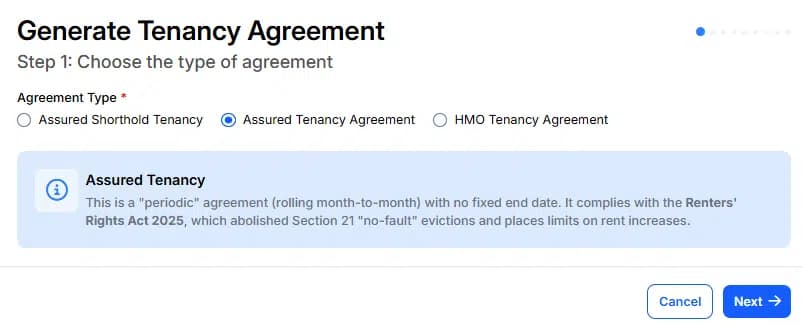
The Lendlord platform allows you to select the "Assured Tenancy" model, ensuring your agreement automatically defaults to the new periodic standard required by the Renters' Rights Act 2025
Swap the AST for the New "Assured Periodic" Standard
On 1 May 2026, the "Big Bang" implementation automatically converts all tenancies to the new system. Continuing to use fixed-term AST templates after this date is not just outdated - it is a civil offense carrying a penalty of up to £7,000. Our generator helps you build a fully compliant Assured Tenancy agreement that aligns with the new periodic rules, removes void rent review clauses, and establishes the correct legal footing for the future.
Generate RRA 2025 Compliant AgreementStudent Housing: A Bifurcated Market
The RRA creates a distinct schism in the student housing sector. Purpose-Built Student Accommodation (PBSA) is exempted from the main tenancy reforms, provided the provider subscribes to a government-approved Code of Practice. PBSA providers can continue to use fixed-term common law tenancies with 40 or 51-week terms.
Private landlords letting HMOs to students do not receive this exemption. Their tenancies become Assured Periodic Tenancies like everyone else. This creates a "void risk" problem. A group of students could give notice in November to leave in January, leaving the landlord with an empty property mid-academic year.
The new Ground 4A offers a partial solution. It allows landlords of student HMOs to recover possession to ensure the property is vacant for the next academic intake. However, the notice must expire between 1 June and 30 September, and you must have stated your intention to use this ground before the tenancy started.
Property Investor Perspectives
Hear from property professionals about navigating the changing landscape of UK landlord regulations and property management.
@hollypropertyuk#ad head to my linktree and click on Lendlord for more information! @Lendlord_UK #buytolet#landlords#buytoletinvestment#hmoproperty#propertytok♬ original sound - hollypropertyuk
@theanxiousinvestor Still chasing AST signatures like it's 2005? Here's how landlords can get documents signed in 60 seconds using Lendlords new feature! No printer, no scanner, no stress! #landlord#rent#buytolet#tenant#lendlord#property♬ Calm Dreamscape - Matias Cancio
New Enforcement Infrastructure
To ensure these rights are more than words on a page, the government is building a robust enforcement ecosystem. The Private Rented Sector Database will become a mandatory digital register for all landlords and properties in England. A property cannot be legally marketed or let if it is not registered.
The PRS Landlord Ombudsman scheme will provide mandatory redress for tenant complaints. The Ombudsman can order landlords to pay compensation of up to £25,000. Failure to comply with a decision can lead to expulsion from the scheme. Since membership is mandatory, expulsion effectively prohibits the landlord from letting property.
Local authorities gain enhanced enforcement powers. The maximum civil penalty for serious offenses rises to £40,000 for repeat offenders. The period for Rent Repayment Orders doubles from 12 months to 24 months. Company directors can now be held personally liable.
Enhanced Penalty Framework
Maximum financial penalties under the new enforcement regime
£40,000Maximum Civil PenaltySevere repeat offenders£25,000Ombudsman CompensationMaximum award to tenants24Months RRO PeriodDoubled from 12 monthsSource: Renters' Rights Act 2025, Enforcement Provisions
Compliance Central: Ready for MTD and the PRS Database?
The era of casual spreadsheet management is ending. Under Making Tax Digital, simply recording the net rent hitting your bank account is no longer compliant - you must digitally record the full gross rent and agent fees separately. Furthermore, the upcoming PRS Database will force you to register safety certificates to obtain the Landlord Registration Number now legally required to sign a tenancy agreement. Use our dashboard to centralize these critical data points, ensuring you are ready for HMRC scrutiny and the new "transparency checks."
Digitize My Tenant Records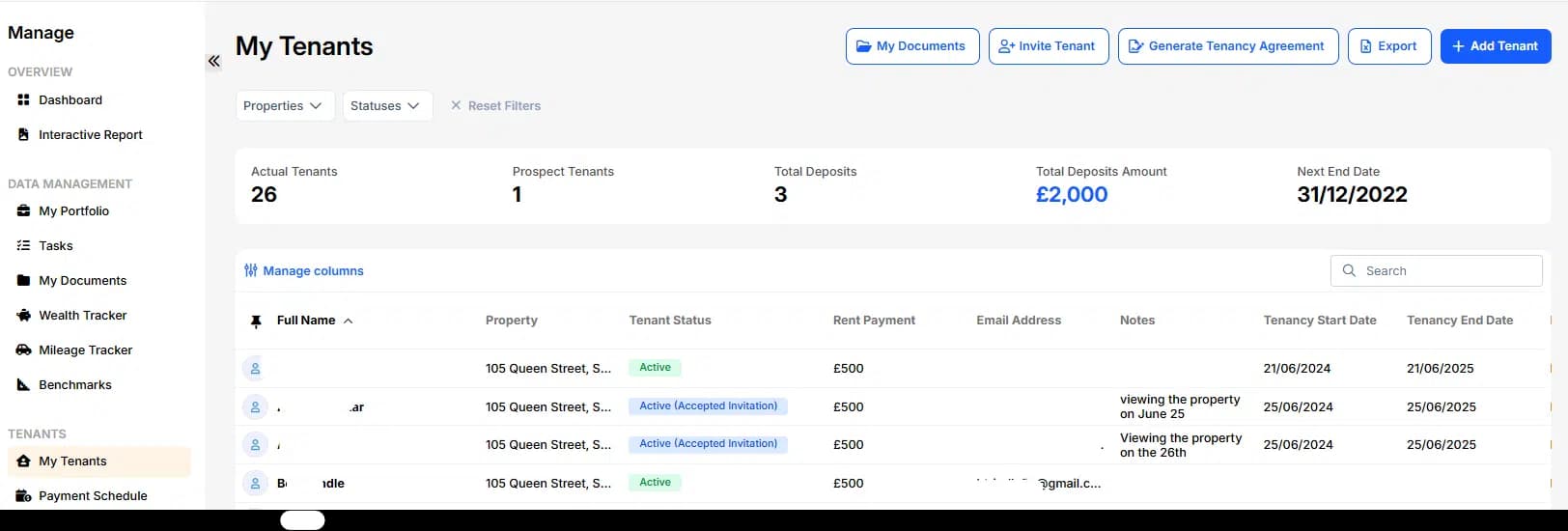
The Lendlord Tenant Management dashboard organizes payment flows and compliance documents, ensuring you have the granular gross income data required for Making Tax Digital and the safety certification records needed for the mandatory PRS Database.
New Tenant Rights and Landlord Obligations
The Act introduces several additional rights that landlords must accommodate. The right to request a pet is now implied into every tenancy agreement. Landlords cannot unreasonably refuse consent, and they must respond to requests within 28 days. To mitigate concerns, landlords can require tenants to hold pet liability insurance.
The Act makes it illegal to discriminate against prospective tenants who have children or receive benefits. "No DSS" advertisements are banned. However, landlords can still conduct affordability checks, which may indirectly filter out benefit claimants if the Local Housing Allowance does not cover the rent.
The Decent Homes Standard extends to the private rented sector. Properties must be free of serious hazards, be in reasonable repair, have modern facilities, and provide adequate thermal comfort. Awaab's Law sets strict timelines for investigating and repairing reported hazards, particularly damp and mould.
Summary: A Unified Market
Key takeaways for landlords preparing for May 2026
The AST EndsAfter May 2026, you will no longer choose between a flexible AST and a secure AT. All tenancies become Assured Periodic Tenancies.Section 21 DeadlineServe any "no-fault" notices by 4:30pm on 30 April 2026. File court proceedings by 31 July 2026.Professional Management RequiredThe era of "passive income" with easy exit strategies is over. Success requires active management, meticulous documentation, and higher risk tolerance."Currently, an AST is like a subscription service - it runs for a set time, and the provider can choose not to renew it. After May 1st 2026, renting becomes like a utility right - once the tenant is connected, you cannot cut them off unless they stop paying or you strictly need the infrastructure back."
- Analogy for Understanding the TransitionFrequently Asked Questions
Common questions from landlords and property investors about the upcoming tenancy reforms.
What is the difference between an AST and an Assured Tenancy? +An Assured Shorthold Tenancy (AST) allows landlords to recover possession using a Section 21 "no-fault" notice after the fixed term expires. An Assured Tenancy (AT) offers the tenant indefinite security - the landlord can only evict by proving specific legal grounds in court. Since 1997, ASTs have been the default for private rentals, while ATs remained rare outside social housing.
When does the Renters' Rights Act 2025 come into force? +The core tenancy reforms take effect on 1 May 2026. This is the "Big Bang" implementation date when all existing ASTs and fixed-term Assured Tenancies automatically convert to the new Assured Periodic Tenancy. Some provisions (like the "AST Trap" fix for long leaseholders) came into force on 27 December 2025.
Can I still serve a Section 21 notice before May 2026? +Yes, but there are strict deadlines. You must serve any Section 21 notice by 4:30pm on 30 April 2026. Additionally, you must initiate court proceedings by 31 July 2026, or the notice becomes invalid. After these deadlines, Section 21 is completely abolished.
What happens to my existing fixed-term tenancy on 1 May 2026? +The fixed term legally "falls away" and converts to an Assured Periodic Tenancy. For example, if your tenant is 2 months into a 12-month fixed-term AST signed in March 2026, on 1 May, they immediately gain the right to serve two months' notice to quit, regardless of the original contract dates.
How do I evict a tenant after Section 21 is abolished? +You must use the amended Section 8 grounds. Key new grounds include: Ground 1A (selling the property - 4 months' notice, cannot use in first 12 months), Ground 1 (landlord/family moving in), and Ground 8 (serious rent arrears - now requires 3 months' arrears). All evictions require proving a specific legal ground in court.
Can I still increase the rent under the new system? +Yes, but only through the statutory Section 13 procedure using Form 4A. Rent increases are limited to once per year, with at least two months' notice. Contractual rent review clauses (e.g., RPI-linked increases) become void on 1 May 2026. Tenants can challenge proposed increases at the First-tier Tribunal.
What is the penalty for using fixed-term tenancies after May 2026? +Attempting to "purport to let" a property for a fixed term after 1 May 2026 is a civil offense. The penalty is up to £7,000 per violation, levied by the local authority. All tenancies must be periodic from inception under the new rules.
Are student lettings exempt from these changes? +Purpose-Built Student Accommodation (PBSA) is exempt, provided they subscribe to an approved Code of Practice. However, private HMOs let to students are NOT exempt - they convert to Assured Periodic Tenancies. Private student landlords can use the new Ground 4A to recover possession between 1 June and 30 September for the next academic year intake.
Do I need to register on the new PRS Database? +Yes. The Private Rented Sector Database will become mandatory (expected late 2026 rollout). You will need a Landlord Registration Number to legally market or let a property. The database will store compliance documents like Gas Safety Certificates and EICRs. A property cannot be legally let if it is not registered.
Can tenants now keep pets without permission? +Tenants have a right to request to keep a pet, and landlords cannot unreasonably refuse. Landlords must respond within 28 days. To mitigate risk, landlords can require the tenant to hold pet liability insurance. Valid refusal reasons include: the head lease prohibits pets, or the property is unsuitable for the specific animal.
Official Government Sources
The key dates and facts in this article are verified against the following official UK Government publications:
Renters' Rights Act 2025 - Full Textlegislation.gov.uk - Official enacted legislation, Royal Assent 27 October 2025
Guide to the Renters' Rights Actgov.uk - Official implementation guide and key provisions
Rental Discrimination Guidancegov.uk - Implementation date 1 May 2026 confirmed
Housing Act 1988legislation.gov.uk - Original AST and AT framework legislation
Accuracy Note
Penalty amounts (£7,000 for fixed-term offenses, £40,000 maximum civil penalty), notice periods, and protected period lengths are as specified in the Renters' Rights Act 2025 and related statutory instruments. Key dates and core provisions have been verified against official gov.uk publications. For the most current and detailed interpretation, consult the full legislation text or seek professional legal advice.
Additional References: Housing Act 1996; Ministry of Housing, Communities and Local Government; Ministry of Justice Possession Statistics.